Showing posts with label Argentina. Show all posts

Saturday, December 27, 2025

Argentina's Congress approves 2026 budget, first under Milei

BUENOS AIRES, Dec 26 - Argentina's Congress passed the 2026 budget on Friday, the first approved by legislators since President Javier Milei took office in late 2023.

The budget, passed 46 votes to 25 with one abstention, includes spending of $102 billion (148 billion Argentine pesos) and projects South America's second-biggest economy will grow 5% with inflation at 10.1%. The bill projects a primary budget surplus equivalent to 1.2% of the gross domestic product.

The 2023 budget was the last one passed by Congress. During the first two years of his term, Milei's government had extended the budget of the previous year without passing a bill in Congress, resulting in sectors being dramatically hit by inflation, which hit an annual rate of almost 300% in April 2024.

According to a report by the Civil Association for Equality and Justice, a Buenos Aires-based think tank, the new budget reflects a 7% increase in real terms from 2025 but a 24.6% drop in real terms compared to the 2023 Congress-approved budget. However, the think tank noted that some inflation projections are significantly higher than the executive branch's forecast.

Milei has ruled with sweeping austerity measures, which have often generated massive protests, and in 2024 Argentina had its first budget surplus in more than a decade. Congress this year overrode Milei's vetoes of bills boosting funding for public universities, pediatric health care and people with disabilities.
While the new budget boosts funding for social services -including health, social security and education - the bump does not compensate for sharp falls over the last several years, the ACIJ report said.

After a strong showing in midterm legislative elections in October, Milei's La Libertad Avanza party gained considerable power in the newly elected Congress, becoming the largest minority in the lower house and increasing its bloc in the Senate. The government hopes that will help it push forward a series of overhauls, including overhauls to the labor and tax systems, in the coming months.

Tuesday, October 28, 2025

Argentina: Libertarians score decisive legislative election win

BUENOS AIRES — Argentines woke up to a politically emboldened President Javier Milei after a dramatic victory in midterm elections on Sunday.

The libertarian president and staunch Donald Trump ally secured more than 40% of the popular vote, and solidified his hold on power in the National Congress, where he had previously struggled to push parts of his agenda through.

The scope of the victory surprised even Milei. His La Libertad Avanza party earned roughly 9 points more than the left-leaning Peronist opposition, and also eked out a victory in the powerful province of Buenos Aires, where Peronists usually dominate. Just over one month ago, the president's party had lost badly in legislative elections in the province of Buenos Aires.

But the story Sunday was very different, and sent a clear message following two years of austerity measures that drastically cut public spending, and helped drive down chronically high inflation. Corruption scandals, and a wild few weeks of economic instability did not dampen the support that he maintains among a sizable part of the population.

The value of the Argentine peso also strengthened considerably on Monday, a show of confidence from the markets after Milei's victory.

Read the rest here.

Sunday, January 21, 2024

Quote of the day: Javier Milei unloads at Davos

"Socialism always and everywhere makes people poorer. It has failed in every country where it has been tried. Failed economically, socially and culturally. And it has murdered more than a hundred million people."

Sunday, December 10, 2023

Javier Milei is sworn in as president of Argentina amidst grave economic crisis

BUENOS AIRES, Argentina (AP) — It wasn’t the most uplifting of inaugural addresses. Rather, Argentina’s newly empowered President Javier Milei presented figures to lay bare the scope of the nation’s economic “emergency,” and sought to prepare the public for a shock adjustment with drastic public spending cuts.

“We don’t have alternatives and we don’t have time. We don’t have margin for sterile discussions. Our country demands action, and immediate action. The political class left the country at the brink of its biggest crisis in history,” he said in his inaugural address to thousands of supporters in the capital, Buenos Aires. “We don’t desire the hard decisions that will be need to be made in coming weeks, but lamentably they didn’t leave us any option.”

South America’s second largest economy is suffering 143% annual inflation, the currency has plunged and four in 10 Argentines are impoverished. The nation has a yawning fiscal deficit, a trade deficit of $43 billion, plus a daunting $45 billion debt to the International Monetary Fund, with $10.6 billion due to the multilateral and private creditors by April. “There’s no money,” is Milei’s common refrain. He repeated it Sunday to explain why a gradualist approach to the situation, which would require financing, was not an option.

But he promised the adjustment would almost entirely affect the state rather than the private sector, and that it represented the first step toward regaining prosperity.

“We know that in the short term the situation will worsen, but soon we will see the fruits of our effort, having created the base for solid and sustainable growth,” he said.

Read the rest here.

Monday, November 27, 2023

Milei to Send ‘Shock’ Package to Argentina’s Congress on Day One

(Bloomberg) -- President-elect Javier Milei plans to call congress into an extraordinary session and send a large package of reforms to stabilize Argentina’s economy on Dec. 11, the day after his inauguration.

“This is urgent,” he said in an interview broadcast Sunday by LN+ TV, adding that Argentina can’t wait for the usual start of congressional sessions in March. “Solving the central bank’s problems as soon as possible” and “halting monetary emission” that causes inflation are among the urgent issues he intends to tackle with lawmakers, he said.

Once his government gets public finances and the central bank balance sheet in order, it will be able to start lifting capital controls and unifying the country’s diverse exchange rates, Milei said, repeating that he never promised to close the central bank on day one.

The positive market reaction to Milei’s win in the Nov. 19 runoff, evidenced by a rally of sovereign bonds and YPF’s debt, emboldened the libertarian economist to pursue his “shock therapy” agenda of fiscal adjustment.

“This has given us greater strength to redouble our bets in favor of fiscal order,” he said, adding the market read the signs his incoming government sent “to perfection.”

“If the financial markets accompany us and interest rates fall, this will be painful but a lot less painful,” he said of the impact of the spending cuts his government proposes — a key concern in a country where more than 40% of the population lives below the poverty line.

Read the rest here.

Thursday, October 15, 2015

Argentina’s Ruling Party Eyes Bigger Banknotes amid Soaring Prices

For the first time in years, lawmakers from Argentina’s ruling Front for Victory coalition have proposed upping the size of the country’s largest denomination banknote to AR$200.

Congressman Carlos Kunkel, author of the initiative, claims the measure has nothing to do with inflation, which runs at 25-35 percent annually, according to private estimates.

Instead, the larger bill — US$12.50 at the black-market rate — would “reduce the cost of printing and circulating money,” Kunkel told a local radio station on October 8. “It will be more convenient for the people.”


Read the rest here.

Thursday, February 27, 2014

Cry for Me, Argentina

USHUAIA, Argentina — A bon mot doing the rounds in post-commodities-boom South America is that Brazil is in the process of becoming Argentina, and Argentina is in the process of becoming Venezuela, and Venezuela is in the process of becoming Zimbabwe. That is a little harsh on Brazil and Venezuela.

Argentina, however, is a perverse case of its own. It is a nation still drugged by that quixotic political concoction called Peronism; engaged in all-out war on reliable economic data; tinkering with its multilevel exchange rate; shut out from global capital markets; trampling on property rights when it wishes; obsessed with a lost little war in the Falklands (Malvinas) more than three decades ago; and persuaded that the cause of all this failure lies with speculative powers seeking to force a proud nation — in the words of its leader — “to eat soup again, but this time with a fork.”

A century ago, Argentina was richer than Sweden, France, Austria and Italy. It was far richer than Japan. It held poor Brazil in contempt. Vast and empty, with the world’s richest top soil in the Pampas, it seemed to the European immigrants who flooded here to have all the potential of the United States (per capita income is now a third or less of the United States level). They did not know that a colonel called Juan Domingo Perón and his wife Eva (“Evita”) would shape an ethos of singular delusional power.

“Argentina is a unique case of a country that has completed the transition to underdevelopment,” said Javier Corrales, a political scientist at Amherst College.
Read the rest here.

Wednesday, November 13, 2013

SSPX Disrupts Interfaith Service Marking the Holocaust

BUENOS AIRES, Argentina (AP) — Ultra-traditionalist Catholics have openly challenged Pope Francis by disrupting one of his favorite events, a ceremony that he and Jewish leaders led in the Metropolitan Cathedral each year to promote religious harmony on the anniversary of the beginning of the Holocaust.

The annual ceremony brings together Catholics, Jews and Protestants to mark Kristallnacht, the Nazi-led mob violence in 1938 when about 1,000 Jewish synagogues were burned and thousands of Jews were forced into concentration camps, launching the genocide that killed 6 million Jews.
 
A small group disrupted Tuesday night's ceremony by shouting the rosary and the "Our Father" prayer, and spreading pamphlets saying "followers of false gods must be kept out of the sacred temple."
Read the rest here.
 HT: Deacon Greg

Tuesday, February 05, 2013

Argentina Freezes Food Prices In Effort To Stem Runaway Inflation

Oh Argentina…the poster-child for incompetent and corrupt government in handling of financial affairs. They just announced they are freezing food prices to “control” inflation. Of course the official inflation rate is reported around 10%, but unofficially it is around 30%:
 Read the rest here.

Preview of coming attractions...

Friday, October 19, 2012

New York Hedge Fund Seizes Argentine Naval Ship

The Libertad, a three-mast tall ship with 330 navy cadets and crew aboard, was seized at Tema, an industrial port east of Ghana’s capital, Accra, on Oct. 2 through a court order obtained by N.M.L. Capital, a holdout creditor from Argentina’s default a decade ago that says it is owed more than $370 million. The creditor is among a few remaining holdouts to refuse debt restructuring agreements in 2005 and 2010. It had tracked the vessel through the Libertad’s Web site.

N.M.L., a subsidiary of Elliot Capital, a New York-based hedge fund with $20 billion under management, offered to release the ship if Argentina paid a $20 million security. It also offered to bear the costs of flying the sailors home.

Argentina’s foreign minister, Héctor Timerman, said in a statement, “The vulture funds have crossed a boundary in their attacks on the Argentine republic.” He said the seizure violated the Vienna Convention, which grants military vessels diplomatic immunity.
Read the rest here.

Monday, August 27, 2012

Argentina: A socialist disaster on wheels

I am fond of using Argentina as the poster-child for incompetent and corrupt government management of an economy. They have destroyed their own economy so many times from inflation and collectivist policies that I’ve lost count.
Read the rest here.

Craig makes a very good point. If you are an investor stay FAR AWAY from US Government inflation indexed bonds (TIPS). It's like buying fire insurance from a known arsonist.

Monday, April 16, 2012

Printing money does not lead to inflation, argues Argentine central bank president

I swear I am not making this up...
The president of Argentina’s Central Bank (BCRA), Mercedes Marcó del Pont, stressed the importance of the recently approved bank’s charter reform and denied that printing currency leads to the creation of an inflationary state “since inflation is rooted in other causes”.

“The new charter will provide the government with more tools to deepen the development model and to give priority to investment credit” said Marcó del Pont in a Sunday interview with two pro-government local newspapers Página 12 and Tiempo Argentino.

The banker added that “it is totally false to say that printing more money generates inflation, price increases are generated by other phenomena like supply and external sector’s behaviour”.
Read the rest here.

Thursday, April 05, 2012

30 Years Later- Argentina still claims the Falkland Islands

BUENOS AIRES — Thirty years after Argentina’s failed invasion of the Falkland Islands, President Cristina Fernandez is ratcheting up pressure by trying to isolate the archipelago’s English-speaking inhabitants while heaping scorn on a British government that has refused to relinquish control.

Argentina’s efforts, calculated to force Prime Minister David Cameron’s government into sovereignty negotiations, come at a poignant moment for Argentina: the anniversary of the land-and-sea assault launched against the islands on April 2, 1982, by a waning dictatorship. Though lasting just 74 days, the war had all the hallmarks of a fierce conventional conflict, complete with sunken warships, the firing of Exocet missiles, artillery bombardments, amphibious landings, aerial dogfights and more than 900 deaths.

Argentina, now ruled by a democratic government, condemns the military junta that made the decision to invade in a last-gasp effort to save its crumbling hold on power. But Fernandez says her country is still in the right to claim the islands — 300 miles off Argentina’s coast — which Argentine invaders were unable to hold from a fleet of more than 100 ships deployed by Prime Minister Margaret Thatcher.

In recent weeks, Argentina has embarked on a multi-pronged effort that has included stopping British vessels from docking and winning support from neighboring countries to restrict port access to ships flying the Falkland Islands flag. The Argentine industry minister called on companies to reduce British imports, and the president has accused Cameron of “near stupidity” for refusing to negotiate.
Read the rest here.

Argentina's claim to the Falkland Islands is as weighty as that of the United States to Canada.

Thursday, January 19, 2012

30 Years Later: Can Britain Defend the Falkland Islands?

Probably not.  They have gutted their armed forces in general and the Royal Navy in particular.  Not a smart move for an island nation that still is dependent on the sea for its survival.  Add to that Argentina has been rattling its sabres of late... And no, sending Prince William there won't add to the defensibility of the Falklands.
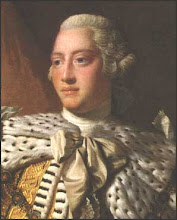
Britain might as well apply to become the 51st state.  They have pretty much made it clear they are depending on us to protect them.

Friday, May 07, 2010

Britain finds oil near the Falklands and Argentina fumes

Argentina reacted with fury last night to the news that British company Rockhopper Exploration had made significant oil discoveries in waters around the Falkland Islands.

As news broke that the company had encountered a 53m-thick deposit of oil 220km (135 miles) north of the islands, that could lead to the discovery of up to 200 million barrels of oil worth £17 billion at current prices, Argentina’s Foreign Minister Jorge Taiana condemned British actions in the region as “illegal” and “unilateral”.

Argentine media labelled the British as “pirates” and said that British action in the region “would push Argentina to its limits”.
Read the rest here.