Wednesday, November 29, 2023

RIP Henry Kissinger

One of the most extraordinary, and controversial men of his time, he was a colossal figure on the world stage and his death likely marks the passing of the last great figure from the Cold War era. I am old enough to remember when almost every single night when dad tuned into watch Walter Cronkite there would be some mention of "Secretary of State Kissinger" on the evening news. 

Dr. Kissinger was 100

Ross Douthat: Pope Francis tries to settle accounts

For years now, Pope Francis’ governance of the Roman Catholic Church has been seemingly designed to drive the church’s conservative and liberal wings ever further apart. Thus the persistent question hanging over his pontificate: How will he hold this thing together?

By opening debate on a wide array of hot-button subjects without delivering explicit changes, he has encouraged the church’s progressives to push the envelope as far as possible, even toward real doctrinal rebellion, in the hopes of dragging him along. At the same time, by favoring the progressives in his personnel decisions and making institutional war on the legacy of John Paul II and Benedict XVI, he has pushed conservatives toward crisis, paranoia and revolt.

On both fronts it’s unclear whether the papacy’s weakening authority can pull either group of rebels back. But in the last few weeks we’ve seen a clear attempt to use that authority, a real test of the pope’s ability to keep the church together.

On the one hand, Pope Francis has moved against two of his sharpest critics on the right: First, he removed Bishop Joseph Strickland from his diocese in Tyler, Texas; now he has stripped Cardinal Raymond Burke of his privileges at the Vatican, including an income and an apartment.

At the same time, the Vatican has tried to draw a bright line against the experiments of the German bishops, the leading progressive faction, by issuing a letter declaring that any reforms the Germans contemplate cannot change the church’s teaching on the all-male priesthood and the immorality of homosexual relations.

In each case you have an act of discipline seemingly tailored to the way that the rebellions are manifesting themselves. Among conservatives and traditionalists, specific critiques of the pope himself from prominent bishops and cardinals have now met with specific personal punishments. Among liberals and progressives, a broad attempt to liberalize the church’s moral teachings has now met with a general doctrinal rebuke.

But in each case one should be skeptical that the discipline will work. Both sides will note, for instance, that criticizing the pope earns you a sacking but that seeming doctrinal disobedience merits only a sternly worded letter. Unless the latter move is eventually backed up by something like the Strickland firing, progressives are likely to persist in the same line the German church is already pursuing, where the practices of the church are simply altered — via blessings for gay couples, say — without Rome granting formal permission. The assumption is that if liberalization becomes a fact on the ground, eventually the church’s laws will have to follow — and the more that assumption is entrenched, the harder it becomes for Rome to avoid some eventual rupture.

Meanwhile, those Catholics who admire Strickland and Burke are likely to be confirmed more deeply in a culture of conservative resistance, in which to remove a bishop from his real-world office only increases his potential influence in the magisterium of internet Catholicism. The idea that a bishop or cardinal could be somehow more orthodox than the Vatican would have seemed like an impossibility to the church’s conservatives just a few short years ago. But the world’s general crisis of authority, mediated by scandal and technological disruption, now extends through conservative Catholicism as well — a long, ragged crack that Francis’ unsteady leadership has opened in what was previously the papacy’s most secure base.

Read the rest here.

Tourists visiting Russia will be required to sign no-criticism agreement

...According to TASS, which cited a draft document, the foreigner would “agree, by entering Russia, to comply with prohibitions established with the aim of protecting the national interests of Russia”.

The person would agree not to “discredit in any form the foreign and domestic state policy of the Russian Federation”.

The foreigner would also comply with not sharing public information about LGBTQ relationships, under Russian legislation, and refrain from “distorting the historical truth” of the Soviet role in the Second World War.

TASS has said the document would soon be put to the Duma, Russia’s lower house of parliament.

It gave no details on what kind of punishment individuals could face for breaking the agreement.

The Kremlin refused to comment on the possible new rules at a briefing with journalists on Wednesday.

Read the rest here. (Sadly paywalled)

Tuesday, November 28, 2023

Pope Francis cancels trip to Dubai amid health concerns

ROME — Pope Francis postponed a series of meetings because of a lung inflammation and breathing difficulties, the Vatican said Monday morning.

Matteo Bruni, director of the Vatican press office, said in an emailed statement that a CT scan ruled out pneumonia but added that doctors had inserted a cannula to provide antibiotics. The pope lost part of a lung following an illness some 50 years ago.

Francis, the first pope from the Americas, turns 87 next month and has battled ill health for years, canceling multiple engagements and appearing in public in a wheelchair. But Bruni's statement stressed: "The Pope’s condition is good and stationary, he has no fever and his respiratory situation is clearly improving."

Read the rest here.

In other news...


Monday, November 27, 2023

Milei to Send ‘Shock’ Package to Argentina’s Congress on Day One

(Bloomberg) -- President-elect Javier Milei plans to call congress into an extraordinary session and send a large package of reforms to stabilize Argentina’s economy on Dec. 11, the day after his inauguration.

“This is urgent,” he said in an interview broadcast Sunday by LN+ TV, adding that Argentina can’t wait for the usual start of congressional sessions in March. “Solving the central bank’s problems as soon as possible” and “halting monetary emission” that causes inflation are among the urgent issues he intends to tackle with lawmakers, he said.

Once his government gets public finances and the central bank balance sheet in order, it will be able to start lifting capital controls and unifying the country’s diverse exchange rates, Milei said, repeating that he never promised to close the central bank on day one.

The positive market reaction to Milei’s win in the Nov. 19 runoff, evidenced by a rally of sovereign bonds and YPF’s debt, emboldened the libertarian economist to pursue his “shock therapy” agenda of fiscal adjustment.

“This has given us greater strength to redouble our bets in favor of fiscal order,” he said, adding the market read the signs his incoming government sent “to perfection.”

“If the financial markets accompany us and interest rates fall, this will be painful but a lot less painful,” he said of the impact of the spending cuts his government proposes — a key concern in a country where more than 40% of the population lives below the poverty line.

Read the rest here.

From draining the swamp to reviving the "spoils system"

Part of the plan being cooked up by his loyalists for Trump Admin 2.0 is to gut 140 years of civil service reform and bring back the old spoils system introduced by (ironically) Andrew Jackson and the Democratic Party back in the 1830s. The way it worked was simple. The party that won the election fired all or most of the civil service employees and replaced them with their own loyalists. The modern Trumpian motive is to combat the mythical "deep state." But it seems more directed towards undermining the rule of law, asserting direct political control over key executive agencies such as the DOJ in order to shut down any inconvenient criminal investigations and allow for the prosecution of his enemies and critics. Indeed, Trump has not been shy on this subject, being quite open in his declaration that he will use the power of the state to go after his enemies.

Sunday, November 26, 2023

Catholic Priest Disciplined for Allowing Sacrilegious Music Video Shoot in Church

A Catholic priest was relieved of his duties for granting singer Sabrina Carpenter permission to shoot a music video at his Brooklyn church.

The Diocese of Brooklyn removed Monsignor Jamie J. Gigantiello from his post  at Our Lady of Mount Carmel-Annunciation Parish following backlash for Carpenter’s “Feather” music video, which came out on Oct. 31. The Catholic News Agency was the first to report his ouster.

The gory yet girly “Feather” video is bookended by funeral-inspired scenes filmed at the Williamsburg house of worship.

In the video, cameras follow Carpenter as she leads men into traffic, stirs up a bloody gym brawl and traps someone in an elevator to their apparent death.

Afterwards, Carpenter dons a short black tulle dress and lace veil as she skips up and down the center aisle, and dances in front of the pastel-adorned altar surrounded by softly-colored coffins.

It ends with Carpenter, a former Disney Channel star, driving away from the church in a hot pink hearse.

Read the rest here.

100 Years Ago: Remembering Warren Harding's trip to Alaska


Part I

Part II

Part III

Pope Francis is ill, but still plans to travel to Dubai

VATICAN CITY — Pope Francis on Sunday revealed that he has a lung inflammation but will go later this week to Dubai to address the climate change conference. 

Read the rest here.

Saturday, November 25, 2023

The Gen Z Rising Star in Conservative Reporting

To understand the motivation of Aaron Sibarium, Yalie, Gen Z reporter and conservative media darling, it’s instructive to travel back in time to last December, and do a little eavesdropping.

Right outside D.C., in a small studio apartment tucked inside an urban-suburban complex in Arlington, Virginia, Sibarium chats it up with libertarian writer Richard Hanania in a video call for a podcast exploring “the right-wing echo chamber.” In other contexts, on other podcasts (like his own), you can find Sibarium leaning into his more conservative opinions, but this is not one of these moments. He’s here to punch right. 

“Everyone on the right wants to write essays and have their grand theories about political economy and the American Right taken very seriously from the time they’re young,” he says, “and the problem is that A) when you’re 22, you don’t really know anything and B) there’s a surplus of that writing already.” 

What he values, he says, is something different from the conservative hot take-machine: real investigations, seeking out scoops, digging for data. As he sees it, he’s providing a rare service, occupying a narrow journalistic niche: old-school, shoe-leather reporting from a conservative point of view. 

“It’s rare to see someone who will cover something like, say, race-based treatment of Covid drugs … who also is like not a crank and has an IQ above 120,” Sibarium says, cracking half a smile. 

This quip is effectively Sibarium’s Statement of Purpose. In the 2½ years since he became a reporter, he’s snared some major scoops: There was his piece exploring how states, advised by the FDA to do so, used racial preferences in rationing scarce Covid-19 drugs, giving preference to young people of color over older white people. (Some of the states stopped the practice soon after he reported on them.) He broke a story that exposed the Columbia Law School’s plans to require video statements from applicants, presumably to evade the Supreme Court decision banning the consideration of race in admissions. (Columbia abandoned that plan, insisting it was a mistake, when Sibarium asked them about it.) And he uncovered Yale administrators’ bullying of a non-Black student who called his apartment a “trap house” in a party invitation, a scandal that brought personnel changes to the school. 

Sibarium, a staff writer at the Washington Free Beacon, is 27, diminutive, nasally and “formerly autistic.” (More on that later.) He’s become a force on the right who’s drawn praise from conservatives as far apart as Tucker Carlson and David French, who called Sibarium “a rising star reporter.” Sibarium doesn’t see his project as wholly new, as there has been conservative reporting for decades, but he’s trying to do something a little different.

“What maybe is new-ish about my personal project,” Sibarium says, is that he is trying “to report on the culture war in a way that is fairly aggressive and combative.”

As Americans’ trust in media has cratered, driven almost entirely by independents and Republicans, Sibarium has hunkered down, abstained from flirtations with fascism and racism (in imagery, group chats or pseudonymous op-eds) and done what some people have long been begging conservatives to do more of: pure reporting, digging up and revealing new information. Sibarium has done that, quietly, without sting operations — and without the millions of eyeballs turned on pundits like Ben Shapiro, Dan Bongino and Carlson.  

Read the rest here.

Tuesday, November 21, 2023

Oswald did it, and he did it alone.


This video presents a good summary of the facts (as opposed to conjecture and mythology) surrounding one of the most tragic events in American history. Polls continue to show that most people believe there was some kind of elaborate conspiracy at the heart of Kennedy's murder. The only problem is that there is not a shred of credible evidence that supports that. Belief in a conspiracy can only be sustained by ignoring the mountains of actual hard evidence, all of which points to Oswald.

Two books do an excellent job debunking the myths, misinformation, and outright lies that are pervasive among conspiracy theorists. There are others, but IMO these are the best.

Case Closed by Gerald Posner

Reclaiming History by Vincent Bugliosi (This book is massive and took me more than six months to read. It is available in almost any well stocked public library.)

Sixty years ago

Monday, November 20, 2023

Rome: The synodal Church will be guided by the spirit of the age

The camera never lies; except that it does. A still photograph taken out of context can be wholly misleading. A video less so, since it provides context. The October Synod in Rome has produced two contradictory responses in observers.

Those who look at the still photograph have been saying “nothing has changed. The catastrophists were wrong. See, no women priests, no homosexual blessings, no change”.

But the opposite is the case. The video tells a different story. One might begin any assessment by asking, if there is no change, what was the Synod all about? Why the cost, the enormous expenditure of effort? Was it really all to enable a couple of hundred hand-picked people the opportunity to self-soothe and engage in ecclesiastical group therapy?

Clearly not. Instrumentum Laboris offered a clear indication that a new kind of theological language was being used, and for a purpose: to facilitate the evolution into a new kind of Church. Salvation was replaced by politics and therapy. The Catholic journalist Jeanne Smits argued that evolution was the wrong term.

She said: “It’s a revolution that’s fundamentally abandoning the definition of the Church as the mystical body of Christ, in order to see it as … a new Church.”

For observers who have watched other ecclesial bodies over the last 50 years, the strategies employed by the proponents of the new synodality look very familiar.

The Episcopalians in America trod this path in the 1980s, as did the Anglicans in England in the 1990s. When the Anglicans turned to the device of detaching theology from the tradition and moving it into encounter groups they chose the term “indaba”.

Indaba is a Zulu concept which describes a gathering for purposeful discussion. It was designed to facilitate “listening as well as speaking and the emergence of wisdom and a common mind”.

Does that sound a little familiar?

It does all the more so when you add the trope “listening to, or in, the ‘spirit’”.

The Anglicans failed to define what they meant by the “spirit”, in exactly the same way as members of the recent Synod bandied about the word as if it should deflect all criticism or save them from any further accountability of examination of what they meant by it.

The task of discernment was equally foreign to both Anglican and Catholic progressives. Traditional Christianity, on the other hand, has always placed considerable emphasis on being able to tell the difference between the different spirits.

Even Hegel knew enough to define what “spirit” meant for him, but political or therapeutic Christianity has no experience or expertise in this. The strategy was as clear as it was pneumatically incompetent.

It was intended to relocate the epistemology that defines the Church – to detach it from Scripture, Tradition and the Magisterium and relocate it in the newly authoritative context of therapeutic “group encounter” precisely so that it could be claimed that the “spirit” had informed the Church. But all the indications are that this is not the Holy Spirit. How otherwise could one explain the Holy Spirit was contradicting what He effected in the past?

Instead this appears to be the spirit of the age, since the values it stimulates and promotes are the opposite of those of the apostolic or renewed Church. How is the anticipated revolution to be achieved, given that no significant decision were arrived at on this occasion?

Answer: by establishing two effective mechanisms to change what the Church believes and practises; the creation of the principle and process of synodality itself and the adjudicating concept of the sensus fidei.

Read the rest here.
HT: Dr. Tighe

Napoleon's hat sells for $2 million

PARIS — A faded and cracked felt bicorne hat worn by Napoléon Bonaparte sold for $2.1 million at an auction of the French emperor’s belongings Sunday. 


"On a field of battle his hat is worth 50,000 men. But it doesn't matter. He is not a gentleman." 
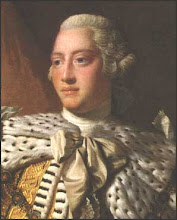
-Arthur Wellesley, 1st Duke of Wellington

Sunday, November 19, 2023

Another 261 churches leave the United Methodists

The exodus has been going on for a while. But here I must give a polite nod to the liberals who are running the UMC. Rather than adopt the scorched earth approach that the leadership of the Episcopal Organization chose in response to its own defections, the Methodists handled this in a fairly civilized way. The national congregation granted a generous period of time for reflection by individual churches during which they were given the opportunity to disaffiliate on terms that might be described as the ecclesial version of a "no-fault divorce." 

Story here.

Franklin Pierce (Strictly for history lovers)


Who? 

You may be forgiven for asking the question. Pierce is one of those presidents that even students of history have a hard time remembering. That said, I have long had a morbid fascination with this obscure and mostly forgotten figure. Wideley regarded as one of our worst presidents by historians, and for once I agree with the general assessment, his personal life was a succession of private struggles and tragedies that would have broken most men. This is easily the best video summary that I have come across on the life and times of our 14th president.

Friday, November 17, 2023

A Conference on the 8th OEcumenical Council

Elon Musk and Henry Ford

The parallels are uncanny. Both men were/are geniuses, with a vision of the future that fundamentally changed the world and made them spectacularly wealthy. Both were pioneers in the transportation industry, specifically cars. Both had a reputation for treating their employees well, while being fiercely hostile to unions. And both were antisemitic bigots, and prone to bizarre conspiracy theories.

Liberals vs Progressives: The deepening divide in the American left

Remember when “liberal” was a dirty word? In the 1980s, Ronald Reagan, who often prefaced it with a damning “tax and spend,” may have been the most effective of bashers. But the most blatant attack was in the early ’90s, after Newt Gingrich’s political organization GOPAC sent out a memo, “Language: A Key Mechanism of Control,” urging fellow Republicans to use the word as a slur.

It worked. Even Democrats began avoiding the dread label. In a presidential primary debate in 2007, Hillary Clinton called herself instead a “modern progressive.” She avoided the term “liberal” again in 2016.

Now the word is back. The portion of Americans who told Gallup pollsters they were “liberal” has increased from 17 percent in 1992 to 25 percent in 2021 (still lower than the proportions of those who said they were “conservatives” or “moderates”).

But the way “liberal” is being used now is more confounding than ever. Never Trump conservatives tout their bona fides as liberals in the classical, 19th century sense of the word, in part to distinguish themselves from hard-right Trumpists. Others use “liberal” and “progressive” interchangeably, even as what progressivism means in practice today is often anything but liberal — or even progressive, for that matter.

For those of us who never abandoned the term — why let Republicans define us? — liberal values, many of them products of the Enlightenment, include individual liberty, freedom of speech, scientific inquiry, separation of church and state, due process, racial equality, women’s rights, human rights and democracy.

Unlike “classical liberals” (i.e., usually conservatives), liberals do not see government as the problem, but rather as a means to help the people it serves. Liberals fiercely defend Social Security, Medicare, Medicaid, Obamacare, the Voting Rights Act and the National Labor Relations Act. They believe government has a duty to regulate commerce for the benefit of its citizens. They tend to be suspicious of large corporations and their tendency to thwart the interests of workers and consumers.

As recently as the 2000s, the difference between liberals and progressives was often a matter of degree — Obamacare versus Medicare for All, or increasing the top marginal tax rate versus imposing a wealth tax. But while liberalism’s most strenuous threat comes from the Trumpian right, a split over basic principles and the purpose of the left has been widening.

In an increasingly prominent version of the progressive vision, capitalism isn’t something to be regulated or balanced, but is itself the problem. White supremacy doesn’t describe an extremist fringe of racists and antisemites, but is instead the inherent character of the nation.

Some aspects of contemporary progressivism look less like actual progress and more like a step in reverse.

Read the rest here.