Showing posts with label bitcoin. Show all posts

Wednesday, November 30, 2022

European Central Bank says bitcoin is on the ‘road to irrelevance’

The European Central Bank gave a strong critique of bitcoin on Wednesday, saying the cryptocurrency is on a “road to irrelevance.”

In a blogpost titled “Bitcoin’s last stand,” ECB Director General Ulrich Bindseil and Analyst Jürgen Schaff said that, for bitcoin’s proponents, the apparent stabilization in its price this week “signals a breather on the way to new heights.”

“More likely, however, it is an artificially induced last gasp before the road to irrelevance — and this was already foreseeable before FTX went bust and sent the bitcoin price to well below USD16,000,” they wrote.

Bitcoin topped $17,000 Wednesday, marking a two-week high for the world’s largest digital coin. However, it struggled to maintain that level, falling slightly to $16,875. Vijay Ayyar, vice president of corporate development and international at crypto exchange Luno, warned that the bounce is likely just a bear market rally and would not be sustained. “This is just a bearish retest,” he told CNBC.

The remarks from the ECB officials are timely, with the crypto industry reeling from one of its most catastrophic failures in recent history — the downfall of FTX, an exchange once valued at $32 billion. And the market has been largely down in the dumps this year amid higher interest rates from the Federal Reserve.

Bindseil and Schaff said that bitcoin didn’t fit the mold of an investment and wasn’t suitable as a means of payment, either.

“Bitcoin’s conceptual design and technological shortcomings make it questionable as a means of payment: real Bitcoin transactions are cumbersome, slow and expensive,” they wrote. “Bitcoin has never been used to any significant extent for legal real-world transactions.”

“Bitcoin is also not suitable as an investment. It does not generate cash flow (like real estate) or dividends (like equities), cannot be used productively (like commodities) or provide social benefits (like gold). The market valuation of Bitcoin is therefore based purely on speculation,” they added.

Read the rest here.

Saturday, April 30, 2022

Quote of the day...

“If you said… for a 1% interest in all the farmland in the United States, pay our group $25 billion, I’ll write you a check this afternoon,” Buffett said. ”[For] $25 billion I now own 1% of the farmland. [If] you offer me 1% of all the apartment houses in the country and you want another $25 billion, I’ll write you a check, it’s very simple. Now if you told me you own all of the bitcoin in the world and you offered it to me for $25 I wouldn’t take it because what would I do with it? I’d have to sell it back to you one way or another. It isn’t going to do anything. The apartments are going to produce rent and the farms are going to produce food.”

 -Warren Buffet (from here)

Tuesday, January 25, 2022

Crypto’s gold standard claims are fading fast


The US-focused shakeout in financial markets has at least given us clarity on one point: bitcoin is not “digital gold” or a “store of value”, to mention two grand claims made about the cryptocurrency when its price was going up.

At $37,000, the late-afternoon level on Tuesday, bitcoin has fallen by 22% since the start of January and by 45% since recording an all-time high in early November. The crypto crew may have convoluted explanations for this setback, but the simplest one is best: bitcoin has always primarily been an instrument for pure speculation; when high-risk assets are out of favour, it will be clobbered.

If anything, bitcoin is behaving like a souped-up proxy for the technology-heavy Nasdaq index in the US, down 14% since the start of 2022. So the parallel claim about “uncorrelated returns” doesn’t stack up either.

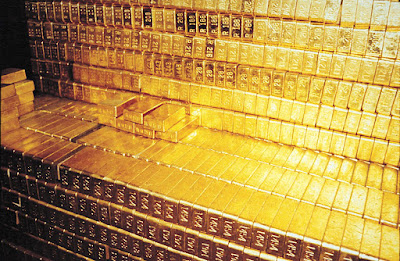
Meanwhile actual gold, a real store of value on the evidence of a few thousand years, has been doing roughly what it is supposed to do during an inflation scare: it has fluttered sideways to gently upwards over the past few months.

None of which precludes the possibility that bitcoin will rally when risk-taking appetites recover. But, if that happens, please let’s not hear a reheated version of the thesis (pushed by a Goldman Sachs strategist, bizarrely, only a few weeks ago) that bitcoin is competing with gold in “the store of value market” and thus could hit $100,000 if it grabs a 50% share.

Come on, cryptocurrencies are not playing on the same pitch, asset-wise, as gold – and one doubts they ever will.

Saturday, December 04, 2021

Bitcoin Plunges (Again)

Crypto craziness was on display again with the latest huge sell off in Bitcoin, which dropped around 17% over the last 24 hrs. Yet its proponents continue to tout it as a "safe haven" for currency volatility. Meanwhile in Turkey; the lira continues its rapid decline with inflation now running around 20%. Turks are rushing to convert their money... into dollars and gold.

Friday, September 24, 2021

China: All crypto-currency related activities are illegal

China’s central bank renewed its tough talk on bitcoin Friday, calling all digital currency activities illegal and vowing to crack down on the market.

In a Q&A posted to its website, the People’s Bank of China said services offering trading, order matching, token issuance and derivatives for virtual currencies are strictly prohibited. Overseas crypto exchanges providing services in mainland China are also illegal, the PBOC said.

“Overseas virtual currency exchanges that use the internet to offer services to domestic residents is also considered illegal financial activity,” the PBOC said, according to a CNBC translation of the comments. Workers of foreign crypto exchanges will be investigated, it added.

The PBOC said it has also improved its systems to step up monitoring of crypto-related transactions and root out speculative investing.

Read the rest here.

I'm not generally a fan of China these days but to borrow a well worn cliché, even a stopped clock is right twice a day. And they are right about this. On a related note; Bitcoin and the other major cryptos are all getting hammered.   

Tuesday, July 13, 2021

BITCOIN ‘Black Swan’ author Nassim Taleb says bitcoin is worth zero and fails as a currency and a hedge

Nassim Nicholas Taleb has reversed his stance on bitcoin.

The author of “The Black Swan” said in a recent paper that the largest cryptocurrency by market cap has failed to satisfy the notions of it as a currency without government, as a hedge against inflation and as a safe haven investment.

“Few assets in financial history have been more fragile than bitcoin,” he said.

Taleb had previously spoken more favorably on bitcoin, particularly on its potential to help people circumvent capital controls in markets that rely on them to manage their exchange rates. He called it “the first organic currency” in the foreword of “The Bitcoin Standard” in 2018 and “an insurance policy” against government control over currency.

In his recent paper, “Bitcoin, Currencies, and Fragility,” published in late June, Taleb, a probability researcher and former longtime quantitative trader, says bitcoin is worth “exactly zero” partly because it requires a sustained amount of interest to maintain it.

By contrast, “gold and other precious metals are largely maintenance free, do not degrade over an historical horizon, and do not require maintenance to refresh their physical properties over time,” he said.

Read the rest here.

Beating one of my favorite dead horses.

Tuesday, June 08, 2021

Coincidence?

Last night it was announced that the Feds had managed to seize a large chunk of the roughly $5 million paid to a Russian ransomware crime gang in order to release a major east coast pipeline that they had managed to shut down. That ransom was paid in the de facto currency of organized crime, Bitcoin. Cryptocurrencies, and especially Bitcoin, have become the go to venue for largely anonymous financial transactions. In this respect they have replaced the now illegal practice of anonymous banking such as the legendary numbered bank accounts that once upon a time every narco kingpin, terrorist and dictator used to stash their money untraceably in places like Switzerland. Its pretty common knowledge that BTC's wild swings are being partly driven by naked price manipulation on the part of celebrity endorsements and criminal syndicates who use it both for money laundering and as a high tech ponzi scheme believing that its relative anonymity makes them near invulnerable.

Today Bitcoin took a dive, at one point losing more than 8% of its value. Hmmm...

Wednesday, May 19, 2021

Bitcoin gets hammered as China issues warning to investors

Bitcoin fell below $37,000 for the first time in over three months on Wednesday, continuing a major sell-off that began a week ago.

The digital currency was down 20% in the last 24 hours, according to Coinbase. The cryptocurrency hit an intraday low of around $36,189 at 7:30 a.m. ET. It was the lowest level since early February. Bitcoin is down more than 30% in the last week, according to Coinbase.

That means bitcoin has now erased all its gains following Tesla’s announcement that it would purchase $1.5 billion worth of the cryptocurrency. It’s also down about 44% since hitting a record high of $64,829 in mid-April.

Negative news over the past week has dampened sentiment for bitcoin.

On May 12, Tesla CEO Elon Musk said the electric carmaker had suspended vehicle purchases using bitcoin, citing environmental concerns over the so-called computational “mining” process. This is where high-powered computers are used to solve complex mathematical puzzles to enable transactions using bitcoin.

Musk’s comments caused over $300 billion to be wiped off the entire cryptocurrency market that day.

Read the rest here.

In related news; JP Morgan believes large institutional investors are losing confidence in crypto-currencies and are moving into gold as a hedge against inflation and other potential issues that could weaken the dollar. 

Details here. (Paywall) 

Wednesday, May 12, 2021

The Smartest Guys in the Room Call Bitcoin “Rat Poison Squared,” “a Colossal Pump-and-Dump Scheme” and “a Big Criminal Scam” but Federal Regulators Look the Other Way

Anne Goldgar wrote of the Dutch Tulip bubble in her 2007 book, Money, Honor, and Knowledge in the Dutch Golden Age, that “the f1000 one might pay in January 1637 for one hypothetical Admirael van der Eyck bulb,” could have bought “a modest house in Haarlem,” or “nearly three years’ wages” of a master carpenter. Comparing that to U.S. dollars in 2007, the year her book was released, Goldgar says it would be like one Tulip bulb selling for $12,000.

Goldgar notes that as historians have looked back at this episode, the tulip mania of the 1630s in Holland has become a “byword for idiocy.”

In his 1841 classic on market bubbles, Extraordinary Popular Delusions and the Madness of Crowds, the Scottish journalist Charles Mackay wrote this about the Tulip bubble: “The rage among the Dutch to possess them was so great that the ordinary industry of the country was neglected…”

Four centuries have apparently not cured the propensity toward idiocy when the lure of riches beckons. The market cap of Bitcoin is now in excess of $1 trillion, despite the fact that it is backed by absolutely nothing.

No amount of disdain toward Bitcoin by the smartest guys in the room can stop the creature’s incessant climb. Bitcoin has multiplied more than five-fold since September, trading yesterday at over $56,000.

Bitcoin has been thoroughly discredited by some of the smartest people in the investment community and global finance, but that hasn’t stopped the oldest futures exchange in the U.S., CME Group, from offering futures and options trading on Bitcoin. CME Group’s federal regulator, the Commodity Futures Trading Commission (CFTC), explains in this podcast that all that CME Group had to do to launch its Bitcoin futures was to “self-certify” its plan with its regulator, the CFTC. The self-certified plan may be just fine – it’s the underlying product based on nothing that the regulator seems to have ignored.

(We’re thinking of submitting a self-certified plan with the CFTC to trade futures on spinning straw into gold. We’re toying with calling it the RumpelstiltskinCoin.)

The CME Group has exchanges that provide for futures trading based on real things: like milk, wheat, soy beans, oil, gasoline, ethanol and so forth. These are real things that fuel economic growth in the United States and/or feed a nation of 331 million people.

To paraphrase Mackay in Extraordinary Popular Delusions and the Madness of Crowds to sum up today’s Bitcoin craze in the U.S.: The rage among speculators to trade Bitcoin was so great that the harm this would do in the long-term to the reputation of integrity in U.S. markets was simply ignored by Congress and regulators.

One of the most respected investors in America, Warren Buffet, summed up Bitcoin like this in May 2018: Bitcoin is “probably rat poison squared.” In January of the same year, Buffet told CNBC in an interview that “In terms of cryptocurrencies, generally, I can say with almost certainty that they will come to a bad ending.”

Also in 2018, Bill Harris, the former CEO of Intuit and PayPal, wrote a detailed critique of Bitcoin for Vox, under the headline: “Bitcoin is the greatest scam in history.”

Read the rest here.

Friday, April 23, 2021

‘Black Swan’ author calls bitcoin a ‘gimmick’ and a ‘game,’ says it resembles a Ponzi scheme

“Black Swan” author Nassim Taleb on Friday criticized bitcoin as a “gimmick,” telling CNBC he believes it’s too volatile to be an effective currency and it’s not a safe hedge against inflation.

“Basically, there’s no connection between inflation and bitcoin. None. I mean, you can have hyperinflation and bitcoin going to zero. There’s no link between them,” Taleb said in a “Squawk Box” interview.

“It’s a beautifully set up cryptographic system. It’s well made but there’s absolutely no reason it should be linked to anything economic,” added Taleb, whose bestselling 2007 book examined highly improbable events and their potential to cause severe consequences. He said bitcoin has characteristics of what he calls a Ponzi scheme that’s right out in the open.

A Ponzi scheme is a type of fraud whereby crooks steal money from investors and mask the theft by funneling returns to clients from funds contributed by newer investors.

Taleb had once held favorable views toward bitcoin, which was created in 2009 and is the world’s largest cryptocurrency by market value. However, he told CNBC he was “fooled by it initially” because he thought it could develop into a currency used in transactions.

“Something that moves 5% a day, 20% in a month — up or down — cannot be a currency. It’s something else,” said Taleb, a former derivatives trader who serves as scientific advisor to hedge fund Universa Investments.

“I bought into it ... not willing to have capital appreciation, so much as wanting to have an alternative to the fiat currency issued by central banks: A currency without a government,” Taleb said. “I realized it was not a currency without a government. It was just pure speculation. It’s just like a game ... I mean, you can create another game and call it a currency.”

Read the rest here.

I think this guy has been reading my blog. Also in today's newsfeed...

$200 billion wiped off crypto market overnight. Bitcoin down over 20% since April 14 (ironically the day I last posted on this subject). 

Wednesday, April 14, 2021

High Tech Tulips

For those contemplating diving into Bitcoin consider its current valuation...

  • 35 x the value of gold
  • 2,400 x the value of silver
  • 63,000 x the value of the US Dollar
If you are thinking of buying Bitcoin you need to be comfortable with these valuations and expect them to go higher. And IMHO that is not rational. Bitcoin is not a bubble in the traditional sense of the term. The bond market and Tesla might be bubbles. But Bitcoin has moved way beyond that. It has become a speculative mania being fueled by frantic buying on the part of people who are afraid they will miss out on the greatest get rich quick opportunity in the history of investment markets. 

Or to borrow an old line from Wall Street professionals "dumb money chases hot money." And I suspect the hot money has mostly cashed in their profits and left the building. 

But with trillions now parked in Bitcoin, what is likely to happen when this all blows up? The honest answer is, I'm not sure. There isn't really any modern event to compare it to. You'd have to go back almost 400 years to find anything comparable. The Great South Seas bubble of the 1720s was comparatively tame in terms of its overpricing. As was the railroad bond bubble that precipitated the Panic of 1873 and the stock mania that blew up in October of 1929. 

If it deflates slowly (probably the best case scenario) it could limit the systemic risks. But a sudden crash could cause chaos. It could also inflict staggering losses on people who can ill afford to lose a lot of money. If Elon Musk, a big BTC enthusiast, loses a few billion, honestly who cares? But there are a lot of working and middle class people who have been putting a great deal of their hard earned money into this. These people could take a hit they aren't ready for. 

Update: On the subject of smart money cashing in their Bitcoin, CNBC reports that Jim Cramer recently sold half of his BTC and paid off the mortgage on his house. Cramer's description... "Phony money paying for real money."

Wednesday, February 24, 2021

Charlie Munger doesn’t know what’s worse: Tesla at $1 trillion or bitcoin at $50,000

I do. It's Bitcoin. 

Tesla is probably the most overpriced stock out there. But Tesla is real. Tesla is an actual company with assets, employees and manufactured products. They make electric cars and other interesting things. Tesla has intrinsic value. Its stock may go down in value. It probably should. But it's not going to zero. 

Bitcoin is a fantasy, a shadow, a technological myth. It's not real. It has no intrinsic value or pragmatic function. You cannot build anything with a Bitcoin. It does not conduct electricity. You can't cook with it. You can't make jewelry or dental work with it. You cannot put a Bitcoin in my hand. I cannot take possession of a bag full of Bitcoin and lock it in my safe deposit box at the bank or bury it in my backyard. It pays no dividend or yield. As a currency it is not backed or recognized by any government and is incredibly volatile. Its brief history is full of shady characters and contains lots of unpleasant words and phrases, like money laundering, gangsters, drug trafficking, tax evasion and so on.

Bitcoin is a racket.

It reminds me of some clever fellow back in the 1970s who made a fortune by selling... pet rocks. The difference between Bitcoin and the pet rocks, is that back in the day if you sent this man a check or money order, you actually got a rock in return.

Anyway, here is the story

Monday, February 22, 2021

T- Secretary Yellen Takes a Shot at Bitcoin

Treasury Secretary Janet Yellen issued a warning Monday about the dangers that bitcoin poses both to investors and the public.

Despite a sharp slide in price to start the week, the cryptocurrency continues to trade above $53,000 as it has received boosts from various sources. Elon Musk’s Tesla recently made a substantial purchase and has said it will accept bitcoin for transactions.

However, Yellen said there remain important questions about legitimacy and stability.

“I don’t think that bitcoin … is widely used as a transaction mechanism,” she told CNBC’s Andrew Ross Sorkin at the New York Times’ “DealBook” conference. “To the extent it is used I fear it’s often for illicit finance. It’s an extremely inefficient way of conducting transactions, and the amount of energy that’s consumed in processing those transactions is staggering.”

Mining bitcoin requires users to solve complex mathematical equations using high-powered computer setups. The electric consumption used in the process leaves an annual carbon footprint equal to the nation of New Zealand, according to Digiconomist.

Read the rest here.

Saturday, January 30, 2021

India mulling ban on Bitcoin and other cryptocurrencies

India’s government plans to introduce a bill in the country’s lower house that would ban private cryptocurrencies such as bitcoin and create a national cryptocurrency. 

The so-called “Cryptocurrency and Regulation of Official Digital Currency Bill” moves “to create a facilitative framework for creation of the official digital currency to be issued by the Reserve Bank of India.” 

Additionally, “the bill also seeks to prohibit all private cryptocurrencies in India, however, it allows for certain exceptions to promote the underlying technology of cryptocurrency and its uses.”

Fronted by Prime Minister Narendra Modi, the right-wing Bhartiya Janata Party currently have control of India’s two houses of Parliament (the Lok Sabha and the Rajya Sabha), giving the legislation a strong possibility of passing.

Bitcoin’s value jumped more than 20% to $38,566 on Friday after Elon Musk changed his personal Twitter bio to #bitcoin.

Read the rest here.

This is one of the main reasons cryptos will never replace gold as the ultimate currency hedge. Governments can effectively regulate or throw the off switch on any or all crypto-currencies at will and there is basically nothing that anyone can do about it. 

Monday, January 11, 2021

UK Investment Watchdog: Crypto investors may lose all of their money

LONDON — Thinking of investing in a cryptocurrency? Be prepared to lose all your money.

That’s the message from the U.K.’s Financial Conduct Authority, which on Monday warned investments and lending products related to crypto come with “very high risks.”

“The FCA is aware that some firms are offering investments in cryptoassets, or lending or investments linked to cryptoassets, that promise high returns,” the financial services regulator said.

“If consumers invest in these types of product, they should be prepared to lose all their money.

Read the rest here.

Bitcoin plunged in overnight trading. As of this post, about $200 billion in value has been wiped out. 

Monday, November 04, 2019

Bitcoin's boom in 2017 was largely market manipulation

A forensic study on bitcoin’s 2017 boom has found that nearly the entire rise of the digital currency at the time is attributable to “one large player,” although the market manipulator remains unidentified.

Finance professors John Griffin and Amin Shams – instructors at University of Texas and the Ohio State University, respectively – analyzed over 200 gigabytes of data for the transaction history between bitcoin and tether, another digital currency. Tether is an asset known as a “stablecoin,” which has its trading value connected to the dollar.

The professors’ study found that tethers being traded for bitcoins revealed a pattern.

“We find that the identified patterns are not present on other flows, and almost the entire price impact can be attributed to this one large player,” Griffin and Shams wrote. “We map this data across both blockchains and find that the one player or entity (labeled as 1LSg throughout the paper) is behind the majority of the patterns we document.”

Griffin and Shams were able to follow the clusters of data to a source: “One large account at Bitfinex.” The digital currency exchange Bitfinex is one of the largest in the world. The study found that, through Bitfinex, the single player was able to manipulate demand for bitcoin via “extreme” flows of tethers. The Wall Street Journal first reported on the updated study’s results on Monday.

The manipulation occurred as bitcoin rose to an all-time high of nearly $20,000 in late 2017, the study found. Bitcoin traded at about $9,300 on Monday.

“One of the SEC’s top worries is that crypto is subject to manipulation. This study appears to lend credibility to that argument,” Cowen analyst Jaret Seiberg said in a note on Monday.

The study comes after an analysis published in March found that 95% bitcoin spot trading is faked. The survey, created by cryptocurrency asset manager Bitwise for the SEC, found that only $273 million of about $6 billion in average daily bitcoin volume was legitimate.


Read the rest here.

Thursday, June 14, 2018

Much of bitcoin's 2017 boom was market manipulation

Bitcoin's epic rise last year may have been more than investor fervor. A study published Wednesday says at least half of the jump in bitcoin was due to coordinated price manipulation.

University of Texas finance professor John Griffin, who has a 10-year track record of spotting financial fraud, and graduate student Amin Shams examined millions of transactions on cryptocurrency exchange Bitfinex. In a 66-page paper, the authors found that tether was used to buy bitcoin at key moments when it was declining, which helped "stabilize and manipulate" the cryptocurrency's price.

"Fraud and manipulation often leave footprints in the data and it's nice to have the blockchain to track things," Griffin told CNBC.

By tracking Bitfinex transactions, which are recorded on a public ledger, Griffin found that another cryptocurrency, tether. was used to buy bitcoin after large price falls. The authors tracked that pattern and found periods of suspicious bitcoin price activity tied to the issuance of tether, which is purportedly pegged to the value of the U.S. dollar.

"It was creating price support for bitcoin, and over the period that we examined, had huge price effects," Griffin said. "Our research would indicate that there are sophisticated people harnessing investor interest for their benefit."

Griffin found that about 87 hours, or about 1 percent, of heavy tether trading could explain 50 percent of the rise of bitcoin, and around 64 percent of the rise of other major cryptocurrencies.

Bitcoin rose to almost $20,000 in December after starting last year below $1,000. This year, the world's first and most popular cryptocurrency has lost more than half its value, trading near $6,252 on Wednesday afternoon, according to CoinDesk.

Read the rest here