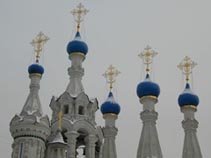
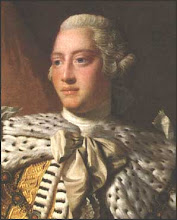
The Central Powers had won the First World War?
Showing posts with label World War I. Show all posts
Showing posts with label World War I. Show all posts
Saturday, June 17, 2023


Wednesday, May 06, 2020
Lusitania leaving New York for the last time
Original film footage shot at the Cunard pier on May 1, 1915. See also this post for background on the ship and numerous images of the liner.
Sunday, November 11, 2018
A War Story (reposted)
 One of the great cemeteries populated by the First World War
(I wrote this essay ten years ago but think it worth reposting.)
From my grandmother and my cousin Sarah Jane (memory eternal) I gleaned the story of my great-uncle Francis Guy (known as Guy in the family). He was one of the older children (14 in all) of my great-grandparents who lived in Endicott New York at the turn of the last century. My great-grandfather was by all accounts a good man, hard working and God fearing as they used to say in those days. But he also had a reputation for being stubborn with a "my way or the highway" mentality.
By contrast my uncle Guy was a shy youth in his middle teens who had been born with some minor disfigurement on his face to which no one really paid any notice other than him. But he was very self conscious about it. In 1914 my great grandfather wanted him to get a job at the local shoe manufacturing plant run by the Endicott Johnson company, then the biggest by far employer in my home town. Guy was perfectly OK with this. But he asked if he could set aside a small amount of his earnings to save for an operation which he felt would remove the offending birth mark. My great-grandfather said no. He was a man who believed that if you were born that way, it’s what God intended and that’s the end of it.
Well he was also not very diplomatic about it and there was an argument, a real barn burner by all accounts. When it was over an ultimatum was given to the boy; do as you’re told or get out and make your own way in the world. In the heat of anger and hurt Guy left home.
Now at this time what would become known as the Great War had just broken out in Europe. Guy like a lot of kids of his generation had rather romantic notions about war. The United States had not fought a really serious one in almost sixty years and memory dulls with time. With the United States still neutral and in need of a job Guy struck out for Canada where he enlisted in the Royal Canadian Army (Canada was part of the British Empire then). I am not sure if he lied about his age. He landed in the Princess Patricia Regiment which would gain great fame in the war. After preliminary training the regiment was shipped to England and then over to the continent where it joined up with the British Expeditionary Force holding the left wing of the Allied line with the Belgian Army in one of the few parts of Belgium not occupied by the Germans.
In February of 1915 during one of the innumerable back and forth battles near Ypres his unit assaulted the German trench works. The attack was repelled with the customary horrific casualties but Guy made it back to his own trench unharmed. When he looked back over the battlefield known as no man’s land between the opposing trench lines he saw amongst the human wreckage of war one of his close friends lying wounded. The odds of surviving in no man’s land were not good since neither side respected stretcher bearers or medics. The wounded were usually left to die. Guy leapt out of the relative safety of his trench and rushed forward to save his buddy. He reached him and under heavy fire dragged him back to the trench. After lowering the wounded soldier down Guy turned to drop down himself when he was shot in the stomach. He died several days later at a military hospital and was buried in one of the vast cemeteries near Ypres created by the carnage of the War to End All Wars.
My great-grandparents received the telegram while watching a silent movie at the local cinema house. The lights were turned on and half the town showed up to express their sympathy. The Canadian Army later (and retroactively) conferred the Military Medal on him posthumously which my great-grandmother was buried with. I am told that in Ottawa there is a book on display with the names of all of the dead of the Princess Patricia Regiment inscribed in it. A page is ceremoniously turned each day. On one of those pages is the name of an Irish-Catholic kid with a birth mark from a small town in upstate New York, Francis Guy Dwyer. Eternal rest grant unto him O Lord, and let perpetual light shine upon him.
The next worse thing to a battle lost, is a battle won.
-The Duke of Wellington
Old men declare war. But it is the young who must fight and die.
-Herbert Hoover
In Flanders Fields
By: Lieutenant Colonel John McCrae, MD (1872-1918)
Royal Canadian Army
IN FLANDERS FIELDS the poppies blow
Between the crosses row on row,
That mark our place; and in the sky
The larks, still bravely singing, fly
Scarce heard amid the guns below.
We are the Dead. Short days ago
We lived, felt dawn, saw sunset glow,
Loved and were loved, and now we lie
In Flanders fields.
Take up our quarrel with the foe:
To you from failing hands we throw
The torch; be yours to hold it high.
If ye break faith with us who die
We shall not sleep, though poppies grow
In Flanders fields.
Monday, January 08, 2018

Wednesday, October 04, 2017
The Madness of Saint Woodrow: Or, What If the United States Had Stayed out of the Great War?
On April 2, 1917, Woodrow Wilson rose before a joint session of
Congress to make the case for a declaration of war on Germany. Summoning
his considerable eloquence, Wilson intoned:
“the right is more precious than peace,” “make the world safe for
democracy,” “a universal dominion of right by a concert of free
peoples,” “America is privileged to spend her blood,” and, in a
conscious echo of Martin Luther, “God helping her, she can do no other.”
But the sentence that really proclaimed a global crusade was this:
The Truman Doctrine would be moderate by comparison.
During the Senate’s cursory two-day debate, William J. Stone (D-Mo.), chairman of the Foreign Relations Committee, warned that to enter this war would be “the greatest national blunder in history.” George W. Norris (R-Neb.) rejected Wilson’s rhetoric as moral gloss obscuring financial interests, declaring: “We are putting the dollar sign on the American flag.”
The noted Independent from Wisconsin, Robert “Fighting Bob” La Follette, rebutted the President’s arguments in a tearful address to his colleagues that lasted four hours. If, as Wilson said, Germany was waging a war against all of humanity, how come the United States was the only neutral nation to object? If, as Wilson said, this was a war to make the world safe for democracy, how come the British refused it to the peoples of Ireland, India, Egypt? If, as Wilson said, the United States meant to wage war on a militaristic government and not on the German people, how come more Germans supported their Kaiser than Americans had voted for Wilson in 1916?
Nevertheless, the Congress, which had bowed to the White House on issues of war and peace ever since 1812, did so again. To be sure, the Senate voted 82 to 6 in favor of war on April 4, and the House, two days later, approved the war resolution 373 to 50, but British Ambassador Cecil Spring-Rice cabled back to London his judgment that the Americans had gone to war “with the greatest reluctance.”[1]
Read the rest here.
HT: Fr. David
But the sentence that really proclaimed a global crusade was this:
Neutrality is no longer feasible or
desirable where the peace of the world is involved and the freedom of
its peoples, and the menace to that peace and freedom lies in the
existence of autocratic governments backed by organized force which is
controlled wholly by their will, not by the will of their people.
During the Senate’s cursory two-day debate, William J. Stone (D-Mo.), chairman of the Foreign Relations Committee, warned that to enter this war would be “the greatest national blunder in history.” George W. Norris (R-Neb.) rejected Wilson’s rhetoric as moral gloss obscuring financial interests, declaring: “We are putting the dollar sign on the American flag.”
The noted Independent from Wisconsin, Robert “Fighting Bob” La Follette, rebutted the President’s arguments in a tearful address to his colleagues that lasted four hours. If, as Wilson said, Germany was waging a war against all of humanity, how come the United States was the only neutral nation to object? If, as Wilson said, this was a war to make the world safe for democracy, how come the British refused it to the peoples of Ireland, India, Egypt? If, as Wilson said, the United States meant to wage war on a militaristic government and not on the German people, how come more Germans supported their Kaiser than Americans had voted for Wilson in 1916?
Nevertheless, the Congress, which had bowed to the White House on issues of war and peace ever since 1812, did so again. To be sure, the Senate voted 82 to 6 in favor of war on April 4, and the House, two days later, approved the war resolution 373 to 50, but British Ambassador Cecil Spring-Rice cabled back to London his judgment that the Americans had gone to war “with the greatest reluctance.”[1]
Read the rest here.
HT: Fr. David
Thursday, April 06, 2017
100 Years Ago- The United States Declared War on the German Empire
One hundred years ago today, Congress voted to enter what was then the largest and bloodiest war in history. Four days earlier, President Woodrow Wilson had sought to unite a sharply divided populace with a stirring claim
that the nation “is privileged to spend her blood and her might for the
principles that gave her birth and happiness and the peace which she
has treasured.” The war lasted only another year and a half, but in that
time, an astounding 117,000 American soldiers were killed and 202,000
wounded.
Still,
most Americans know little about why the United States fought in World
War I, or why it mattered. The “Great War” that tore apart Europe and
the Middle East and took the lives of over 17 million people worldwide
lacks the high drama and moral gravity of the Civil War and World War II, in which the very survival of the nation seemed at stake.
World
War I is less easy to explain. America intervened nearly three years
after it began, and the “doughboys,” as our troops were called, engaged
in serious combat for only a few months. More Americans in uniform died
away from the battlefield — thousands from the Spanish flu — than with
weapons in hand. After victory was achieved, Wilson’s audacious hope of
making a peace that would advance democracy and national
self-determination blew up in his face when the Senate refused to ratify
the treaty he had signed at the Palace of Versailles.
But
attention should be paid. America’s decision to join the Allies was a
turning point in world history. It altered the fortunes of the war and
the course of the 20th century — and not necessarily for the better. Its
entry most likely foreclosed the possibility of a negotiated peace
among belligerent powers that were exhausted from years mired in trench
warfare.
Read the rest here.
Sunday, May 24, 2015
A War Story
One of the great cemeteries populated by the First World War(I wrote this essay several years ago but think it worth reposting.)
From my grandmother and my cousin Sarah Jane (memory eternal) I gleaned the story of my great-uncle Francis Guy (known as Guy in the family). He was one of the older children (14 in all) of my great-grandparents who lived in Endicott New York at the turn of the last century. My great-grandfather was by all accounts a good man, hard working and God fearing as they used to say in those days. But he also had a reputation for being stubborn with a "my way or the highway" mentality.
By contrast my uncle Guy was a shy youth in his middle teens who had been born with some minor disfigurement on his face to which no one really paid any notice other than him. But he was very self conscious about it. In 1914 my great grandfather wanted him to get a job at the local shoe manufacturing plant run by the Endicott Johnson company, then the biggest by far employer in my home town. Guy was perfectly OK with this. But he asked if he could set aside a small amount of his earnings to save for an operation which he felt would remove the offending birth mark. My great-grandfather said no. He was a man who believed that if you were born that way, it’s what God intended and that’s the end of it.
Well he was also not very diplomatic about it and there was an argument, a real barn burner by all accounts. When it was over an ultimatum was given to the boy; do as you’re told or get out and make your own way in the world. In the heat of anger and hurt Guy left home.
Now at this time what would become known as the Great War had just broken out in Europe. Guy like a lot of kids of his generation had rather romantic notions about war. The United States had not fought a really serious one in almost sixty years and memory dulls with time. With the United States still neutral and in need of a job Guy struck out for Canada where he enlisted in the Royal Canadian Army (Canada was part of the British Empire then). I am not sure if he lied about his age. He landed in the Princess Patricia Regiment which would gain great fame in the war. After preliminary training the regiment was shipped to England and then over to the continent where it joined up with the British Expeditionary Force holding the left wing of the Allied line with the Belgian Army in one of the few parts of Belgium not occupied by the Germans.
In February of 1915 during one of the innumerable back and forth battles near Ypres his unit assaulted the German trench works. The attack was repelled with the customary horrific casualties but Guy made it back to his own trench unharmed. When he looked back over the battlefield known as no man’s land between the opposing trench lines he saw amongst the human wreckage of war one of his close friends lying wounded. The odds of surviving in no man’s land were not good since neither side respected stretcher bearers or medics. The wounded were usually left to die. Guy leapt out of the relative safety of his trench and rushed forward to save his buddy. He reached him and under heavy fire dragged him back to the trench. After lowering the wounded soldier down Guy turned to drop down himself when he was shot in the stomach. He died several days later at a military hospital and was buried in one of the vast cemeteries near Ypres created by the carnage of the War to End All Wars.
My great-grandparents received the telegram while watching a silent movie at the local cinema house. The lights were turned on and half the town showed up to express their sympathy. The Canadian Army later (and retroactively) conferred the Military Medal on him posthumously which my great-grandmother was buried with. I am told that in Ottawa there is a book on display with the names of all of the dead of the Princess Patricia Regiment inscribed in it. A page is ceremoniously turned each day. On one of those pages is the name of an Irish-Catholic kid with a birth mark from a small town in upstate New York, Francis Guy Dwyer. Eternal rest grant unto him O Lord, and let perpetual light shine upon him.
The next worse thing to a battle lost, is a battle won.
-The Duke of Wellington
Old men declare war. But it is the young who must fight and die.
-Herbert Hoover
In Flanders Fields
By: Lieutenant Colonel John McCrae, MD (1872-1918)
Royal Canadian Army
IN FLANDERS FIELDS the poppies blow
Between the crosses row on row,
That mark our place; and in the sky
The larks, still bravely singing, fly
Scarce heard amid the guns below.
We are the Dead. Short days ago
We lived, felt dawn, saw sunset glow,
Loved and were loved, and now we lie
In Flanders fields.
Take up our quarrel with the foe:
To you from failing hands we throw
The torch; be yours to hold it high.
If ye break faith with us who die
We shall not sleep, though poppies grow
In Flanders fields.
Wednesday, May 06, 2015
Remembering the Lusitania (repost from 2013)

Today I want to pay tribute to the ship itself.
At the turn of the 20th century steam ships were what connected the globe in the way airplanes do today. Then as now speed, and for those who could afford it, comfort were paramount. Lusitania was a product of the intense rivalry between Germany and Great Britain in the decades preceding the Great War. Through most of the 19th century Britain had held a more or less unchallenged position as the world's principal maritime power, both in terms of her navy and her commercial fleet. This changed with the accession of Kaiser William II who was a huge maritime enthusiast. Quickly he began dedicating significant resources towards challenging Britain's supremacy, and in 1897 this paid off with the launch of the Kaiser Wilhelm der Grosse. Germany's new Atlantic gray hound stunned Britain and the world by seizing the record for the fastest crossing and with her four giant funnels she established a new era in which the "four stacker" became synonymous with size, speed, luxury and safety.
For the next ten years, while Britain fumed, the Germans built a seemingly endless series of ships, each bigger faster and more luxurious than the one before, and they had a monopoly on the coveted "Blue Riband." Adding insult to injury, on the other side of the Atlantic the great American financial wizard J. P. Morgan had set his eyes on establishing a monopoly over transatlantic shipping. In 1902 his new conglomerate, the International Mercantile Marine, absorbed the White Star Line, then the second largest British shipping company.
This turned British annoyance into outright alarm.
Wasting little time, the Cunard Line, Britain's largest shipping firm and White Star's chief rival, quickly warned the British government that they too might be bought out unless something drastic changed. Such an eventuality was unthinkable and the Admiralty quickly approved a huge loan to Cunard that was to be used to build two new transatlantic liners. But there were conditions attached. The ships had to be fast and they had to be built to naval specifications in case they were needed in a war.
With cash in hand Cunard set about planning the construction of two ships so revolutionary they would effectively end the transatlantic speed race for two decades. Those ship's were the Lusitania and her sister ship the Mauritania. They were built in different yards and fitted out separately including in their decor. But in terms of their engineering and general layout the two were near twins.
Lusitania was finished first and in 1907 on her second voyage she smashed the German speed record and seized the Blue Riband. In 1908 the Mauritania took the record and excepting a brief period in 1909 when Lusitania regained it, she would prove to be the slightly faster of the twin steamers.
When completed Lusitania was 787 feet long and 87 feet wide with the requisite four stacks. She had a gross registered tonnage of 31,500 tons that propelled by four brand new and very revolutionary turbine engines geared to four screws could move her at the near blinding speed of 28 knots with a service speed of 25 knots. The race for speed records was over and Lusitania's slightly faster sister would hold the record unchallenged from 1909 to 1928. Externally her appearance was such that she resembled an oversized racing yacht with her raked back funnels and sleek lines. Mauritania by contrast had a rather cluttered appearance on her top decks owing to a large number of ventilation funnles. On the Lusitania these were designed to be smaller and blend in more with the overall appearance of the ship.
But Lusitania had a flaw. When she left for her first sea trials the engines caused a severe vibration in the back of the ship which was intended for the second class passengers. The ship was redocked and major changes were made to her second class accommodations to reduce the vibration. Later in her career she would twice have additional adjustments made to her propellers to further reduce it. Even so, the vibration, while greatly diminished, was never completely conquered.
More so than in their outer appearance, it was in their interiors that the two ship's were most distinguished from one another. While their layout was nearly identical the Lusitania had a lighter and somewhat more informal air about her. Mauritania on the other hand was very much furnished in the classical Edwardian style with tons of dark wood paneling In this respect Lusitania was somewhat more progressive in her decor.
What follows are some photographs of a ship universally regarded as one of the great liners. Sadly most of the images are black and white which generally fail in conveying the elegance of her interior accommodations. One simply cannot grasp the often bright and very colorful decor in her public rooms and cabins. Most of the pictures are large and detailed but the blog automatically reduces them so they fit. Click on the images to enlarge them.
Lusitania being launched.


During sea trials.

Arriving in New York on her maiden voyage.


This a massive and very detailed panoramic photo of her arrival in New York in September 1907. The contrast between the sleek modern liner and the sea of horse drawn cabs waiting on the pier is stark. You will definitely need to enlarge the photo.

After a rough crossing. Note the paint has been blasted off her by the North Atlantic.

Scenes from the boat deck. As originally configured the Lusitania, like most steamers of the period, carried the minimum number of lifeboats required by law. That was sixteen, four less than what the Titanic carried in 1912. After the Titanic disaster additional lifeboats were added for everyone on board. But many were of the "some assembly required" kind. And they proved utterly useless when needed in a hurry on May 7th 1915.


The first class dining room. There were two tiers and a stained glass dome.


Some views of the lounge and music room.


The first class entrance foyer with stairs and electric elevator.


The first class foyer off the Promenade deck.

The promenade deck. During Atlantic crossings, weather permitting, the deck was filled with passengers lounging in steamer chairs. Tea and bullion were served on trollies every day at four.

First class smoking room. Sorry ladies. Gentlemen only please.


First class reading and writing room. Quiet please.

Second class entrance foyer.

Second class dining room. While the cabins (see below) in the second class were much smaller than in first, the public rooms were well appointed and quite comfortable. The passengers here also enjoyed generally very good food (see the menu below). For many years Cunard openly advertised that second class was the best way to travel for the money.

Second class lunch menu. Click to enlarge and read.

Second class lounge.


Second class smoking room. Again, men only.

Second class ladies withdrawing room.

The purser's office.

The verandah cafe. There were huge sliding glass doors that were opened to the back of the first class promenade deck when the weather was agreeable.

Some views of first class state rooms.


First class state room deluxe with adjoining bedrooms.


Some views of the two first class regal suites. These came with such astonishing amenities as separate bedrooms, a sitting room/parlor, a private dining room, a trunk room and room (probably closet sized) for one's personal servants. And the ultimate in sea going luxury for which one would pay out the nose... a private en suite water closet and bathroom. Prior to the Second World War private bathrooms were a rare, and expensive luxury at sea. Even millionaires typically had to put on their slippers and bathrobe when nature called in the middle of the night and hoof it down the hall. Those wishing to take a bath would first have to make an appointment with the ship's bath steward. These rooms also had sinks with both hot and cold running water. Most staterooms had only cold water. Hot water for shaving or washing up was delivered at appointed times, usually in the morning and when the dressing gong was sounded for dinner. It could also be requested at anytime via your cabin steward.


A second class cabin. Unlike in first class those traveling in the second class got rooms that were small and would be considered cramped by today's standards. Typically they came with the more traditional berths and in a two berth cabin one would see a small sofa and a chair. They also had a sink with running water, an armoire, and space to stow a couple of suitcases or a small trunk. In those days people often traveled with more than they do today. But on a ship space was limited so you would tag all of your luggage before boarding indicating "wanted" or "not wanted." Not wanted was sent to the baggage hold until arrival. Also in second class you were likely to be sharing your cabin with someone unless you booked all of the berths. These cabins were usually two or four berths (for families traveling together). Bed curtains on ships of this period were more than decorative. They also served to offer some privacy if you were sharing your cabin and even in first class they helped keep the heat in and the chill out. Outside of the public rooms, central heating was rare on pre Great War ships. And the North Atlantic is notoriously unpleasant most of the year. Passengers embarking on a transatlantic voyage were well advised to pack warm clothes and long underwear even in the summer.

Third class cabin. Contrary to popular belief it was the third class or "steerage" who provided the profit for the big steamship companies in the pre-war years. They required the least service and the fewest amenities and could be packed in to much more cramped spaces. On the Lusitania the third class cabins were generally quite spartan but still liveable. There were no dormitory style steerage quarters. All third class passengers had cabins which had between two and six berths. Each cabin had a sink with running water. As in the second class, you could pretty much guarantee that you were going to have roommates. Also there were no "bath" facilities on most ships for the third class though Lusitania did have generally decent lavatory and washrooms.

Third class dining room. The dining room was located forward and meals were served in two sittings. Food in the third class was generally edible and for many probably better than what they were used to. Unlike in some other immigrant ships of the period, here the third class appear to have been treated as paying customers rather than human cargo. They ate off real plates, with flatware and actual glasses for drinking. It wasn't first class but they were treated better than most immigrants during that time. The third class also had their own smoking room, ladies room and a piano in the dining room which doubled as a social hall in the evenings.

The officer's lounge and smoke room.

The bridge and wheelhouse.

The great liner today.

Subscribe to:
Posts (Atom)