Showing posts with label conversion. Show all posts

Thursday, April 23, 2026

Pew Research: Trends in religious conversions

Christianity has experienced some of the largest losses from religious switching of any faith group around the world, according to our 2024 surveys. Religious switching refers to when people identify with a different religion in adulthood than they were raised in as a child.

Within Christianity, however, religious switching has affected the two largest subgroups – Catholicism and Protestantism – differently:

*Catholicism has lost more people than it’s gained in nearly all countries that we surveyed.
*Protestantism has seen a net gain from switching in nearly as many places as it has seen a net loss.

Here we take a closer look at religious switching into, out of, and between Catholicism and Protestantism, based on Pew Research Center surveys in 24 countries...

Read the rest here.

Sunday, January 05, 2025

In Kosovo a Return to Christianity

The Catholic priest stood at the altar in the hilltop church for the mass baptism, dunking dozens of heads in water and tracing a cross with his finger on each forehead.

Then he rejoiced at Christianity’s recovery of souls in a land where the vast majority of people are Muslim — as the men, women and children standing before him had been.

The ceremony was one of many in recent months in Kosovo, a formerly Serbian territory inhabited largely by ethnic Albanians that declared itself an independent state in 2008. In a census last spring, 93 percent of the population professed itself Muslim and only 1.75 percent Roman Catholic.

A small number of ethnic Albanian Christian activists, all converts from Islam, are urging their ethnic kin to look to the church as an expression of their identity. They call it the “return movement,” a push to revive a pre-Islamic past they see as an anchor of Kosovo’s place in Europe and a barrier to religious extremism spilling over from the Middle East.

Until the Ottoman Empire conquered what is today Kosovo and other areas of the Balkans in the 14th century, bringing with it Islam, ethnic Albanians were primarily Catholics. Under Ottoman rule, which lasted until 1912, most of Kosovo’s people switched faiths.

By reversing that process, said Father Fran Kolaj, the priest who carried out the baptisms outside the village of Llapushnik, ethnic Albanians can recover their original identity.

Read the rest here.

Tuesday, December 03, 2024

NY Post: Young men converting to Orthodoxy in droves

Not sure what to make of this. Always good news when people are converting of course. But the article sounds like it is heavily based on anecdotal evidence. FWIW, I've also noticed an uptick in converts.

HT: Dr. Tighe

Thursday, January 04, 2024

For the record

The actor Shia LaBeouf has reportedly converted into the Catholic Church. LaBeouf apparently was drawn to Catholicism while playing the title role in a biopic about the late Padre Pio (recognized as a saint in the Roman Church). He has reportedly expressed a strong attachment to an antiquated form of liturgy that is not held in high regard by the current occupant of the Chair of Peter. 

Tuesday, September 28, 2021

Washington Post: In the heart of Latin America, large numbers of indigenous people are converting to Orthodox Christianity

When the clergy and seminarians of the St. Andrew’s Seminary in Aguacate, Guatemala, roll into town they have their work cut out for them. 

“On day one, we did the liturgy, 10 baptisms, and seven chrismations,” explained the Fr. Thomas Manuel, an Orthodox Christian priest. “Then the next day, we did another visit, we had nine confessions, the Divine Liturgy, four chrismations, three weddings and a baptism.”

The men’s workload is their own doing. Established only a decade ago in a country traditionally dominantly Roman Catholic, Guatemala’s Orthodox Christian community is so successful that its few clergy are in a constant state of being overwhelmed...

...Estimates of how many converts there are vary widely. Claims that the community numbers more than 100,000 seem exaggerated: The last time the Eastern Orthodox Church saw a mass conversion on such a scale, it was the pagan Slavs of Kievan Rus, a precursor to the Russian Empire in the 9th century. Manuel is far more conservative, putting the total between 10,000 to 15,000 at most.

What’s inarguable is that in the last decade, Orthodox Christian communities have popped up in some 120 villages across northern Guatemala and southern Mexico. The largest is in Aguacate, where the seminary is located, with about 1,000 members. Most churches draw closer to 100.

“It’s still a pretty staggering number of people,” said Manuel, a U.S.-trained missionary who relocated to Guatemala with his family to help build the community into a self-sufficient parish of the Ecumenical Patriarchate of Constantinople. Even if you put it at 8,000, or 10,000, you know, that’s still a huge population of people that go from one tradition to another overnight.”

There are only five native priests to serve the community, including their vicar, Fr. Evangelios Pata, but Manuel is hard at work training more. 

Read the rest here.

Friday, September 03, 2021

Anglican Bishop Swims the Tiber

A Church of England bishop who opposed women priests has defected to the Roman Catholic church amid speculation it was not “spiritual” or “orthodox” enough for him. 

Bishop Jonathan Goodall, the Bishop of Ebbsfleet, has been a provincial episcopal visitor, known as a “flying bishop”, since 2013, supporting congregations in the Church of England that are unable to accept the ministry of women as priests or bishops.

However, on Friday afternoon he announced that “after a long period of prayer, which has been among the most testing periods of my life”, he was quitting to defect to Catholicism. 

The exact reasons for his departure remain unknown. However, a source close to the Bishop, who has been away on retreat until this week, claimed that he was unhappy with the direction of the Church regarding its spirituality, orthodoxy and allowing of same-sex unions. 

Read the rest here. 

Tuesday, March 02, 2021

Israeli Says Converts to Non-Orthodox Judaism Can Claim Citizenship

JERUSALEM — The question of who is and isn’t a Jew has always been a subject of debate within Israel. Since the state was founded, the government has largely deferred to Orthodox Jewish authorities, who do not view converts to more liberal forms of Judaism as Jewish.

But on Monday, the Israeli Supreme Court struck a symbolic blow for a more pluralistic vision of Jewish identity: It granted the right to automatic citizenship to foreigners who convert within the state of Israel to Conservative, also known as Masorti, or Reform Judaism.

The decision was mainly symbolic because typically, only 30 or 40 foreigners convert to Reform or Masorti Judaism in Israel every year, according to the Israel Religious Action Center, the rights group that led efforts to obtain the court ruling.

But the ruling chips away some of the monopoly Orthodox rabbis have held over questions of religious identity that are central to frictions within Israeli society. It also inflames a long-running debate about the relationship between Israel’s civil and religious authorities — and particularly the role of the Supreme Court.

The Israeli right has portrayed the court as a bastion of the country’s secular and liberal elite, acting without democratic legitimacy. And though the court delayed ruling in this case for years, hoping Parliament would vote on it instead, the court’s critics were already making political capital from the decision on Monday night.

The party of Prime Minister Benjamin Netanyahu, a regular antagonist of the Israeli courts who is on trial on corruption charges, swiftly cited the decision as a reason to vote for the party and “ensure a stable right-wing government that will restore sovereignty to the people.”

Israel’s “Law of Return” gives foreign-born Jews, or anyone with a Jewish parent, grandparent or spouse, the automatic right to claim Israeli citizenship. Those who convert to non-Orthodox Judaism in another country have been able to gain Israeli citizenship for decades.

Read the rest here.

Thursday, February 04, 2021

Against (re)Baptizing Converts

A cogent argument against the practice of receiving Roman Catholic and Trinitarian Protestant converts by baptism. I have been and remain ambivalent on this subject and am happy to defer to whatever my bishop says. 

P.S. See also this. 

Wednesday, April 10, 2019

The National Catholic Register on the manner of receiving Orthodox converts to Catholicism

WASHINGTON — With every Lent, Catholic parishes enter into the final stretch of preparing people for full initiation into the Catholic Church at the Easter vigil.

But parishes that have Orthodox preparing to become Catholic through the Rite of Christian Initiation for Adults need to make sure they do not end up invalidly re-baptizing and re-confirming fully initiated Christians, who only need to make a profession of the faith in order to become part of the Catholic communion.

“When they’re in RCIA, it’s problematic,” said Paulist Father Ron Roberson, associate director of the Secretariat for Ecumenical and Interreligious Affairs at the U.S. Conference of Catholic Bishops.

Father Roberson explained that the Catholic Church recognizes the validity of the sacraments of the Eastern Orthodox, Oriental Orthodox, and Assyrian Church of the East Christians. These Churches all confer the sacraments of initiation — baptism, chrismation (or confirmation) and first Eucharist — at the same time, even at infancy. Unlike Protestant Christians, Orthodox and Assyrian Church Christians are fully initiated and profess the same Creed as Catholics. Father Roberson said it would be “extremely inappropriate” for a Catholic parish to attempt to re-baptize or re-confirm them.

“They really don’t need to go through RCIA at all,” he said. However, he said Orthodox coming into communion with the Catholic Church might find RCIA beneficial as a vehicle for Catholic catechesis, depending on their level of education in the Catholic faith.

Father Roberson said the ecumenical dialogues between the Catholic Church and the Eastern Orthodox, Oriental Orthodox, and Assyrian Church have made substantial progress in coming to doctrinal agreement, but the “lynchpin of disagreements” is still the role and exercise of papal primacy.

Katherine Hayes, a member of St. Barbara’s Melkite Catholic mission in Houston, told the Register that she came into communion with the Catholic Church in 2003, her senior year of high school. Hayes came from the Antiochian Orthodox Church and transferred into the corresponding Melkite Greek Catholic Church, after a Latin Rite Catholic priest and canon lawyer informed her about the Eastern Catholic Churches, which are co-equal to the Latin Church and united by communion with the Pope. He showed Hayes that she could maintain her faithfulness to the Orthodox tradition and teaching “in communion with Rome and still have the Divine Liturgy.”

Because there was no Melkite Greek Catholic Church at the time in her area, Hayes said her formal reception into the Catholic Church took place at the local Latin Rite parish. Because she was already a fully initiated Christian (having received a valid baptism, chrismation and Eucharist as an infant) Hayes did not need to go through RCIA. Hayes came into Catholic communion on Holy Thursday 2003 by making a profession of the Catholic faith through reciting the Creed.

Read the rest here.

No incendiary comments please. We have our own guidelines for receiving Catholics into the Church.

Tuesday, April 11, 2017

For the record...

Noted evangelical Hank Hanegraaf, aka "the Bible answers man," along with his wife and two of his twelve(!) children were received into the Church on Palm Sunday. Predictably the blogosphere has lit up with commentary on this event. And also predictably, much of that commentary has ranged from highly critical to scathing.

And ye shall be hated of all men for my name's sake: but he that shall endure unto the end, the same shall be saved.
-Mark 13:13

Many years!

Wednesday, February 10, 2016

ROCOR and the "Catholic Church of the East" - It's not looking good

OK, it is all over the web. And since it has been the topic of discussion on multiple recent posts on this blog... here is the latest, less some of the more salacious details. The hoped for reception of the self identified Catholic Church of the East into Holy Orthodoxy has hit a major speed bump and is now in doubt. Metropolitan Hilarion is directly involved and dealing with the situation.

Let's keep the comments classy and avoid unnecessary gossip. Prayers for all involved would be appreciated.

Friday, February 05, 2016

Statement from Metropolitan Hilarion regarding the Conversion of the "Catholic Church of the East" to Orthodoxy

Over the past several months, the leader of an independent church movement called the "Catholic Church of the East," the former Archbishop Ramzi Mussalam, has begun a remarkable transition: to bring his entire movement, of over 60 parishes, into the Russian Orthodox Church Outside of Russia (ROCOR). The former archbishop was received into the Orthodox Church and ordained a deacon and priest with the encouragement and blessing and by the hand of Metropolitan Hilarion, ROCOR’s First Hierarch. The former archbishop is now Hieromonk Elias. Father Elias grew up in the Scranton area of Pennsylvania as a communicant of the Polish National Catholic Church, in which he was ordained to the priesthood.

The process of Orthodox catechization has now commenced, with the gradual reception of the former clergy and faithful of the "Catholic Church of the East" into Orthodoxy, with their regularization within the canonical embrace of the Orthodox Church. It is expected that this will be a long and complex process but one of that will bear an abundant spiritual harvest. A number of parishes have already been received: St. Irene Church in Pittston, PA; St. Ann Church in Pottsville, PA and St. Mark Church in Milford, CT.

Let us welcome these people with joy and do all that we can to help them integrate into the Orthodox community. Let us give thanks to God that He has led Fr. Elias and his faithful people into Orthodoxy.

Source

Thanks to blog reader Thundercat for the link.

Thursday, November 19, 2015

The Missionary Vision of the Martyred Fr. Daniel Sysoev

By all accounts, Fr. Daniel Sysoev was a powerful and effective missionary priest. According to his missionary companion and close friend, Prof. Yuri Maximov (now Priest Giorgy Maximov.—O.C.), Fr. Daniel turned “around 500 Protestants” to Orthodoxy and personally “baptized more than 80 Muslims” in his fourteen years of ordained ministry.1 He built a church community and mission center in an immigrant district in Moscow and had great success reaching persons of various ethnicities, nationalities, religions, and social classes.2 As a direct result of his efforts, and in accordance with his express desire and sense of calling, he crowned his ministry with martyrdom, being shot in the nave of his own church on the night of November 19, 2009...


...Fundamentally, Fr. Daniel’s missionary activity found its most basic principle in an extreme faith in the reality of eternal life and eternal judgment. When viewed from the perspective of an eternal destiny, actions in this present life gain a new significance; temporal life becomes “a school” where the human being is to prepare himself for “true life,” which “begins after the Final Judgment.”5 As such, it behooves every Christian to intentionally live a life that prepares him for eternity and to continually meditate on the transitoriness of earthly life and the inevitability of facing death and judgment.

 While Jesus has “earned paradise for us” by his death on the Cross and Orthodox Christians have “receive[d] salvation as a gift through baptism,” they still need to “assimilate” its reality to themselves by living a Christian life that is characterized by continual repentance, frequent Communion, and the performance of “good deeds”, which fulfill Christ’s commandments.7 If the Christian does not busy himself with repentance and thereby assimilate the salvation of baptism to himself, he runs the risk of his post-baptismal sin becoming a sort of “second nature” which would sever him from Christ and make him “incapable of entering into eternity.”8

Following a common interpretation of the writings of St. Cyprian of Carthage, Fr. Daniel taught that, “outside the Church there is no salvation,” and anyone who does not “come into the Orthodox Church will perish forever.”9 In his view, this included anyone who was outside of the formal boundaries of the Orthodox Church, including Roman Catholics, Protestants, and Old Ritualists.10 (Indeed, so strong was his view on this subject, that he claimed that “heresy” and “schism” were the only sins that a martyric death would not “wash... away.”11)


Read the rest here.

Saturday, March 07, 2015

Journeys

Life is not for the faint of heart. It is a journey with lots of pitfalls, and speed-bumps. And sometimes there are detours. Anyone who has ever made the difficult decision to change their ecclesial affiliation will understand the many special challenges that come with that choice. It can be even more difficult when the switch is from one confession to another that is in the minds of many, so very similar.

And then there are the doubts. I'm not sure if I've ever met a convert to Orthodoxy who hasn't been plagued by them at least occasionally. I certainly have. If your lucky, you work your way through them. If not, you might end up hitting a speed bump or taking one of the aforementioned detours. It happens. One can never judge because each of us wrestles with the demons in our own way. The temptations to this or that sin, passion, or doubt may be different for each of us, but we all fight the same battle. In the end we can only pray and then do what we think is right, as God gives us the light to discern right from wrong and beg God's mercy when we fall.

Tonight, I have been given a very powerful and humbling reminder of that courtesy of Owen White for which I am deeply grateful.

Monday, September 15, 2014

Old news

It's old news but I haven't seen it mentioned outside of the Byzantine Forum...

Fr. Constantin Simon, SJ, former vice-rector of the Pontifical Oriental Institute in Rome, and author of several articles and books on Russian Christianity, has been received into the Orthodox Church.

HT: Blog reader Ordo Antiquus 

Monday, September 30, 2013

Rod Dreher is not going back to Rome

Pope Francis has apparently not impressed him. Why an Orthodox Christian would consider the particular policies of a given Pope in terms of remaining in The Church escapes me. But in any event he is remaining Orthodox. His piece is something of an indictment of the problems of the post Vatican II Roman Church that even Fr. Z found compelling. But not surprisingly he has drawn sharp criticism from more than a few corners of the Catholic blogosphere and their attendant comboxes. For the record I am not offended by that kind of criticism. If you fire a full broadside at someone's church you can't cry foul if they shoot back, though some of the commentary was snarky and personal.

But while if you have serious problems with your church, that may or may not be a good reason for leaving (circumstances depending), I am somewhat confused by Rod’s decision to leave the Roman Church. Did he leave because it has become a nest of modernist liberals? Or was it because he became convinced the Roman Catholic Church is heretical in its teachings? The latter is a good reason for leaving, the former is more doubtful.

And then there is the question of why Orthodoxy? Whatever your reason for leaving your previous confession, you need to be “all in” when you join a Church (as opposed to ‘church’), that like Rome, claims to be The One Holy Catholic and Apostolic Church spoken of in the Creed. I am not getting this from his piece. One needs to be careful when judging or impugning the motives of others. But if he joined the Orthodox Church because he wanted the Catholic Church without all of the liberal crap, then he did so for the wrong reasons.

Obviously, I am Orthodox and a former Catholic. And while the over the top liberal craziness did not make my decision to leave any harder, in the end I left the Roman Church because I became convinced over time that it was wrong on a number of important doctrinal points. Orthodoxy’s initial attraction was its magnificent liturgical rites and sound moral teachings. But I did not enter until I became convinced of the truths of Holy Orthodoxy.

I would have felt a little better if I had gotten that message from Rod. In the end though all we can do is to try and do right as God gives the light to discern right from wrong. Beyond that, we are all under that Great Mercy that none of us deserves, and without which we are all doomed.

HT: Ordo Antiquus

Tuesday, June 05, 2012

Rod Dreher: My Church is better than your church

Substantively that is the point of this essay, though in fairness he isn't obnoxious about it. Owen the Ochlophobist didn't like it, which I suspect for some will come as a recommendation. For my part I thought it was OK but am not wild about the emphasis on "conservative" that he applies. It left the impression (possibly I am misreading it) that he means cultural conservatives in the neo-con context which I have no use for. The extent of the Church's involvement with politics should be anointing the monarch (long accepted as a sacrament) and reprimanding the monarch if they are behaving badly or abusing their power. Once you get past that I become very leery when those whose job is to guide us on the path to theosis start getting wrapped up in the affairs of the world. Are there exceptions? Yes. Abortion is an absolute moral evil and the Church has a right and duty to say as much. But such exceptions are few and far between. In general the Church should stay clear of politics.

Wednesday, December 07, 2011

John Hepworth: Why the surprise?

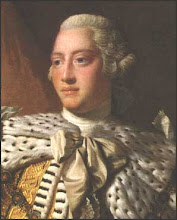
Archbishop John Hepworth of the Traditional Anglican Communion (TAC) is once again creating quite a stir among both Roman Catholics and traditionally minded Anglicans on the blogosphere.  For those not familiar with his background Hepworth started out as a Roman Catholic.  He was ordained as a priest in that church in the late 1960's but in 1976 he became an Anglican and was accepted as a minister/priest in the Anglican Church of Australia.  In this capacity he continued until 1982* (1992) when he was received into one of the so called "continuing Anglican" churches.  Not long after he was made a bishop in their church and eventually succeeded as the primate of the TAC.  Subsequent to his Roman Catholic ordination he has been married, divorced, and married again.

In recent years Hepworth, has been instrumental in leading the TAC into the Roman communion.  Under his leadership the college of bishops voted to request full communion with Rome and each member then signed the Catechism Of the Catholic Church as a sign of their unconditional acceptance of Rome's magesterial authority and all of her doctrines and dogmas.  During this period Hepworth intimated that when the time came he was prepared to accept whatever role the Roman Church deemed right and appropriate for him, including that of a layman.

Now his work is bearing fruit.  Pope Benedict XVI has ordered the erection of an "Ordinariate" for Anglo-Catholics seeking full communion with the Holy See.  Guidelines have been issued and in several countries local Ordinariates have been, or are in the process of being, erected.  If perhaps there has not been an avalanche of Anglican conversions there have been more than a few, especially in traditionally Anglican countries like Great Britain and Australia.

In general the guidelines for receiving Anglican clergy appear to my mind to be fair and even to some degree generous.  But Rome has it's own rules and and also some doctrinal issues.  Recall those signatures on the Roman Catechism.

First, Roman Catholic canon law forbids the return to active ministry of their clergy once they leave for another church.  In other words once you are a Roman cleric, including their so called "minor orders," if you leave there is no coming back as a cleric.  You can return to Rome, but only as a layman.  A very few exceptions have been made over the years, but usually only when there are truly unusual or extenuating circumstances.*

Secondly Rome does not recognize the validity of divorce and remarriage.  Nor does it recognize the possibility of a valid marriage by someone bound by vows of celibacy.  This is so elementary it should not require serious discussion.

And yet it needs to be mentioned because there have been howls of astonishment in certain quarters over the fact that Archbishop Hepworth has been told by Rome that he will not be received back into their church as anything other than a laicized priest, and then presumably only after his irregular marital situation has been remedied.  All of which leads me to ask...

Why the surprise?  Seriously.  Anyone who did not see this coming has either been willfully blind or appallingly ignorant of what would be expected of persons entering the Roman Catholic Church.  Did they think they would just continue to be Anglicans, only now with the added benefit of being admitted to the sacraments of the Latin Church?  Rome has some standards and while there may be some give on a few things there is none on others.

I do not mean to be uncharitable or disparaging of John Hepworth.  But it is worth taking a look at his resume from a Catholic perspective for a moment.
  • Ordained a Roman Catholic priest.  Vowed obedience and celibacy among other things.
  • Left Rome and twice changed religions.
  • Married then divorced then remarried.
  • Has received Protestant orders as a "bishop."
  • Has claimed (credibly) sexual abuse by Roman Catholic priests.
How can anyone have realistically expected that a man with that background would be received into active ministry as a Catholic priest?

And now reinforcing to my mind Rome's judgment in this matter comes word that Hepworth has opted to remain outside the Roman Church to minister to those Anglicans not yet ready to make the leap!  So let's get this right.  He signed the Roman Catechism and affirmed each and every doctrine of that church.  He encouraged his clergy and lay flock to convert into the Roman Church.  He even persuaded the Pope to make special arrangements and concessions to facilitate large scale conversions by Anglicans.  And he indicated his understanding that when the time came he was prepared to make the move himself as a layman.  Now though, the moment having come and Rome's terms being made clear, he has refused to take the plunge.

I really am having a difficult time understanding the shock among Anglicans at Rome's refusal to receive him in any clerical capacity.  And I am equally having a difficult time grasping the surprise of Catholics that a man with his track record would balk when told he must live the remainder of his life as a layman and endure a painful process of sorting out his marital situation with no certain outcome.

Anyone shocked by recent events simply hasn't been paying attention.

*Corrections: See Dr. Tighe's comment in the combox (2nd from the top) for two corrections.