[Note from Ad Orientem: Sorry about the writing structure. Florovsky was not a big fan of paragraphs.]
Archpriest George Florovsky
"Ego vero Evangelio non crederem, ni si me catholicae Ecclesiae commoveret auctoritas." [Indeed, I should not have believed the Gospel, if the authority of the Catholic Church had not moved me]. St. Augustine, contra epist. Manichaei, I.1.
St. Vincent of Lerins and tradition
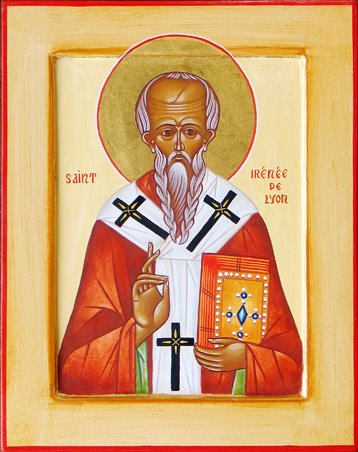
The famous dictum of St. Vincent of Lerins was characteristic of the attitude of the Ancient Church in the matters of faith: "We must hold what has been believed everywhere, always, and by all" [Commonitorium, 2]. This was at once the criterion and the norm. The crucial emphasis was here on the permanence of Christian teaching. St. Vincent was actually appealing to the double "ecumenicity" of Christian faith — in space and in time. In fact, it was the same great vision which had inspired St. Irenaeus in his own time: the One Church, expanded and scattered in the whole world, and yet speaking with one voice, holding the same faith everywhere, as it had been handed down by the blessed Apostles and preserved by the succession of witnesses: quae est ab apostolis, quae per successionem presbyterorum in ecclesiis custoditur. ["Which is being preserved in the Church from the Apostles through the succession of the presbyters."] These two aspects of faith, or rather — the two dimensions, could never be separated from each other. Universitas and antiquitas, as well as consensio, belonged together. Neither was an adequate criterion by itself. "Antiquity" as such was not yet a sufficient warrant of truth, unless a comprehensive consensus of the "ancients" could be satisfactorily demonstrated. And consensio as such was not conclusive, unless it could be traced back continuously to Apostolic origins. Now, suggested St. Vincent, the true faith could be recognized by a double recourse — to Scripture and Tradition: duplici modo … primum scilicet divinae legis auctoritate, tum deinde ecclesiae catholicae traditione. ["In two ways … first clearly by the authority of the Holy Scriptures, then by the tradition of the Catholic Church."] This did not imply, however, that there were two sources of Christian doctrine. Indeed, the rule, or canon, of Scripture was "perfect" and "self-sufficient" — ad omnia satis superque sufficiat. ["For all things complete and more than sufficient."] Why then should it be supplemented by any other "authority"? Why was it imperative to invoke also the authority of "ecclesiastical understanding" — ecclesiasticae intelligentiae auctoritas? The reason was obvious: Scriptures were differently interpreted by individuals: ut paene quot hominess tot illinc sententiae erui posse videantur. ["So that one might almost gain the impression that it can yield as many different meanings, as there are men."] To this variety of "private" opinions St. Vincent opposes the "common" mind of the Church, the mind of the Church Catholic: ut propheticae et apostolicae interpretationis linea secundum ecclesiastici et catholici sensus normam dirigatur. ["That the trend of the interpretation of the prophets and the apostolic writings be directed in accordance with the rule of the ecclesiastical and Catholic meaning."] Tradition was not, according to St. Vincent, an independent instance, nor was it a complementary source of faith. "Ecclesiastical understanding" could not add anything to the Scripture. But it was the only means to ascertain and to disclose the true meaning of Scripture. Tradition was, in fact, the authentic interpretation of Scripture. And in this sense it was co-extensive with Scripture. Tradition was actually "Scripture rightly understood." And Scripture was for St. Vincent the only, primary and ultimate, canon of Christian truth (Commonitorium, cap. II, cf. cap. 28).
The hermeneutical question in the Ancient Church
At this point St. Vincent was in full agreement with the established tradition. In the admirable phrase of St. Hilary of Poitiers, scripturae enim non in legendo sunt, sed in intelligendo. ["For Scripture is not in the reading, but in the understanding;" ad Constantium Aug., lib. II, cap. 9, ML X, 570; the phrase is repeated also by St. Jerome, Dial. c. Lucifer., cap. 28, ML XXIII, 190-191]. The problem of right exegesis was still a burning issue in the Fourth century, in the contest of the Church with the Arians, no less than it has been in the Second century, in the struggle against Gnostics, Sabellians, and Montanists. All parties in the dispute used to appeal to Scripture. Heretics, even Gnostics and Manichees, used to quote Scriptural texts and passages and to invoke the authority of the Holy Writ. Moreover, exegesis was at that time the main, and probably the only, theological method, and the authority of the Scripture was sovereign and supreme. The Orthodox were bound to raise the crucial hermeneutical question: What was the principle of interpretation? Now, in the Second century the term "Scriptures" denoted primarily the Old Testament and, on the other hand, the authority of these "Scriptures" was sharply challenged, and actually repudiated, by the teaching of Marcion. The Unity of the Bible had to be proved and vindicated. What was the basis, and the warrant, of Christian, and Christological, understanding of "Prophecy," that is — of the Old Testament? It was in this historical situation that the authority of Tradition was first invoked. Scripture belonged to the Church, and it was only in the Church, within the community of right faith, that Scripture could be adequately understood and correctly interpreted. Heretics, that is — those outside of the Church, had no key to the mind of the Scripture. It was not enough just to read and to quote Scriptural words — the true meaning, or intent, of Scripture, taken as an integrated whole, had to be elicited. One had to grasp, as it were in advance, the true pattern of Biblical revelation, the great design of God’s redemptive Providence, and this could be done only by an insight of faith. It was by faith that Christuszeugniss could be discerned in the Old Testament. It was by faith that the unity of the tetramorph Gospel could be properly ascertained. But this faith was not an arbitrary and subjective insight of individuals — it was the faith of the Church, rooted in the Apostolic message, or kerygma, and authenticated by it. Those outside of the Church were missing precisely this basic and overarching message, the very heart of the Gospel. With them Scripture was just a dead letter, or an array of disconnected passages and stories, which they endeavored to arrange or re-arrange on their own pattern, derived from alien sources. They had another faith. This was the main argument of Tertullian in his passionate treatise De praescriptione. He would not discuss Scriptures with heretics — they had no right to use Scriptures, as they did not belong to them. Scriptures were the Church’s possession. Emphatically did Tertullian insist on the priority of the "rule of faith," regula fidei. It was the only key to the meaning of the Scripture. And this "rule" was Apostolic, was rooted in, and derived from, the Apostolic preaching. C. H. Turner has rightly described the meaning and the intention of this appeal or reference to the "rule of faith" in the Early Church. "When Christians spoke of the ‘Rule of Faith’ as ‘Apostolic,’ they did not mean that the Apostles had met and formulated it … What they meant was that the profession of belief which every catechumen recited before his baptism did embody in summary form the faith which the Apostles had taught and had committed to their disciples to teach after them." This profession was the same everywhere, although the actual phrasing could vary from place to place. It was always intimately related to the baptismal formula [C. H. Turner, Apostolic Succession, in "Essays on the Early History of the Church and the Ministry," edited by H. B. Swete (London, 1918), pp. 101-102. See also Yves M. J. Cougar, O.P., La Tradition et les traditions, 11. Essai Théologique (Paris, 1963), pp. 21 ss]. Apart from this "rule" Scripture could be but misinterpreted. Scripture and Tradition were indivisibly interwined for Tertullian. Ubi enim apparuerit esse veritatem disciplinae et fidei christianae, illic erit veritas scripturarum et expositionum et omnium traditionum christianarum. ["For only where the true Christian teaching and faith are evident will the true Scriptures, the true interpretations, and all the true Christian traditions be found;" XIX. 3]. The Apostolic Tradition of faith was the indispensable guide in the understanding of Scripture and the ultimate warrant of right interpretation. The Church was not an external authority, which had to judge over the Scripture, but rather the keeper and guardian of that Divine truth which was stored and deposited in the Holy Writ [Cf. E. Flesseman-van-Leer, Tradition and Scripture in the Early Church (Assen, 1954), pp. 145-185; Damien van den Eynde, Les Normes de l’Enseignment Chrétien dans la litterature patristique des trois premiers siècles (Gembloux-Paris, 1933), pp. 197-212; J. K. Stirniman, Die Praescriptio Tertullians im Lichte des römischen Rechts und der Théologie (Freiburg, 1949); and also the introduction and notes of R. F. Refoulé, O.P., in the edition of De praescriptione, in the "Sources Chrétiennes," 46 (Paris, 1957)].
St. Irenaeus and the “Canon of Truth”
Denouncing the Gnostic mishandling of Scriptures, St. Irenaeus introduced a picturesque simile. A skillful artist has made a beautiful image of a king, composed of many precious jewels. Now, another man takes this mosaic image apart, re-arranges the stones in another pattern so as to produce the image of a dog or of a fox. Then he starts claiming that this was the original picture, by the first master, under the pretext that the gems (the ψηφιδες) were authentic. In fact, however, the original design had been destroyed — λυσας την υποκειμενην του ανθρωπου ιδεαν. This is precisely what the heretics do with the Scripture. They disregard and disrupt "the order and connection" of the Holy Writ and "dismember the truth" — λυοντες τα μελη της αληθειας. Words, expressions, and images —ρηματα, λεξεις παραβολαι —are genuine, indeed, but the design, the υποθεσις (ipothesis), is arbitrary and false (adv. haeres., 1. 8. 1). St. Irenaeus suggested as well another analogy. There were in circulation at that time certain Homerocentones, composed of genuine verses of Homer, but taken at random and out of context, and re-arranged in arbitrary manner. All particular verses were truly Homeric, but the new story, fabricated by the means of re-arrangement, was not Homeric at all. Yet, one could be easily deceived by the familiar sound of the Homeric idiom (1.9.4). It is worth noticing that Tertullian also refers to these curious centones, made of Homeric or Virgilian verses (de praescr., XXXIX). Apparently, it was a common device in the polemical literature of that time. Now, the point which St. Irenaeus endeavored to make is obvious. Scripture had its own pattern or design, its internal structure and harmony. The heretics ignore this pattern, or rather substitute their own instead. In other words, they re-arrange the Scriptural evidence on a pattern which is quite alien to the Scripture itself. Now, contended St. Irenaeus, those who had kept unbending that "canon of truth" which they had received at baptism, will have no difficulty in "restoring each expression to its appropriate place." Then they are able to behold the true image. The actual phrase used by St. Irenaeus is peculiar: προσαρμοσας τω της αληθειας σωματιω (prosarmosas to tis alithias somatio; which is clumsily rendered in the old Latin translation as corpusculum veritatis). But the meaning of the phrase is quite clear. The somatio is not necessarily a diminutive. It simply denotes a "corporate body." In the phrase of St. Irenaeus it denotes the corpus of truth, the right context, the original design, the "true image," the original disposition of gems and verses [Cf. F. Kattenbusch, Das Apostolische Symbol, Bd. II (Leipzig, 1900), ss. 30 ff., and also his note in the "Zeitschrift f. neutest. Theologie," x (1909), ss. 331-332]. Thus, for St. Irenaeus, the reading of Scripture must be guided by the "rule" of faith — to which believers are committed (and into which they are initiated) by their baptismal profession, and by which only the basic message, or "the truth," of the Scripture can be adequately assessed and identified. The favorite phrase of St. Irenaeus was "the rule of truth," κανων της αλιθειας (kanon tis alithias), regula veritatis. Now, this "rule" was, in fact, nothing else than the witness and preaching of the Apostles, their κηρυγμα (kirigma) and praedicatio (or praeconium), which was "deposited" in the Church and entrusted to her by the Apostles, and then was faithfully kept and handed down, with complete unanimity in all places, by the succession of accredited pastors: Those who, together with the succession of the episcopacy, have received the firm charisma of truth [IV. 26. 2]. Whatever the direct and exact connotation of this pregnant phrase may be [It has been contended that charisma veritatis was actually simply the Apostolic doctrine and the truth (of the Divine Revelation), so that St. Irenaeus did not imply any special ministerial endowment of the bishops. See Karl Müller, Kleine Beiträge zur alten Kirchengeschichte, 3. Das Charisma veritatis und der Episcopat bei Irenaeus, in "Zeitschrift f. neut. Wissenschaft," Bd. xxiii (1924), ss. 216-222; cf. van den Eynde, pp. 183-187; Y. M. J. Congar, O.P., La Tradition et ler traditions, Êtude historique (Paris, 1960), pp. 97-98; Hans Freiherr von Campenhausen, Kirchliches Amt und geistliche Vollmacht in den ersten drei Jahrhunderten (Tübingen, 1953), ss. 185 ff.; and also-with the special emphasis on the character of "Succession" — Einar Molland, Irenaeus of Lugdunum and the Apostolic Succession, in the "Journal of Ecclesiastical History," 1.1, 1950, pp. 12-28, and Le développement de 1’idée de succession apostolique, in the "Revue d’historie et de philosophie réligieuses," xxxiv.i, 1954, pp. 1-29. See, on the other hand, the critical remarks of Arnold Ehrhardt, The Apostolic Succession in the first two centuries of the Church (London, 1953), pp. 207-231, esp. 213-214], there can be no doubt that, in the mind of St. Irenaeus, this continuous preservation and transmission of the deposited faith was operated and guided by the abiding presence of the Holy Spirit in the Church. The whole conception of the Church in St. Irenaeus was at once "charismatic" and "institutional." And "Tradition" was, in his understanding, a depositum juvenescens, a living tradition, entrusted to the Church as a new breath of life, just as breath was bestowed upon the first man — (quemadmodum aspiratio plasmationis III. 24. 1). Bishops or "presbyters" were in the Church accredited guardians and ministers of this once deposited truth. "Where, therefore, the charismata of the Lord have been deposited (posita sunt), there is it proper to learn the truth, namely from those who have that succession of the Church which is from the Apostles (apud quos est ea quae est ab apostolis ecclesiae successio), and who display a sound and blameless conduct and an unadulterated and incorrupt speech. For these also preserve this faith of ours in one God who created all things, and they increase that love for the Son of God, who accomplished such marvellous dispensation for our sake, and they expound the Scriptures to us without danger, neither blaspheming God, nor dishonoring the patriarchs, nor despising the prophets" (IV. 26. 5).
The regula fidei
Tradition was in the Early Church, first of all, an hermeneutical principle and method. Scripture could be rightly and fully assessed and understood only in the light and in the context of the living Apostolic Tradition, which was an integral factor of Christian existence. It was so, of course, not because Tradition could add anything to what has been manifested in the Scripture, but because it provided that living context, the comprehensive perspective, in which only the true "intention" and the total "design" of the Holy Writ, itself of Divine Revelation, could be detected and grasped. The truth was, according to St. Irenaeus, a "well-grounded system," a corpus (adv. haeres. II. 27. 1 — veritatis corpus), a "harmonious melody" (II. 38. 3). But it was precisely this "harmony" which could be grasped only by the insight of faith. Indeed, Tradition was not just a transmission of inherited doctrines, in a "Judaic manner," but rather the continuous life in the truth [Cf. Dom Odo Casel O.S.B., Benedict von Nursia als Pneumatiker, in "Heilige Überlieferung" (Münster, 1938), ss. 100-101: Die heilige Überlieferung ist daher in der Kirche von Anfang an nicht bloss ein Weitergeben von Doktrinen nach spätjudischen (nachchristlicher) Art gewesen, sondern ein lebendiges Weiterblühen des göttlichen Lebens. In a footnote Dom Casel sends the reader back to John Adam Möhler]. It was not a fixed core or complex of binding propositions, but rather an insight into the meaning and impact of the revelatory events, of the revelation of the "God who acts." And this was determinative in the field of Biblical exegesis. G. L. Prestige has well put it: "The voice of the Bible could be plainly heard only if its text were interpreted broadly and rationally, in accordance with the apostolic creed and the evidence of the historical practice of Christendom. It was the heretics that relied on isolated texts, and the Catholics who paid more attention on the whole to scriptural principles" [G. L. Prestige, Fathers and Heretics (London, 1940), p. 43]. Summarizing her careful analysis of the use of Tradition in the Early Church, Dr. Ellen Flessemanvan-Leer has written: "Scripture without interpretation is not Scripture at all; the moment it is used and becomes alive it is always interpreted Scripture." Now, Scripture must be interpreted "according to its own basic purpose," which is disclosed in the regula fidei. Thus, this regula becomes, as it were, the controlling instance in the exegesis. "Real interpretation of Scripture is Church preaching, is tradition" [Flesseman, pp. 92-96. On St. Irenaeus see Flesseman, 100-144; van den Eynde, 159-187; B. Reynders, Paradosis, Le progrès de l’idée tradition jusqu’ à Saint Irénée, in the "Recherches de théologie ancienne et mediévale," v (1933), 155-191; La polemique de Saint Irenee, ibidem, vii (1935), 5-27; Henri Holstein, La Tradition des Apotres chez Saint Irénée, in the "Recherches de Science réligieuse," xxxvi (1949), 229-270; La Tradition dans l’Eglise (Paris, 1960); André Benoit, Ecriture et Tradition chez Saint Irénée, in the "Révue d’histoire et de philosophie réligieuses," xL (1960), 32-43; Saint Irénée, Introduction á l’etude de sa théologie (Paris, 1960)].
St. Athanasius and the “Scope of Faith”
The situation did not change in the Fourth century. The dispute with the Arians was centered again in the exegetical field — at least, in its early phase. The Arians and their supporters have produced an impressive array of Scriptural texts in the defense of their doctrinal position. They wanted to restrict theological discussion to the Biblical ground alone. Their claims had to be met precisely on this ground, first of all. And their exegetical method, the manner in which they handled the text, was much the same as that of the earlier dissenters. They were operating with selected proof-texts, without much concern for the total context of the Revelation. It was imperative for the Orthodox to appeal to the mind of the Church, to that "Faith" which had been once delivered and then faithfully kept. This was the main concern, and the usual method, of St. Athanasius. The Arians quoted various passages from the Scripture to substantiate their contention that the Saviour was a creature. In reply St. Athanasius invoked the "rule of faith." This was his usual argument. "Let us, who possess τον σκοπον της πιστεως [the scope of faith], restore the correct meaning (ορθην την διανοιαν) of what they had wrongly interpreted" (c. Arian. III. 35). St. Athanasius contended that the "correct" interpretation of particular texts was only possible in the total perspective of faith. "What they now allege from the Gospels they explain in an unsound sense, as we may discover if we take in consideration τον σκοπον της καθ ημας τους Χριστιανοθς πιοτεως [the scope of the faith according to us Christians], and read the Scripture using it (τον σκοπον, ton skopon) as the rule— ωσπερ κανονι χρησαμενοι" (III. 28) On the other hand, close attention must be given also to the immediate context and setting of every particular phrase and expression, and the exact intention of the writer must be carefully identified (I. 54). Writing to Bishop Serapion, on the Holy Spirit, St. Athanasius contends again that Arians ignored or missed "the scope of the Divine Scripture" (ad Serap., II. 7; cf. ad episc. Eg., 4). The (σκοπος) skopos was, in the language of St. Athanasius, a close equivalent of what St. Irenaeus used to denote as (υποθεσις) ipothesis — the underlying "idea," the true design, the intended meaning (See Guido Müller, Lexicon Athanasianum, sub voce: id quod quis docendo, scribendo, credendo intendit). On the other hand, the word σκοπος skopos was a habitual term in the exegetical language of certain philosophical schools, especially in Neoplatonism. Exegesis played a great role in the philosophical endeavor of that time, and the question of hermeneutical principle had to be raised. Jamblichos was, for one, quite formal at this point. One had to discover the "main point," or the basic theme, of the whole treatise under examination, and to keep it all time in mind [See Karl Prächter, Richtungen und Schulen im Neuplatonismus, in "Genethalikon" (Carl Roberts zum 8. März 1910), (Berlin, 1910). Prächter translates skopos as Zielpunkt or Grundthema (s. 128 f.). He characterizes the method of Jamblichos as an "universalistische Exegese" (138). Proclus, in his Commentary on Timaeus, contrasts Porphyry and Jamblichos: Porphyry interpreted texts merikoteron, while Jamblichos did it epoptikoteron, that is in a comprehensive or syntretic manner: in Tim. I, pp. 204, 24 ff., quoted by Prächter, s. 136.). St. Athanasius could well be acquainted with the technical use of the term. It was misleading, he contended, to quote isolated texts and passages, disregarding the total intent of the Holy Writ. It is obviously inaccurate to interpret the term (σκοπος) skopos in the idiom of St. Athanasius as "the general drift" of the Scripture. The "scope" of the faith, or of the Scripture, is precisely their credal core, which is condensed in the "rule of faith," as it had been maintained in the Church and "transmitted from fathers to fathers," while the Arians had "no fathers" for their opinions (de decr., 27). As Cardinal Newman has rightly observed, St. Athanasius regarded the "rule of faith" as an ultimate "principle of interpretation," opposing the "ecclesiastical sense" (την εκκλησιαστικην διανοιαν, c. Arian. I. 44) to "private opinions" of the heretics [Select Treatises of St. Athanasius, freely translated by J. H. Cardinal Newman, Vol. II (Eighth impression, 1900), pp. 250-252]. Time and again, in his scrutiny of the Arian arguments, St. Athanasius would summarize the basic tenets of the Christian faith, before going into the actual re-examination of the alleged proof-texts, in order to restore texts into their proper perspective. H. E. W. Turner has described this exegetical manner of St. Athanasius:
Against the favorite Arian technique of pressing the grammatical meaning of a text without regard either to the immediate context or to the wider frame of reference in the teaching of the Bible as a whole, he urges the need to take the general drift of the Church’s Faith as a Canon of interpretation. The Arians are blind to the wide sweep of Biblical theology and therefore fail to take into sufficient account the context in which their proof-texts are set. The sense of Scripture must itself be taken as Scripture. This has been taken as a virtual abandonment of the appeal to Scripture and its replacement by an argument from Tradition. Certainly in less careful hands it might lead to the imposition of a strait-jacket upon the Bible as the dogmatism of Arian and Gnostic had attempted to do. But this was certainly not the intention of St. Athanasius himself. For him it represents an appeal from exegesis drunk to exegesis sober, from a myopic insistence upon the grammatical letter to the meaning of intention (σκοπος skopos, χαρακτηρ haraktir) of the Bible" (H.E.W. Turner, The Pattern of Christian Truth, London, 1954, pp. 193-194).
It seems, however, that Professor Turner exaggerated the danger. The argument was still strictly scriptural, and, in principle, St. Athanasius admitted the sufficiency of the Scripture, sacred and inspired, for the defense of truth (c. Gentes, I). Only Scripture had to be interpreted in the context of the living credal tradition, under the guidance or control of the "rule of faith." This "rule," however, was in no sense an "extraneous" authority which could be "imposed" on the Holy Writ. It was the same "Apostolic preaching," which was written down in the books of the New Testament, but it was, as it were, this preaching in epitome. St. Athanasius writes to Bishop Serapion: "Let us look at that very tradition, teaching, and faith of the Catholic Church from the very beginning, which the Lord gave (εδωκεν), the Apostles preached (εκηρυξαν), and the Fathers preserved (εφυλαξαν). Upon this the Church is founded" (ad Serap., I. 28). The passage is highly characteristic of St. Athanasius. The three terms in the phrase actually coincide: (παραδοσις) paradosis [tradition] — from Christ himself, (διδασκαλια) didaskalia [teaching] — by the Apostles, and (πιστις) pistis [faith] — of the Catholic Church. And this is the foundation (θεμελιον, themelion) of the Church — a sole and single foundation. Scripture itself seems to be subsumed and included in this "Tradition," coming, as it is, from the Lord. In the concluding chapter of his first epistle to Serapion St. Athanasius returns once more to the same point. "In accordance with the Apostolic faith delivered to us by tradition from the Fathers, I have delivered the tradition, without inventing anything extraneous to it. What I learned, that have I inscribed (ενεχαραξα, eneharaksa), conformably with the Holy Scriptures" (c. 33). On an occasion St. Athanasius denoted the Scripture itself as an Apostolic paradosis (ad Adelph., 6). It is characteristic that in the whole discussion with the Arians no single reference was made to any "traditions" — in plural. The only term of reference was always "Tradition," — indeed, the Tradition, the Apostolic Tradition, comprising the total and integral content of the Apostolic "preaching," and summarized in the "rule of faith." The unity and solidarity of this Tradition was the main and crucial point in the whole argument.
The purpose of exegesis and the “Rule of Worship”
The appeal to Tradition was actually an appeal to the mind of the Church. It was assumed that the Church had the knowledge and the understanding of the truth, of the truth and the "meaning" of the Revelation. Accordingly, the Church had both the competence and the authority to proclaim the Gospel and to interpret it. This did not imply that the Church was "above" the Scripture. She stood by the Scripture, but on the other hand, was not bound by its "letter." The ultimate purpose of exegesis and interpretation was to elicit the meaning and the intent of the Holy Writ, or rather the meaning of the Revelation, of the Heilsgeschichte. The Church had to preach Christ, and not just "the Scripture." The use of Tradition in the Ancient Church can be adequately understood only in the context of the actual use of the Scripture. The Word was kept alive in the Church. It was reflected in her life and structure. Faith and Life were organically interwined. It would be proper to recall at this point the famous passage from the Indiculus de gratia Dei, which was mistakenly attributed to Pope Celestine and was in fact composed by St. Prosper of Aquitania: "These are the inviolable decrees of the Holy and Apostolic See by which our holy Fathers slew the baneful innovation … Let us regard the sacred prayers which, in accordance with apostolic tradition our priests offer uniformly in every Catholic Church in all the world. Let the rule of worship lay down the rule of faith." It is true, of course, that this phrase in its immediate context was not a formulation of a general principle, and its direct intention was limited to one particular point: Infant Baptism as an instance pointing to the reality of an inherited or original sin. Indeed, it was not an authoritative proclamation of a Pope, but a private opinion of an individual theologian, expressed in the context of a heated controversy [See Dom M. Capuyns, L’origine des Capitula Pseudo-Celestiniens contre les Semipelagiens, in ‘Révue Bénédictine,’ t. 41 (1929), pp. 156-170; especially Karl Federer, Liturgie und Glaube, Eine theologiegeschichtliche Untersuchung (Freiburg in der Schweiz, 1950. Paradosis, IV; cf. Dom B. Capelle, Autorité de la liturgie chèz les Pères, in ‘Recherches de Théologie ancienne et médiévale,’ t. XXI (1954), pp. 5-22]. Yet, it was not just an accident, and not a misunderstanding, that the phrase had been taken out of its immediate context and slightly changed in order to express the principle: ut legem credendi statuat lex orandi [So that the rule of worship should establish the rule of faith]. "Faith" found its first expression precisely in the liturgical, sacramental, rites and formulas — and "Creeds" first emerged as an integral part of the rite of initiation. "Credal summaries of faith, whether interrogatory or declaratory, were a by-product of the liturgy and reflected its fixity or plasticity," says J. N. D. Kelly [J. N. D. Kelly, Early Christian Creeds London, 1950), p. 167]. "Liturgy," in the wide and comprehensive sense of the word, was the first and initial layer in the Tradition of the Church, and the argument from the lex orandi [Rule of worship] was persistently used in discussion already by the end of the Second century. The Worship of the Church was a solemn proclamation of her Faith. The baptismal invocation of the Name was probably the earliest Trinitarian formula, as the Eucharist was the primary witness to the mystery of Redemption, in all its fulness. The New Testament itself came to existence, as a "Scripture," in the Worshipping Church. And Scripture was read first in the context of worship and meditation.
St. Basil and “Unwritten Tradition”
Already St. Irenaeus used to refer to "faith" as it had been received at baptism. Liturgical arguments were used by Tertullian and St. Cyprian [See Federer, op. cit., s. 59 ff.; F. De Pauw, La justification des traditions non écrites chèz Tertullien, in ‘Ephemerides Theologicae Lovanienses,’ t. XIX, 1/2, 1942, pp. 5-46. Cf. also Georg Kretschmar, Studien zur frühchristlichen Trinitätstheologie (Tübingen, 1956)]. St. Athanasius and the Cappadocians used the same argument. The full development of this argument from the liturgical tradition we find in St. Basil. In his contest with the later Arians, concerning the Holy Spirit, St. Basil built his major argument on the analysis of doxologies, as they were used in the Churches. The treatise of St. Basil, De Spiritu Sancto, was an occasional tract, written in the fire and heat of a desperate struggle, and addressed to a particular historic situation. But St. Basil was concerned here with the principles and methods of theological investigation. In his treatise St. Basil was arguing a particular point — indeed, the crucial point in the sound Trinitarian doctrine — the homotimia of the Holy Ghost. His main reference was to a liturgical witness: the doxology of a definite type ("with the Spirit"), which, as he could demonstrate, has been widely used in the Churches. The phrase, of course, was not in the Scripture. It was only attested by tradition. But his opponents would not admit any authority but that of the Scripture. It is in this situation that St. Basil endeavored to prove the legitimacy of an appeal to Tradition. He wanted to show that the omotimia (ομοτιμια) of the Spirit, that is, his Divinity, was always believed in the Church and was a part of the Baptismal profession of faith. Indeed, as Père Benoit Pruche has rightly observed, the omotimos (ομοτιμιος), was for St. Basil an equivalent of the omousios (ομοουσιος) [See his introduction to the edition of the treatise De Spiritu Sancto in ‘Sources Chrètiennes,’ (Paris, 1945), pp. 28 ss]. There was little new in this concept of Tradition, except consistency and precision.
His phrasing, however, was rather peculiar. "Of the dogmata and kerygmata, which are kept in the Church, we have some from the written teaching (εκ της εγγραφου διδασκαλιας), and some we derive from the Apostolic paradosis, which had been handed down en mistirio (εν μυστηριω). And both have the same strength (την αυτην ισχυν) in the matters of piety" (de Spir. S., 66). At first glance one may get the impression that St. Basil introduces here a double authority and double standard — Scripture and Tradition. In fact he was very far from doing so. His use of terms is peculiar. Kerygmata were for him what in the later idiom was usually denoted as "dogmas" or "doctrines" — a formal and authoritative teaching and ruling in the matters of faith, the open or public teaching. On the other hand, dogmata were for him the total complex of "unwritten habits" (τα αγραφα των εθνων), or, in fact, the whole structure of liturgical and sacramental life. It must be kept in mind that the concept, and the term itself, "dogma," was not yet fixed by that time, it was not yet a term with a strict and exact connotation [See the valuable study by August Deneffe, S.J., Dogma. Wort und Begriff, in the ‘Scholastik,’ Jg. VI (1931), ss. 381-400 and 505-538]. In any case, one should not be embarrassed by the contention of St. Basil that dogmata were delivered or handed down, by the Apostles en mistirio (εν μυστρηω). It would be a flagrant mistranslation if we render it as "in secret." The only accurate rendering is: "by the way of mysteries," that is — under the form of rites and (liturgical) usages, or "habits." In fact, it is precisely what St. Basil says himself: τα πλειτα των μυστικων αγραφως ημιν εμπολιτευεται [Most of the mysteries are communicated to us by an unwritten way]. The term ta mistika (τα μυστικα) refers here, obviously, to the rites of Baptism and Eucharist, which are, for St. Basil, of "Apostolic" origin. He quotes at this point St. Paul’s own reference to "traditions," which the faithful have received (ειτε δια λογου ειτε δι επιστολης 2 Thess. 2:15; 1 Cor. 11:2). The doxology in question is one of these "traditions" (71; cf. also 66) — οι τα περι τας Εκκλησιας εξαρχης διαθεσμοθετησαντες αποστολοι και πατερες, εν τω κεκρυμμενω και αφθεγκτω το σεμνον τοις μυστηριοις εφυλασσον [The Apostles and Fathers who from the very beginning arranged everything in the churches, preserved the sacred character of the mysteries in silence and secrecy]. Indeed, all instances quoted by St. Basil in this connection are of ritual or liturgical nature: the use of the sign of the Cross in the rite of admission of Catechumens; the orientation toward East at prayer; the habit to keep standing at worship on Sundays; the epiclesis in the Eucharistic rite; the blessing of water and oil, the renunciation of Satan and his pomp, the triple immersion, in the rite of Baptism. There are many other "unwritten mysteries of the Church," says St. Basil: τα αγραφα της εκκλησιας μυστηρια (c. 66 and 67). They are not mentioned in the Scripture. But they are of great authority and significance. They are indispensable for the preservation of right faith. They are effective means of witness and communication. According to St. Basil, they come from a "silent" and "private" tradition: απο της αδημοσιευτου και μυστικης παραδοσεως εκ της αδημοσιευτου ταυτης και απορρητου διδασκαλιας [From the silent and mystical tradition, from the unpublic and ineffable teaching]. This "silent" and "mystical" tradition, "which has not been made public," is not an esoteric doctrine, reserved for some particular elite. The "elite" was the Church. In fact, "tradition" to which St. Basil appeals, is the liturgical practice of the Church. St. Basil is referring here to what is now denoted as disciplina arcani [The discipline of secrecy]. In the fourth century this "discipline" was in wide use, was formally imposed and advocated in the Church. It was related to the institution of the Catechumenate and had primarily an educational and didactic purpose. On the other hand, as St. Basil says himself, certain "traditions" had to be kept "unwritten" in order to prevent profanation at the hands of the infidel. This remark obviously refers to rites and usages. It may be recalled at this point that, in the practice of the Fourth century, the Creed (and also the Dominical Prayer) were a part of this "discipline of secrecy" and could not be disclosed to the non-initiated. The Creed was reserved for the candidates for Baptism, at the last stage of their instruction, after they had been solemnly enrolled and approved. The Creed was communicated, or "traditioned," to them by the bishop orally and they had to recite it by memory before him: the ceremony of traditio and redditio symboli. [Transmission and Repetition (by the initiated) of the Creed]. The Catechumens were strongly urged not to divulge the Creed to outsiders and not to commit it to writing. It had to be inscribed in their hearts. It is enough to quote there the Procatechesis of St. Cyril of Jerusalem, cap 12 and 17. In the West Rufinus and St. Augustine felt that it was improper to set the Creed down on paper. For that reason Sozomen in his History does not quote the text of the Nicene Creed, "which only the initiated and the mystagogues have the right to recite and hear" (hist. eccl. 1.20) . It is against this background, and in this historic context, that the argument of St. Basil must be assessed and interpreted. St. Basil stresses strongly the importance of the Baptismal profession of faith, which included a formal commitment to the belief in the Holy Trinity, Father, Son, and Holy Spirit (67 and 26). It was a "tradition" which had been handed down to the neophytes "in mystery" and had to be kept "in silence." One would be in great danger to shake "the very foundation of the Christian faith" — το στερεωμα της Χριστον πιστεως — if this "unwritten tradition" was set aside, ignored, or neglected (c. 25). The only difference between dogma (δογμα) and kirigma (κηρυγμα) was in the manner of their transmission: dogma is kept "in silence" and kerygmata are "publicized:" το μεν γαρ σιωπαται, τα δε κηρυγματα δημοσειυονται. But their intent is identical: they convey the same faith, if in different manners. Moreover, this particular habit was not just a tradition of the Fathers — such a tradition would not have sufficed: uk eksarki. In fact, "the Fathers" derived their "principles" from "the intention of the Scripture" — τω βουληματι της Γραφης λαβοντες [Following the intention of the Scripture, deriving their principles from the scriptural witnesses]. Thus, the "unwritten tradition," in rites and symbols, does not actually add anything to the content of the Scriptural faith: it only puts this faith in focus [Cf. Hermann Dörries, De Spiritu Sancto, Der Beitrag des Basilius zum Abschluss des trinitarischen Dogmas (Göttingen, 1956); J. A. Jungmann, S.J., Die Stellung Christi im liturgischen Gebet, 2. Auflage (Münster i/W, 1962), ss. 155 ff., 163 ff.; Dom David Amand, L’ascese monastique de Saint Basile, Editions de Maredsous (1949), pp. 75-85. The footnotes in the critical editions of the treatise De Spiritu S. by C. F. H. Johnson (Oxford, 1892) and by Benoit Pruche, O.P. (in the ‘Sources Chrètiennes,’ Paris, 1945) are highly instructive and helpful. On disciplina arcani see O. Perler, s.v. Arkandisciplin, in ‘Reallexikon für Antike and Christentum,’ Bd. I (Stuttgart, 1950), ss. 671-676,. Joachim Jeremias, Die Abendmahlsworte Jesu (Göttingen, 1949), ss. 59 ff., 78 ff., contended that disciplina arcani could be detected already in the formation of the text of the Gospels, and actually existed also in Judaism; cf. the sharp criticism of this thesis by R. P. C. Hanson, Tradition in the Early Church (London, 1962), pp. 27 ss].
St. Basil’s appeal to "unwritten tradition" was actually an appeal to the faith of the Church, to her sensus catholicus, to the (φρονιμα εκκλησιατικον) fronima ekklisiatikon [Ecclesiastical mind]. He had to break the deadlock created by the obstinate and narrow-minded pseudo-biblicism of his Arian opponents. And he pleaded that, apart from this "unwritten" rule of faith, it was impossible to grasp the true intention and teaching of the Scripture itself. St. Basil was strictly scriptural in his theology: Scripture was for him the supreme criterion of doctrine (epist. 189.3). His exegesis was sober and reserved. Yet, Scripture itself was a mystery, a mystery of Divine "economy" and of human salvation. There was an inscrutable depth in the Scripture, since it was an "inspired" book, a book by the Spirit. For that reason the true exegesis must be also spiritual and prophetic. A gift of spiritual discernment was necessary for the right understanding of the Holy Word. "For the judge of the words ought to start with the same preparation as the author … And I see that in the utterances of the Spirit it is also impossible for everyone to undertake the scrutiny of His word, but only for them who have the Spirit which grants the discernment" (epist. 204). The Spirit is granted in the sacraments of the Church. Scripture must be read in the light of faith, and also in the community of the faithful. For that reason Tradition, the tradition of faith as handed down through generations, was for St. Basil an indispensable guide and companion in the study and interpretation of the Holy Writ. At this point he was following in the steps of St. Irenaeus and St. Athanasius. In the similar way Tradition, and especially the liturgical witness, of the Church was used by St. Augustine [Cf. German Mártil, O.D., La tradición en San Agustín a través de la controversia pelagiana (Madrid, 1942) (originally in ‘Revista española de Teología,’ Vol. I, 1940, and II, 1942); Wunibald Roetzer, Des heiligen Augustinus Schriften als liturgie-geschichtliche Quelle (München, 1930); see also the studies of Federer and Dom Capelle, as quoted above].
The Church as interpreter of Scripture
The Church had the authority to interpret the Scripture, since she was the only authentic depository of Apostolic kerygma. This kerygma was unfailingly kept alive in the Church, as she was endowed with the Spirit. The Church was still teaching viva voce, commending and furthering the Word of God. And viva vox Evangelii [the living voice of the Gospel] was indeed not just a recitation of the words of the Scripture. It was a proclamation of the Word of God, as it was heard and preserved in the Church, by the ever abiding power of the quickening Spirit. Apart from the Church and her regular Ministry, "in succession" to the Apostles, there was no true proclamation of the Gospel, no sound preaching, no real understanding of the Word of God. And therefore it would be in vain to look for truth elsewhere, outside of the Church, Catholic and Apostolic. This was the common assumption of the Ancient Church, from St. Irenaeus down to Chalcedon, and further. St. Irenaeus was quite formal at this point. In the Church the fullness of truth has been gathered by the Apostles: plenissime in eam contulerint omnia quae sunt veritatis [lodged in her hands most copiously are all things pertaining to truth (adv. hoeres., III.4.1)]. Indeed, Scripture itself was the major part of this Apostolic "deposite." So was also the Church. Scripture and Church could not be separated, or opposed to each other. Scripture, that is — its true understanding, was only in the Church, as she was guided by the Spirit. Origen was stressing this unity between Scripture and Church persistently. The task of the interpreter was to disclose the word of the Spirit: hoc observare debemus ut non nostras, cum docemus, led Sancti Spiritus sententias proferamus [we must be careful when we teach to present not our own interpretation but that of the Holy Spirit (in Rom. 1.3.1)]. And this is simply impossible apart from the Apostolic Tradition, kept in the Church. Origen insisted on catholic interpretation of Scripture, as it is offered in the Church: audiens in Ecclesia verbum Dei catholice tractari [hearing in the Church the Word of God presented in the catholic manner (in Lev. hom., 4.5)]. Heretics, in their exegesis, ignore precisely the true "intention" or the voluntas of the Scripture: qui enim neque juxta voluntatem Scripturarum neque juxta fidei veritatem profert eloquia Dei, seminat triticum et metit spinas [those who present the words of God, not in conjunction with the intention of the Scriptures, nor in conjunction ‘with the truth of faith, have sown wheat and reaped thorns (in Jerem. hom., 7.3)]. The "intention" of the Holy Writ and the "Rule of faith" are intimately correlated and correspond to each other. This was the position of the Fathers in the Fourth century and later, in full agreement with the teaching of the Ancients. With his usual sharpness and vehemence of expression, St. Jerome, this great man of Scripture, has voiced the same view:
Marcion and Basilides and other heretics … do not possess the Gospel of God, since they have no Holy Spirit, without which the Gospel so preached becomes human. We do not think that Gospel consists of the words of Scripture but in its meaning; not on the surface but in the marrow, not in the leaves of sermons but in the root of meaning. In this case Scripture is really useful for the hearers when it is not spoken without Christ, nor is presented without the Fathers, and those who are preaching do not introduce it without the Spirit … It is a great danger to speak in the Church, lest by a perverse interpretation of the Gospel of Christ, a gospel of man is made (in Galat., I, 1. II; M. L. XXVI, c. 386).
There is the same preoccupation with the true understanding of the Word of God as in the days of St. Irenaeus, Tertullian, and Origen. St. Jerome probably was simply paraphrasing Origen. Outside of the Church there is no "Divine Gospel," but only human substitutes. The true meaning of Scripture, the sensus Scripturae, that is, the Divine message, can be detected only juxta fidei veritatem [in conjunction with the truth of faith], under the guidance of the rule of faith. The veritas fidei [the truth of faith] is, in this context, the Trinitarian confession of faith. It is the same approach as in St. Basil. Again, St. Jerome is speaking here primarily of the proclamation of the Word in the Church: audientibus utilis est [to those who hear the Word].
St. Augustine and Catholic Authority.
In the same sense we have to interpret the well known, and justly startling, statement of St. Augustine: Ego vero Evangelio non crederem, nisi me catholicae Ecclesiae commoveret auctoritas [Indeed, I should not have believed the Gospel, if the authority of the Catholic Church had not moved me (c. epistolam Fundamenti, v.6) ]. The phrase must be read in its context. First of all, St. Augustine did not utter this sentence on his own behalf. He spoke of the attitude which a simple believer had to take, when confronted with the heretical claim for authority. In this situation it was proper for a simple believer to appeal to the authority of the Church, from which, and in which, he had received the Gospel itself: ipsi Evangelio catholicis praedicantibus credidi. [I believed the Gospel itself, being instructed by catholic preachers]. The Gospel and the preaching of the Catholica belong together. St. Augustine had no intention "to subordinate" the Gospel to the Church. He only wanted to emphasize that "Gospel" is actually received always in the context of Church’s catholic preaching and simply cannot be separated from the Church. Only in this context it can be assessed and properly understood. Indeed, the witness of the Scripture is ultimately "self-evident," but only for the "faithful," for those who have achieved a certain "spiritual" maturity, — and this is only possible within the Church. He opposed this teaching and preaching auctoritas of the Church Catholic to the pretentious vagaries of Manichean exegesis. The Gospel did not belong to the Manicheans. Catholicae Ecclesiae auctoritas [the authority of the Catholic Church] was not an independent source of faith. But it was the indispensable principle of sound interpretation. Actually, the sentence could be converted: one should not believe the Church, unless one was moved by the Gospel. The relationship is strictly reciprocal
[Cf. Louis de Montadon, Bible et Eglise dans l’Apologétique de Saint Augustin, in the "Recherches de Science réligieuse," t. II (1911), pp. 233-238; Pierre Battiffol, Le Catholicisme de Saint Augustin, 5th ed. (Paris, 1929), pp. 25-27 (see the whole chapter I, L’Eglise règle de foi); and especially A. D. R. Polman, The Word of God according to St. Augustine (Grand Rapids, Michigan, 1961), pp. 198-208 (it is a revised translation of the book published in Dutch in 1955 - De Theologie van Augustinus, Het Woord Gods bij Augustinus); see also W. F. Dankbaar, Schriftgezag en Kerkgezag bij Augustinus, in the ‘Nederlands Theologisch Tijdschrift,’ XI (1956-1957), ss. 37-59 (the article is written in connection with the Dutch edition of Polman’s book)].