Seeing the Image of God
19 hours ago


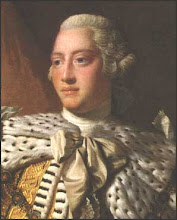
Beset by mishaps while on hunting trips and rumours of extramarital flings, the latter years of King Juan Carlos I of Spain resemble that of many of Europe's royals in the tabloid age. But beyond the occasional headlines in Spain's prensa rosa – or red-top newspapers – he will be remembered for skilfully transiting his land from backward military dictatorship to modern European state.Read the rest here.
With Spain bitterly divided in the post-war years between Republicans and Fascists, the young monarch faced hostile generals on the Right and contemptuous Communists on the Left, and was widely expected to end up as "Juan Carlos the Brief". Instead, as his 38 years on the throne was to prove, he played a key role in smoothing Spain's path to democracy, deftly courting allies on both sides and almost single-handedly thwarting a military coup in 1981.

The commission’s intervention came as a British warship docked in Gibraltar on Monday morning, part of what the British authorities described as a long-planned military training operation, rather than a show of force aimed at Spain.Read the rest here.
Still, the arrival of the warship, the Westminster, which was escorted by two smaller ships from the Royal Navy, came a day after Spanish fishermen confronted British police vessels to protest Gibraltar’s construction of an artificial reef that is limiting their access to the waters off the territory.
Although Spain has regularly challenged Britain’s 300-year-old control of Gibraltar, the territory’s decision to build the reef has heightened tensions considerably. Gibraltar created the reef this month by dumping 70 concrete blocks into the sea in an attempt to prevent overfishing. Spain retaliated by tightening controls at the border, forcing cars to wait for hours to enter or leave the territory. Spain has also said that it may charge 50 euros, or about $67, to cross the border, saying that the additional revenue could help compensate Spanish fishermen for their losses.
BRUNETE, Spain — In the worldwide battle to get dog owners to clean up after their pets, enter Brunete, a middle-class suburb of Madrid fed up with dirty parks and sidewalks.Read the rest here.
Some cities hand out steep fines. But in these tough economic times, the mayor here, Borja Gutiérrez, didn’t much like that idea. Instead, this town engaged a small army of volunteers to bag it, box it and send it back to its owners.
“It’s your dog, it’s your dog poop,” Mr. Gutiérrez said. “We are just returning it to you.”
Until now, Brunete’s claim to fame, if it had one, was that it sustained heavy damage in the Spanish Civil War. But these days, this leafy hamlet has made headlines all over Spain. Residents say that strangers take note when they say they live in Brunete.
At a recent political event, Mr. Gutiérrez said, the mayor of Madrid sought him out.
“She said, ‘Well, it is not many mayors who think sending dog poop to voters is a good idea,'” Mr. Gutiérrez said. “'How did you dare?'”
Spain has acceded to the demands of the Islamist government in Morocco by agreeing that Moroccan children adopted by Spanish families must remain culturally and religiously Muslim.Read the rest here.
The agreement obliges the Spanish government to establish a "control mechanism" that would enable Moroccan religious authorities to monitor the children until they reach the age of 18 to ensure they have not converted to Christianity.

Spain is battling to avert a fully-fledged sovereign rescue after borrowing costs spiralled out of control, with dangerous knock-on effects in Italy and Eastern Europe.Read the rest here.
The yields on closely-watched two-year debt surged by 78 basis points to a modern-era high of 6.42pc, leaving it unclear how long the country can continue funding itself. Italy’s two-year yields vaulted to 4.6pc.
“We can’t keep going like this for another 15 days,” said Prof Miguel Angel Bernal from Madrid’s Institute of Market Studies. “The European Central Bank has to bring out its heavy artillery.”
Queen Sofia of Spain has been ordered to turn down an invitation from the Queen to a Diamond Jubilee lunch for the world's sovereign monarchs because of an escalating diplomatic row over Gibraltar.Read the rest here.
Queen Sofia had earlier accepted the invite to Friday's celebration at Windsor Castle, but in a last minute snub by Spain's government she has been told not to attend because it would be "inappropriate in the current circumstances".
Last week Spain's foreign ministry issued a formal complaint to Britain's Ambassador in Madrid over the planned visit in June of The Earl and Countess of Wessex to the disputed territory of Gibraltar to mark the Queen's Diamond Jubilee year.
Bolivian President Evo Morales ordered his military to seize the local assets of Spanish energy company Red Electrica, in the latest example of muscle-flexing by a South American leader.Read the rest here.
Mr Morales said the expropriation of Transportadora de Electricidad (TDE), which runs most of Bolivia's power grid, was "in honour of all Bolivian people who have struggled to recuperate our natural resources and basic services". He timed the seizure for May Day.
TDE is 99.94pc owned by Spain's Red Electrica and, according to El Pais, accounts for about 1.5pc of the company's business. Accusing Red Electrica of underinvestment in TDE, Mr Morales said: "We do this... for the benefit of the Bolivian people."
The nationalisation comes just two weeks after Argentine President Cristina de Kirchner announced the expropriation of Spanish company Repsol's stake in oil group YPF, also citing underinvestment.
Mr Morales's move could further spook European investors already wary of resource nationalism in left-wing regimes in South America.
MADRID — Spanish workers enraged by austerity-driven labor reforms to prevent the nation from becoming Europe’s next bailout victim slowed down the country’s economy in a general strike Thursday, closing factories and clashing with police as the new-center right government tried to convince investors the nation isn’t headed for a financial meltdown.Read the rest here.
Tens of thousands held protest marches in Madrid and other cities, and the demonstrations turned violent in Spain’s second largest city of Barcelona, where hooded protesters smashed bank and storefront windows with hammers and rocks and set fire to streetside trash containers. Television images also showed the Barcelona demonstrators throwing rocks at riot police vans, and hitting them as they sped near the crowds.
NEW YORK — Stocks are closing at their lowest level so far in July on fresh fears that Europe’s debt crisis will spread beyond Greece to much larger economies.Read the rest here.
Italy, Europe’s third-largest economy, and Spain, its fourth-largest, could be sliding toward default.
The Dow Jones industrial average lost 151 points, or 1.2 percent, to close at 12,506 Monday. The Standard & Poor’s 500 index fell 24, or 1.8 percent, to 1,319. The Nasdaq composite fell 57, or 2 percent, to 2,803.
CÓRDOBA, Spain — The great mosque of Córdoba was begun by the Muslim caliphs in the eighth century, its forest of pillars and red-and-white striped arches meant to convey a powerful sense of the infinite. With the Christian reconquest of Spain in the 13th century, it was consecrated as a cathedral.Read the rest here.
Today, signs throughout this whitewashed Andalusian city refer to the monument, a Unesco World Heritage site, as the “mosque-cathedral” of Córdoba. But that terminology is now in question. Last month, the bishop of Córdoba began a provocative appeal for the city to stop referring to the monument as a mosque so as not to “confuse” visitors.
For now, the matter is largely semantic because the mayor says the city will not change its signs. But the debate goes far beyond signs. It is the latest chapter in the rich history of the most emblematic monument in Christian-Muslim relations in Europe — and a tussle over the legacy of “Al Andalus,” when part of Spain, under the Muslim caliphs, was a place of complex coexistence among Muslims, Christians and Jews.
The debate takes on greater weight ahead of Pope Benedict XVI’s planned visit this weekend to Spain, which he has identified as an important battlefield in his struggle to shore up Christian belief in an increasingly secular — and implicitly Muslim — Europe.
The polemic in Córdoba began in mid-October, when Bishop Demetrio Fernández published an opinion article in ABC, a Spanish center-right daily newspaper.
“There’s no problem saying that the Muslim caliphs built this temple to God,” the bishop wrote. “But it is completely inappropriate to call it a mosque today because it has not been one for centuries, and to call it a mosque confuses visitors.”
“In the same way, it would be inappropriate to call the current mosque of Damascus the Basilica of St. John or to expect that it could be both a place of Muslim and Christian worship,” Bishop Fernández added, referring to the Syrian site where an Umayyad mosque was built in the eighth century above a fourth-century church said to contain the remains of John the Baptist.
MADRID — Manolo Marbán, 59, is still living in his house in Toledo and going to work in the small pink-and-aqua pet grooming shop he bought here in 2006, when he got swept up in Spain’s giddy real estate boom.Read the rest here.
But Mr. Marbán does not own either anymore. The bank foreclosed on both properties last April, and he is waiting for the courts to issue the eviction notices. For most Americans facing foreclosure, that is the end of it. But for Mr. Marbán and thousands of others here, it is just the beginning of their troubles. When the gavel falls on his case, he will still owe the bank more than $140,000. “I will be working for the bank for the rest of my life,” Mr. Marbán said recently, tears welling in his eyes. “I will never own anything — not even a car.”
The real estate and banking excesses in Spain were a lot like those in the United States. Construction boomed, prices rose at an astonishing pace and banks gave out loans just as fast, often to customers like Mr. Marbán, who used the equity in his house to finance a mortgage for his shop. But those days are over. Spain now has the highest unemployment rate in the euro zone — 20 percent — and real estate prices are dropping. For many Spaniards, no longer able to pay their mortgages, the fine print in the deals they agreed to years ago is catching up with them.
Not only are Spanish mortgage holders personally liable for the full amount of the loan, but throw in penalty interest charges and tens of thousands of dollars in court fees, and people can end up, like Mr. Marbán, facing a mountain of debt. Bankruptcy is not the answer, either. Mortgage debt is specifically excluded here.
“Effectively, you can never get rid of this debt,” said Ada Colau, a human rights lawyer who works for Plataforma, a new advocacy group formed both to give legal advice to homeowners and to push for reform of the country’s foreclosure laws. “Other countries in the European Union also have personal debt mortgages, but you can go to the courts and get relief. Not in Spain.”
The head of the Russian Orthodox Church has decried gay relationship "propaganda" in Spanish secondary school textbooks.Source
Spain, which was one of the first European countries to legalize gay marriages in 2005, has seen a wave of criticism from parents whose children had to use books that teach pupils about gay relationships.
Some of the indignant parents are set to apply to the European Court of Human Rights.
The patriarch said the Orthodox Church "would never fail to call a sin a sin."
"I consider it very important to take into account the second article of the Protocol 1 of the European convention on human rights that stipulates that "the state shall respect the right of parents to ensure such education and teaching in conformity with their own religions and philosophical convictions," the patriarch said.
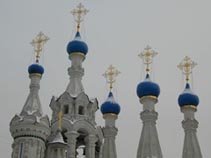
An agreement on the allotment of a plot of land to the Russian Orthodox Church for building a church was signed in the Madrid City Council on July 9, 2010. The plot of 756 square meters is situated in a prestigious part of the city near the Pinar del Rey metro station.Source
The Russian Orthodox Parish of St. Mary Magdalene was founded in Madrid in 1761 under Envoy N. Repnin. It lasted till 1882. In the post-war period, there was a Chapel of St. Seraphim of Sarov at the house belonging to the Russian Imperial family in Madrid.
The Parish of the Nativity of Christ was founded in 2001, but to this day the divine services have been celebrated in a former furniture workshop.
The need for a church has been discussed for a long time but a breakthrough happened after Russian President Dmitry Medvedev visited Spain in March 2009. Ms. Medvedev visited the Parish of the Nativity of Christ on March 1, 2009. During the visit Madrid Mayor Alberto Ruiz-Gallardón promised to decide the issue of allotting some land to the Russian Orthodox Church for building a church.
With the blessing of His Holiness Patriarch Kirill, a Nativity of Christ Foundation has been registered with the Spanish Ministry of Culture. It is headed by the rector of the parish, Rev. Andrey Kordochkin. Its Patrons Board includes Archbishop Innocent of Korsun, Archbishop Mark of Yegoryevsk, Moscow Patriarch secretary for institutions abroad, and Grand Duchess Maria Vladimirovna, who lives in Madrid.
The church is to be designed by local architect Jesus San Vicente in cooperation with well-known Moscow architect A. Vorontsov who designed the Russian Orthodox church in Havana.
The agreement provides for tough deadlines: within 6 months after the title of land is registered, a construction license is to be requested and within 2 months after it is obtained the construction should start to be completed within 24 months after its beginning.
The Bishop of Cordoba says that they will not share the cathedral, a former mosque, with Muslims.Read the rest here.
The Bishop of Cordoba, Demetrio Fernandez, said today that "sharing" the Cathedral of Cordoba and former mosque that some Muslim groups want, "is a euphemism which means: get Catholics out of here". Faced with this and in an interview with Europa Press, Fernandez wanted to make clear that, "therefore, the answer to the question about sharing the Cathedral is that no, we're not, because this place has been a Catholic Church 16 centuries, while Muslims have been four and half centuries".
Consequently, the Catholic Church, which is the holder of the temple through the Cathedral Chapter of Córdoba, has "a good relationship with Muslims" and want to collaborate with those who profess Islam in constant search of "peace, justice and coexistence between peoples, but that is one thing and another, very different, you want to share the same temple for worship, which is not possible, either by Muslims or by Catholics".