Eyes for God
19 hours ago
SEOUL — Japanese Prime Minister Shinzo Abe on Thursday visited a Shinto shrine that honors Japan’s war dead, including 14 war criminals, and is seen by Asian neighbors as a symbol of the nation’s unrepentant militarism.Read the rest here.
The visit to Yasukuni Shrine, the first by a sitting Japanese leader in seven years, raises the prospect of even deeper hostility between an already isolated Tokyo and its neighbors. It also suggests that Abe, after a year of focusing on pragmatic, economic issues, is increasingly willing to play to his conservative base — a group that believes Japan has been unfairly vilified for its wartime past.
“Ex-Marine Asks Soviet Citizenship”Read the rest here.
— Washington Post headline,
Nov. 1, 1959
(concerning Lee Harvey Oswald)
“He didn’t even have the satisfaction of being killed for civil rights. It’s — it had to be some silly little Communist.”
— Jacqueline Kennedy,
Nov. 22, 1963
She thought it robbed his death of any meaning. But a meaning would be quickly manufactured to serve a new politics. First, however, an inconvenient fact — Oswald — had to be expunged from the story. So, just 24 months after the assassination, Arthur Schlesinger Jr., the Kennedys’ kept historian, published a thousand-page history of the thousand-day presidency without mentioning the assassin.
The transformation of a murder by a marginal man into a killing by a sick culture began instantly — before Kennedy was buried. The afternoon of the assassination, Chief Justice Earl Warren ascribed Kennedy’s “martyrdom” to “the hatred and bitterness that has been injected into the life of our nation by bigots.” The next day, James Reston, the New York Times luminary, wrote in a front-page story that Kennedy was a victim of a “streak of violence in the American character,” noting especially “the violence of the extremists on the right.”
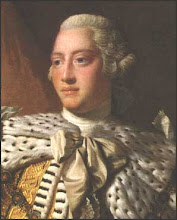
The easiest way of assessing whether the United States would have been better off without its revolution is to look at those English-speaking countries that rejected the American Revolution and retained the monarchy, particularly Canada, which experienced an influx of American refugees after the British defeat. The U.S. performance should also be assessed against the ideals the new country set for itself — namely, advancing life, liberty and the pursuit of happiness.Read the rest here.
The new republic started advancing life and liberty by keeping a substantial part of its population enslaved. (This, at least, proves the frequent British put-down that Americans don’t have a sense of irony.) By contrast, in British-controlled Canada, the abolition of slavery began almost 20 years before the War of 1812, sometimes called America’s “Second Revolution.” A good number of free blacks fought with the British against the United States in that conflict, even participating in the burning of Washington. And if, as some scholars argue, the Civil War was the unfinished business of the American Revolution, then Americans — like the Russians — paid a very high human cost for their revolutions.
An ancient papyrus fragment which a Harvard scholar says contains the first recorded mention that Jesus may have had a wife is a fake, the Vatican said Friday.Read the rest here.
"Substantial reasons would lead one to conclude that the papyrus is indeed a clumsy forgery," the Vatican's newspaper, L'Osservatore Romano, said in an editorial by its editor, Gian Maria Vian. "In any case, it's a fake."
Joining a highly charged academic debate over the authenticity of the text, written in ancient Egyptian Coptic, the newspaper published a lengthy analysis by expert Alberto Camplani of Rome's La Sapienza university, outlining doubts about the manuscript and urging extreme caution.
The fragment, which reads "Jesus said to them, 'My wife...'" was unveiled by Harvard Professor Karen King as a text from the 4th century at a congress of Coptic Studies in Rome last week.

Jerusalem, Israel, Jul 5, 2012 / 03:38 pm (CNA/EWTN News).- Israel's Yad Vashem Holocaust memorial has made changes to a controversial exhibit on Pope Pius XII, presenting a more balanced view of his actions toward the Nazis and their Jewish victims.Read the rest here.
Pave the Way Foundation President Gary Krupp, a prominent Jewish defender of Pope Pius XII, said his inter-religious group was “very pleased” with Yad Vashem's change of position, which “should show the world that it is truly an institution based on facts and truth.”
“The black legend against Pope Pius XII is being bleached white by the stark light of truth,” Krupp told CNA on July 5. Further research, he said, will show that the Pope, born Eugenio Pacelli, “was indeed a great hero to the Jewish people during our darkest years of the Shoah.”
Yad Vashem's new wall panel on Pius XII and the Vatican “presents a more complex picture than previously presented,” the museum said in a July 1 announcement, citing “research that has been done in the recent years” on the wartime Pope.


ATLANTA — The Civil War, the most wrenching and bloody episode in American history, may not seem like much of a cause for celebration, especially in the South.Read the rest here.
And yet, as the 150th anniversary of the four-year conflict gets under way, some groups in the old Confederacy are planning at least a certain amount of hoopla, chiefly around the glory days of secession, when 11 states declared their sovereignty under a banner of states’ rights and broke from the union.
The events include a “secession ball” in the former slave port of Charleston (“a joyous night of music, dancing, food and drink,” says the invitation), which will be replicated on a smaller scale in other cities. A parade is being planned in Montgomery, Ala., along with a mock swearing-in of Jefferson Davis as president of the Confederacy.
In addition, the Sons of Confederate Veterans and some of its local chapters are preparing various television commercials that they hope to show next year. “All we wanted was to be left alone to govern ourselves,” says one ad from the group’s Georgia Division.
That some — even now — are honoring secession, with barely a nod to the role of slavery, underscores how divisive a topic the war remains, with Americans continuing to debate its causes, its meaning and its legacy.
“We in the South, who have been kicked around for an awfully long time and are accused of being racist, we would just like the truth to be known,” said Michael Givens, commander-in-chief of the Sons, explaining the reason for the television ads. While there were many causes of the war, he said, “our people were only fighting to protect themselves from an invasion and for their independence.”
President Medvedev has issued a stinging repudiation of the Soviet Union, condemning it as a totalitarian state that had deprived Russians of their basic rights.Read the rest here.
He also condemned Joseph Stalin’s record of repression before Victory Day celebrations on Sunday marking the 65th anniversary of the defeat of Nazi Germany, an event that many elderly Russians attribute to the leadership of the Soviet dictator.
The President’s outspoken verdict on Russia’s Soviet legacy contrasted sharply with that of his predecessor Vladimir Putin, who called the collapse of the Communist state “the greatest geopolitical catastrophe of the century”. Mr Putin, the Prime Minister, has also been much more equivocal about Stalin.
Mr Medvedev said that Stalin had committed unforgivable crimes regardless of any progress made by the Soviet Union under his rule. In an interview with Izvestia newspaper that was also broadcast on state television, he rejected arguments that Stalin was responsible for the victory over Hitler in what Russians call the Great Patriotic War.
“The Great Patriotic War was won by our people, not by Stalin or even the generals,” Mr Medvedev said. “Their role was undoubtedly very serious but, at the same time, the people won the war at the cost of great efforts and a huge number of lives.
“Stalin committed mass crimes against the people. And despite the fact that he worked a lot, despite the fact that under his leadership the country achieved successes, what was done to his own people cannot be forgiven.”