Wednesday, September 13, 2006

Whose Church Do I Belong To: My Church or the Orthodox Church of Christ?

Fr. George Morelli

In our day the predominant culture is secularist; a view that holds that religion and the moral precepts drawn from it should have no impact in public life. Secularism is closely tied to post-modernism which eschews the existence of moral universals or even a unifying narrative. Orthodox ethicist H. Tristam Englehardt wrote that postmodernism is "the absence as a matter of fact and in principle of a universal secular moral narrative." Postmodernism has replaced the Western European view of a "monotheistic, monocultural moral vision with strong commitment to faith ... " (Englehardt, 1996).

How is secularism evident in society? One example is the divorce of law from an underlying moral narrative and thus history. Language and concepts (fairness, justice, etc.) that were drawn from the moral tradition to grant civil laws their moral legitimacy are applied in ways that are highly pragmatic and utilitarian in nature.

For example, if abortion, birth control, cloning, sex education, stem cell research and other vexing moral issues produce a pragmatically desirable outcome they should be promoted. No reference to a larger body of moral teaching (and the psychological and spiritual consequences the moral prohibitions seek to avoid) needs to be made.

Read the rest here.

The Greek Orthodox Church, The NCC and Stem Cell Research: Just say NO

Often I refrain from specifically endorsing articles I post or link on here. However in this case I am going to make an exception. I strongly endorse this article and urge everyone to read it.

Greek Orthodox Church Should Say No to NCC Collaboration on Stem Cell Research
Rev. Johannes L. Jacobse

At first glance, the position paper on human biotechnology written by the Archdiocesan Advisory Committee on Science and Technology seems innocent enough. Titled "Fearfully and Wonderfully Made: A Policy on Human Biotechnologies," the paper correctly warns against the potential abuse of emerging biological technologies.

The paper, written in collaboration with other members of the National Council of Churches (NCC), was distributed at last months' Clergy Laity Congress in Nashville. Work began three years ago and the completed version will be presented to the NCC at its national conference in November for final approval. The advisory committee is eager to have the Greek Orthodox Church endorse the document.

And there's the rub. Despite awareness of the ethical problems raised by the advances in biotechnological research, the paper says nothing about the moral status of the embryo. At the point where moral clarity is need the most, the paper is silent. It's a critical failure and officials of the Greek Orthodox Archdiocese should refuse to sign it.
Read the rest here.

Quote of the Day

Show me just what Muhammad brought that was new, and there you will find things only evil and inhuman, such as his command to spread by the sword the faith he preached.
- Pope +Benedict XVI quoting Byzantine Emperor Manuel II Paleologus during his speech of Sept 12 2006 in Regensburg Germany

As we used to say in the navy when approaching bad weather... "Stand by for heavy rolls." I got a feeling this comment is going to provoke a response.

Tuesday, September 12, 2006

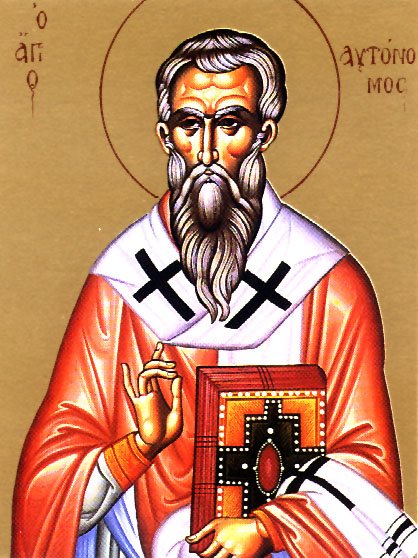
Hieromartyr Autonomus the Bishop in Italy

Hieromartyr Autonomus the Bishop in Italy
12 September

The Hieromartyr Autonomus was a bishop in Italy. During the time of the persecution against Christians under the emperor Diocletian (284-305), St Autonomus left his own country and resettled in Bithynia, in the locality of Soreus with a man named Cornelius. St Autonomus did his apostolic duty with zeal and converted to Christ so many pagans, that a large Church was formed, for which he consecrated a temple in the name of the Archangel Michael. For this church, the saint at first ordained Cornelius as deacon, and then presbyter. Preaching about Christ, St Autonomus visited also Lykaonia and Isauria.

The emperor Diocletian gave orders to arrest St Autonomus, but the saint withdrew to Claudiopolis on the Black Sea. In returning to Soreus, he had the priest Cornelius ordained bishop. St Autonomus then went to Asia, and when he had returned from there, he began to preach in the vicinity of Limna, near Soreus.

Once, the newly-converted destroyed a pagan temple. The pagans decided to take revenge on the Christians. Seizing their chance, the pagans rushed upon the church of the Archangel Michael when St Autonomus was serving Divine Liturgy there. After torturing St Autonomus they killed him, reddening the altar of the church with his martyr's blood. The deaconess Maria removed the body of the holy martyr from beneath a pile of stones and buried it.

During the reign of St Constantine the Great, a church was built over the tomb of the saint. In the year 430, a certain priest had the old church pulled down. Not realizing that the martyr's body had been buried beneath the church, he rebuilt the church in a new spot. But after another 60 years the relics of the saint were found incorrupt, and a church was then built in the name of the Hieromartyr Autonomus.

From the web site of the OCA.

Monday, September 11, 2006

Lest We Forget...

September 11 2001
May Their Memory Be Eternal!

What About….Freemasonery?

Most Americans, as often as they see a dollar bill, are unaware that the strange pyramid on the reverse side is a Masonic symbol and that George Washington, the "father of our country" was a Mason. What is Masonry? Few people could give more than a vague (and not very accurate) answer. It is, in fact, the largest secret society in the world, numbering nearly six million members, among whom are many men prominent in business, politics and the arts.

Until quite recently I had never known a Mason. In the first six years of my pastoral activity in the missions I had never met an Orthodox Christian who was a Mason, or catechized anyone who had ever been one. Evidently Freemasonry has rarely been attractive to the average American convert to Orthodoxy, who sees the Masonic Lodge as a silly collection of "mumbo-jumbo" and "high pooh-bahs." My own acquaintance with it was purely academic. Until this year, when my "book-knowledge" on the subject had cause to take on a definite form. Let me relate.

One day I received a call from an older man of Greek background who wished to join our parish. He made an appointment to come and talk to me. Although I noticed that he wore a distinctive ring, I failed to recognize the emblem until he casually mentioned that he belonged to the "Blue Lodge." When I asked what this was, he said, "It's a local Masonic Lodge." "Demetrios," I replied, "I can't admit you to the Sacraments if you area Freemason." "Why not?" he asked. "Because Masonry is anti-Christian and has been condemned by both the Greek and Russian Churches in this century." "That's funny," he said, "because I know many Orthodox who are my 'lodge brothers,' even a bishop!"

Read the rest here.

The Countdown

4

Sunday, September 10, 2006

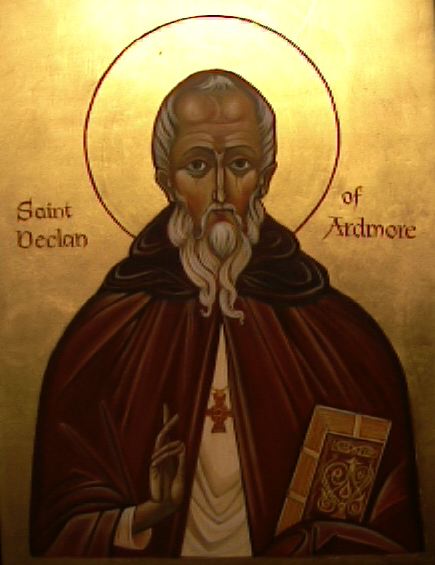
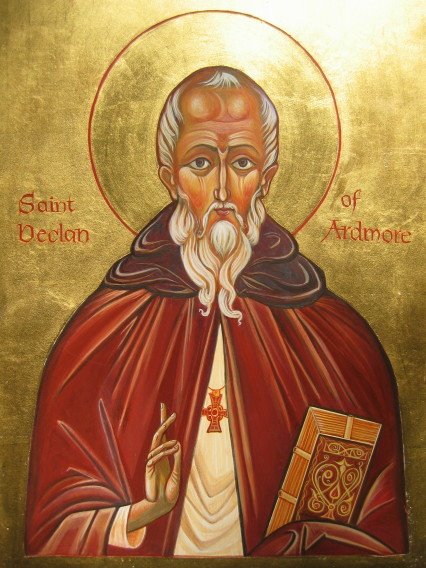
St Declan of Ardmore

For Juliana:


St. Declan
Read the life of St. Declan of Ardmore here.
You may click on the icons for a full size image.

Saturday, September 09, 2006

How Britain is turning Christianity into a crime

How long will it be before Christianity becomes illegal in Britain? This is no longer the utterly absurd and offensive question that on first blush it would appear to be.

An evangelical Christian campaigner, Stephen Green was arrested and charged last weekend with using threatening, abusive or insulting words or behaviour.

So what was this behaviour? Merely trying peacefully to hand out leaflets at a gay rally in Cardiff.

So what was printed on those leaflets that was so threatening, abusive or insulting that it attracted the full force of the law?

Why, none other than the majestic words of the 1611 King James Bible.

The problem was that they were those bits of the Bible which forbid homosexuality. The leaflets also urged homosexuals to "turn from your sins and you will be saved".

But to the secular priests of the human rights culture, the only sin is to say that homosexuality is a sin.

Admittedly, Mr Green is not everyone's cup of tea; other Christians regard him as extreme. But our society is now so upside-down that, by doing nothing more than upholding a fundamental tenet of Christianity, he was treated like a criminal.

And yet at the same time, the police are still studiously refusing to act against Islamic zealots abusing British freedom to preach hatred and incitement against the West.

Read the rest here.

Friday, September 08, 2006

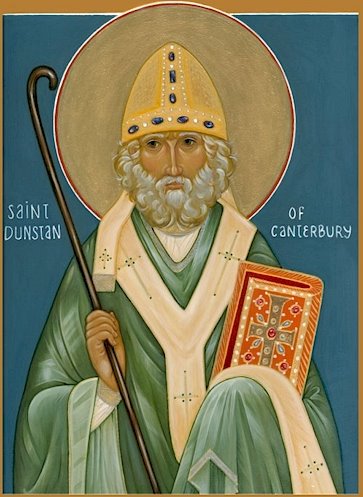
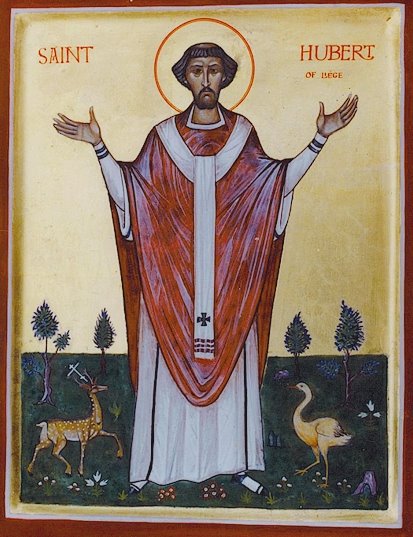
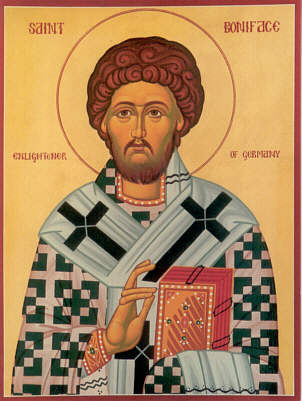
Western Saints Icon Project

St. Dunstan Ab. of Canterburry

St. Hubert of Liege (Belgium)

St. Boniface Equal to the Apostles and Enlightener of Germany

The Western Saints Icon Project has an extraordinary number (432!) of icons of western (pre-schism) saints. Icons of most western saints are rare and often impossible to find. Enjoy this site.

Hat tip to Monk Aidan of All Merciful Savior Orthodox Mission (ROCOR)

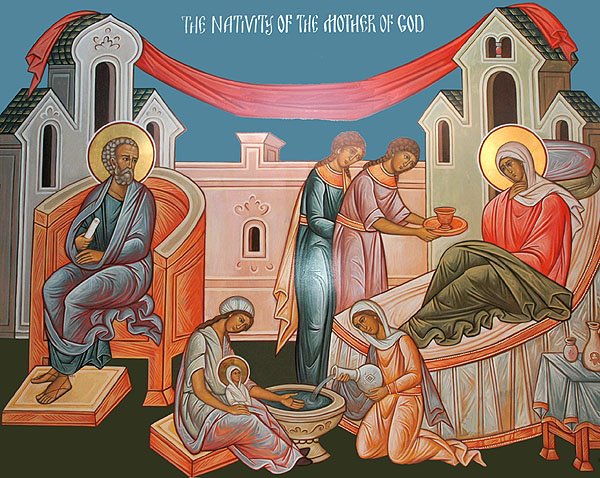
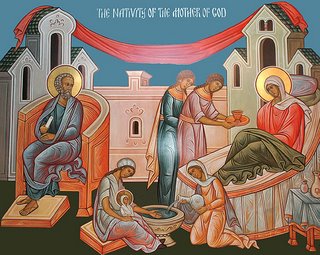
The Nativity of our Most Holy Lady the Mother of God and Ever-Virgin Mary

The Nativity of Our Most Holy Lady Theotokos and Ever Virgin Mary: The Most Holy Virgin Mary was born at a time when people had reached such a degree of moral decay that it seemed altogether impossible to restore them. People often said that God must come into the world to restore faith and not permit the ruin of mankind.

The Son of God chose to take on human nature for the salvation of mankind, and chose as His Mother the All-Pure Virgin Mary, who alone was worthy to give birth to the Source of purity and holiness.

The Nativity of Our Most Holy Lady Theotokos and Ever Virgin Mary is celebrated by the Church as a day of universal joy. Within the context of the Old and the New Testaments, the Most Blessed Virgin Mary was born on this radiant day, having been chosen before the ages by Divine Providence to bring about the Mystery of the Incarnation of the Word of God. She is revealed as the Mother of the Savior of the World, Our Lord Jesus Christ.

The Most Holy Virgin Mary was born in the small city of Galilee, Nazareth. Her parents were Righteous Joachim of the tribe of the Prophet-King David, and Anna from the tribe of the First Priest Aaron. The couple was without child, since St Anna was barren.

Having reached old age, Joachim and Anna did not lose hope in God's mercy. They had strong faith that for God everything is possible, and that He would be able to overcome the barrenness of Anna even in her old age, as He had once overcame the barrenness of Sarah, spouse of the Patriarch Abraham. Sts Joachim and Anna vowed to dedicate the child which the Lord might give them, to the service of God in the Temple.

Childlessness was considered among the Hebrew nation as a Divine punishment for sin, and therefore the righteous Sts Joachim and Anna had to endure abuse from their own countrymen. On one of the feastdays at the Temple in Jerusalem the elderly Joachim brought his sacrifice to offer to God, but the High Priest would not accept it, considering him to be unworthy since he was childless.

St Joachim in deep grief went into the wilderness, and there he prayed with tears to the Lord for a child. St Anna wept bitterly when she learned what had happened at the Jerusalem Temple. Never once did she complain against the Lord, but rather she prayed to ask God's mercy on her family.

The Lord fulfilled her petitions when the pious couple had attained to extreme old age and prepared themselves by virtuous life for a sublime calling: to be the parents of the Most Holy Virgin Mary, the future Mother of the Lord Jesus Christ.

The Archangel Gabriel brought Joachim and Anna the joyous message that their prayers were heard by God, and of them would be born a most blessed daughter Mary, through Whom would come the Salvation of all the World.

The Most Holy Virgin Mary surpassed in purity and virtue not only all mankind, but also the angels. She was manifest as the living Temple of God, so the Church sings in its festal hymns: "the East Gate... bringing Christ into the world for the salvation of our souls" (2nd Stikhera on "Lord, I Have Cried", Tone 6).

The Nativity of the Theotokos marks the change of the times when the great and comforting promises of God for the salvation of the human race from slavery to the devil are about to be fulfilled. This event has brought to earth the grace of the Kingdom of God, a Kingdom of Truth, piety, virtue and everlasting life. The Theotokos is revealed to all of us by grace as a merciful Intercessor and Mother, to Whom we have recourse with filial devotion.

From the web site of the Orthodox Church in America.

Thursday, September 07, 2006

The Countdown


7

ROCOR Synod Approves Communion with Moscow

The Holy Synod of the Russian Church Abroad has approved the Act of Canonical Communion and issued a decree. It would appear that formal communion will be restored by the end of the year. The full text is below.

From the web site of The Russian Orthodox Church Outside of Russia:

The Synod of Bishops of the Russian Orthodox Church Outside of Russia, at its regular session on August 24/September 6, 2006, considered:

The report of the Secretary of the Commission on discussions with the Moscow Patriarchate, Protopriest Alexander Lebedeff, on the results of the seventh joint meeting of the Commissions held in late June of this year.

After an exhaustive discussion of the matter, decreed:

1. To take into consideration the report of Protopriest Alexander Lebedeff.
2. On the basis of the decision of the Council of Bishops of May 15-19, 2006, to confirm and approve the “Act on Canonical Communion” in its revised form as prepared by the church Commissions at the seventh joint meeting, along with other materials developed by the Commissions.
3. In accordance with the directions of the Council of Bishops of 2006, to instruct the Commission on discussions with the Moscow Patriarchate, jointly with the Commission on dialog with the Russian Orthodox Church Outside of Russia, to work out the details of the ceremony of the signing of the “Act” and the Rite of establishment of canonical communion of both parts of the Russian Orthodox Church.
4. Also, in accordance with the decision of the Council of Bishops, to authorize Archbishop Mark of Berlin and Germany, Chairman of the Commission on discussions with the Moscow Patriarchate, to coordinate together with Archbishop Innokenty of Korsun the simultaneous publication of the “Act” which has been confirmed by both Holy Synods on the official websites of the two parts of the Russian Orthodox Church.
5. To consider at the next expanded session of the Synod of Bishops, to be scheduled at the time of the feast day of the Kursk-Root Icon of the Mother of God this year, on the proposals prepared by the joint Commissions at their next meeting.
6. To inform the flock through a special Address on the present state of the negotiation process and the proposed plans for the future.

+ Metropolitan Laurus
President

+ Archbishop Mark

+ Archbishop Kyriil

+ Bishop Michael

+ Bishop Peter

Quote of the Day

Sometimes I find quotes that give me that sinking feeling they were directed towards me personally.

"He who busies himself with the sins of others, or judges his brother on suspicion, has not yet even begun to repent or to examine himself so as to discover his own sins..."

-St. Maximos the Confessor

ROCOR & Moscow ...

The Holy Synod of the Russian Church Abroad is meeting in NY and is expected to finish its business on Thursday. Its very possible they will give formal approval to the Act on Canonical Communion. Pray for all concerned and stay tuned.

Wednesday, September 06, 2006

A Saint's Confession

The Holy Royal Martyr and Passion Bearer Czar Emperor Nicholas II

Father Afanasy's testimony about the Emperor's confession is very moving: "Next to me stood one who had no peer among those living on earth. Up to this moment he was our God-sent Anointed one who, according to the Law of Succession, for 23 years reigned as the Russian Orthodox Czar. And now, the humble servant of God Nicholas, as a meek lamb, benevolent towards all his enemies, forgetting all abuses, is fervently praying for the well-being of Russia, deeply believing in its glorious future, kneeling and looking at the cross and the book of the Gospels, is confessing to the Heavenly Father, with me, an unworthy one, as a witness, the innermost secrets of his long-suffering life, reducing himself to dust before the greatness of the King of Heaven, tearfully asking to be forgiven for his voluntary and involuntary transgressions." The suffering of the Sovereign brings to mind the long-suffering Righteous Job, on whose feast day Nicholas II was born. The Emperor's life was comparable to the suffering of Job - he accepted his cross just as the Biblical righteous one accepted the misfortune which was sent to him - firmly, patiently, meekly, and without a shadow of grumbling.

-From the report of the Moscow Patriarchate commission investigating the possibility of canonizing the Russian Orthodox Emperor Nikolai II

The magic number is now 9

The Mets swept a daytime double header today against the Atlanta Braves. They now need to win nine games to clinch the NL East division pennant. If the Phillies loose tonight the number will become eight. For the last twenty years with a single exception the Mets have sucked. Since the day I formally entered the Church they have been in first place and have dominated the National League. What further evidence on behalf of Orthodoxy beyond this obvious miracle does one need? Lord have mercy!

Addendum: Make that EIGHT!!!!!

Do we need Rome?

Owen of The Ochlophobist posted the following reply to the thread over at Pontifications that I noted below. I am not in full agreement with every point he makes. For instance I do think we need a Church Council. But broadly speaking he makes a very powerful argument about the difficulties that lie between Orthodoxy and Rome. Please direct any comments or replies to the thread on Pontifications. Owen’s post #80:
Diane,
People who get offended by comments annoy me, so never worry about offending me. I did mean what Mr. Grano suggests. I think that most patristic scholars (Prot, Catholic, Orthodox) would agree that it is an anachronism to suggest that St. Maximus or any other Eastern father would have held something akin to universal jurisdiction or papal infallibility as defined by Vat. I. The fact that they held to papal primacy, that they had a very high regard for the papacy, that they believed that Rome had consistently and faithfully taught the Catholic faith, and that Rome was the place to go for final appeal when things went bad in the home region does not amount to the two points of Vat. I which RCs and Orthodox will never agree on. Whether or not these pro-papal beliefs of the Eastern fathers naturally develop into Vat. I is another matter RCs and Orthodox will never agree on.

My comments regarding why we Orthodox should not want and do not need the Pope (as part of some ecumenical agenda) is easily construed as lacking in my former irenic manner. Fair enough. I must confess that I recently had the opportunity to attend a Novus Ordo Mass for the first time in over 4 years. During those 4 years I have tried my darndest to immerse myself in the Byzantine liturgical tradition and spiritual discipline. After having seen a Novus Ordo in this context, I must argue that while I might not be irenic in a technical sense I am being loving when I state this: The Orthodox and Roman Catholic Churches will never reunite. For them to reunite one of them will have to stop being who she is, and this simply is not going to happen. This is the reality that professional ecumenists and internet theo-pundits refuse to acknowledge. As many Catholics have noted in this thread, if the Roman Catholic Church were to agree to Fr. Hopko’s terms, it would not be the Roman Catholic Church that reunited with Orthodoxy, but some other new communion. Likewise, if Rome did not agree to something like Fr. Hopko’s terms, and Orthodoxy nonetheless united with her, the Orthodox Church at that point would cease to exist, despite the condescending analysis of Roman Catholic theologians and ecclesiocrats who assure us that we need do nothing more than say yes. To speak that yes would be to speak no to Orthodoxy. As an Orthodox, you might imagine how likely I think that scenario is. Time and time again in these debates, it seems to me that many RCs simply don’t believe us when we say that we are the fullness of the Church, that we are the Church which Christ founded, that we are and nobody else is. The general response from RCs carries with it a tone that communicates, “O, isn’t that cute, little Orthodoxy thinks she’s the Church!” But, alas, we really do believe what we say, and because we believe what we say, we believe that we don’t really need the Roman Church. If Rome returns to Orthodoxy, great, if not, Oh well.

This brings me to the ecumenical economic reality that is the elephant in this room. We Orthodox are chided for the fact that our terms for a reunite (via Fr. Hopko in this case) demand so much from Rome while Rome’s terms demand so little from us. Well, uh, yeah. When you get us you get our problems - some jurisdictional issues, a piety that is often enough totalizing (in a day in which the rest of Christianity, including American Catholicism, can barely muster any piety), and your usual amount of corruption and sin, etc. But when you get us you also get a large influx of churches which are liturgically and devotionally stable, and which hold on (in a relatively clear fashion) to Holy Tradition and venerable traditions. That would certainly help the good guys, whoever they are, in the trad-con-prog wars going on inside the RCC. It might even breathe some life into some of the old Western traditions which were once thought dead. But what do we Orthodox stand to gain if we accept Rome’s terms? Please keep in mind that we already understand ourselves to be the Church, so we do not gain that understanding. Many of our jurisdictional problems would not be solved - how many Patriarchs of Jerusalem are there right now who are in communion with Rome? Our discipline is not going to get any better, if anything it might get worse, following Rome. The Pope, from an Orthodox point of view, is not able to keep his own house in order, in terms of what Orthodox consider to be basic Church discipline. Furthermore, the Pope of Rome in this day and age is, as you admit, not able to play too strong of a hand in administrative affairs. He would be on pins and needles with the incoming Orthodox Churches in that regard. The only thing a Pope could offer us that we do not already have is a spokesperson, his ability to call a council, and his ability to declare dogma. As I have already stated, I don’t share Fr. Hopko’s enthusiasm for a central, formal, spokeperson for the Church. I don’t think that the Orthodox Church needs a council, because there are no new heresies under the sun, Christology and Trinitarian thought have been fully explained and defended by the Church, and there are no matters of discipline in the Orthodox Church at this time which I believe justify an Ecumenical Council. As for declaring something to be a dogma, why? We have the fullness of dogma now. We have more doctrinal and dogmatic unity now than the contemporary RCC could ever dream of. Thus, I don’t see any benefit for the Orthodox in agreeing to Rome’s easy terms (assuming that were even possible), other than an increase in prestige, and I am of the opinion that we should not be all that concerned with prestige. Should the Eastern Orthodox and Oriental Orthodox Churches reunite (something which is possible), that would put the nails into the coffin of Rome’s eastward ecumenical agenda. Then we would have a multi-rite Eastern Orthodox Church with the full weight of the Greek and Syriac traditions under one roof. And the Latins then, as now, can wander about as they see fit.

Perhaps I am less irenic in tone because after some years of being Orthodox and then visiting a Novus Ordo Mass (in a “conservative” RC mega-parish) I was struck by the fact that it may as well have been a mainline Presbyterian service or a happy clappy Pentecostal service, it was so far from what I recognize Christianity to be. We think it kind in these circles to talk about what we have in common, but what is not said (enough anyway) is that what we have in common is all abstract. In the real flesh and blood terms of authentic communion we have very little in common. You talk about Eucharist, but in the end your Eucharist is very, very different from ours. You talk about the veneration of Mary, but in the end your Marian veneration is very, very different from ours. You talk about the communion of the saints, but in the end your relationship to the saints is very, very different from ours. You talk about Sacraments, but in the end your Sacraments are very, very different from our Mysteries. You talk about prayer, almsgiving, and fasting but in the end your understanding of the spiritual disciplines is very, very different from ours. You talk about Church, but in the end your understanding of Church is very, very different from ours. I used to think that these differences were merely aesthetic and trivial. I no longer do. I have to agree with His All-Holiness Bartholomew that there is an ontological difference at the heart of what divides us. Yes, we are the poor little Orthodox Church, but we are the Church, and every time we are “mocked” by a thinly veiled condescension for thinking so it only serves to increase our resolve and identify all the more with the cross of Christ.

Tuesday, September 05, 2006

An Orthodox Papacy?

Fr. Stephen Freeman (OCA) has posted an article on Pontifications by Fr. Thomas Hopko (also OCA). The subject is an Orthodox approach to the Papacy in the modern world. Jump over to Pontifications and join the disucussion.

Monday, September 04, 2006

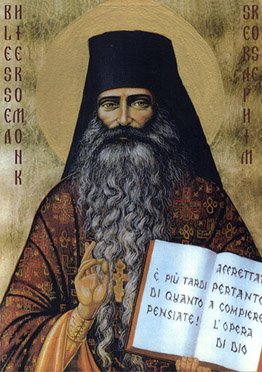
(Saint?) Hieromonk Seraphim of Platina


Sept 2nd was the anniversary of the repose of Fr. Seraphim Rose of Platina (1934-1982). This extraordinary man is among the most famous American converts to Orthodoxy. Born Eugene Rose he was baptized as a Methodist and was raised in a normal middle class family. Early in life he abandoned all religious belief professing atheism and later practicing Buddhism. As a young man in college Eugene fell into a life of hedonism. In the 1950s he was introduced to Orthodox Christianity (ironically by his homosexual lover). As his attraction to Holy Orthodoxy grew so his love for the world and its pleasures waned and he gradually abandoned the ways of his dissipated youth. During this period he became close friends with and adopted as a spiritual mentor the great St. John Maximovitch of Shanghai and San Francisco (then archbishop of SF). In 1962 he was received into Orthodoxy via Holy Chrismation by his spiritual father St. John.

In the early 1960’s Eugene with another Orthodox Christian organized a community of Christian booksellers and publishing dedicated to St. Herman of Alaska (not yet canonized by the Church). By 1966 Eugene had reached the point where he and some of the others felt the need to withdraw from the world and pursue the angelic life. They departed the world and settled in the wilderness of Northern California near Platina. There they lived the monastic life under extremely ascetic conditions (no running water or electricity). In 1970 he was tonsured as a monk by the Russian Orthodox Church Outside of Russia (ROCOR) where he took the name Seraphim after St. Seraphim of Sarov.

It was in his monastic life that he also began to write articles and books on Orthodox spirituality and other topics. His works include God's Revelation to the Human Heart, Orthodoxy and the Religion of the Future, and The Soul After Death. He also founded the magazine The Orthodox Word which is still published at the monastery today. His fame soon spread for his spirituality and also for his sound teachings on many subjects though some of his eschatological writings were and remain highly controversial.

He defended the veneration of pre-schism western saints including Blessed Augustine at a time when some challenged the practice. He also strongly defended the grace of the Church in Russia when more radical elements were attempting to deny that the Russian Church retained grace. He became an outspoken critic of the Holy Transfiguration Monastery (Brookline Mass) as it began its slide towards eventual schism.

In 1982 Fr. Seraphim complained of stomach pains and after some procrastination and resistance allowed himself to be taken to the hospital in Redding California. There it was discovered that he was gravely ill. Prayers from all over the Orthodox world went up for his recovery but it was not to be. Within days he reposed.

His body was returned to St. Herman’s Monastery in Platina where it was said that a sweet odor emanated from it and it showed no signs of corruption. After several days he was buried and his grave remains a place of pilgrimage for pious Orthodox Christians. Many miracles have been attributed to his intercession and there is a movement to have him glorified as a saint. At present none of the various Orthodox synods have chosen to act on the matter though it is widely assumed that the ROCOR would be the most logical one to do so if the decision is ever made since he lived his monastic life under their jurisdiction. Informally he is widely referred to as Blessed Seraphim of Platina and some icons have been produced with his image depicting him as a saint (see above).

On a personal note I can relate that I had the pleasure of visiting St. Herman’s Monastery this last Cheesefare weekend in preparation for being received into the Orthodox Christian Faith. The monastery is today under the jurisdiction of the Serbian Church after a brief period where it had become extra-canonical. The monks are extremely welcoming of visitors though they ask that you write ahead or email them. They do have an email address that they check every day or two on a computer in the local town. The monastery remains very rustic with none of the amenities of the modern world. The bunk houses for guests have wood burning stoves for heating in the winter. The food was surprisingly good.

St. Herman’s is located in a remote area of Northern California a little less than an hour from Redding. It is not far from Trinity National Park and the scenery is breathtaking. Pilgrims and those seeking a retreat from the world are always welcome though they do not accommodate women overnight in the monastery. Ladies are encouraged to contact St. Xenia’s monastery for women which is close by. While staying in the monastery visitors abide by the monastic rule there to the extent possible. Spiritual reading material is given to visitors and when they tire of reading they often ask the abbot for some small task to perform with the monks. If you plan to visit, pack conservative attire as modesty is required while on the monastery’s grounds. Also wear comfortable shoes since in the church they follow the traditional Orthodox practice of standing through services. Benches are available for the infirm or those not accustomed to long standing. A flashlight and sanitary napkins are also good things to bring. There is still no running water or electricity. St Herman’s follows the Old Calendar and all services are in English.

For those interested the monks may be contacted by email at: stherman@stherman.com

Hat tip to the Young Fogey whose blog reminded me of the anniversary.

Addendum: When I originally wrote this essay I said that Fr. Seraphim had been raised Catholic. I was mistaken and have corrected the text above. He was baptised in the Methodist Church.