Wednesday, November 08, 2006

Florovsky on The Last Things (part 3)


The Second Coming

The notion of "the end" - of an ultimate end - is a paradoxical notion. An "end" both belongs to the chain or series, and breaks it. It is both "an event" and "the end of all events." It belongs to the dimension of history, and yet it dismisses the whole dimension. The notion of "the beginning" - first and radical - is also a paradoxical notion. As St. Basil has said once, "the beginning of time is not yet time, but precisely the beginning of it" (Hexaem. 1.6). It is both an "instant" and more than that.

Of the future we can speak but in images and parables. This was the language of the Scripture. This imagery cannot be adequately deciphered now, and should not be taken literally. But in no sense should it be simply and bluntly "demythologized." Brunner is formal at this point. The expected Parousia [the appearance]of Christ must be regarded as "an event." The character of this event is unimaginable. Better symbols or images can be hardly found than those used in the Bible. "Whatever the form of this event may be, the whole point lies in the fact that it will happen" (Brunner, Eternal Hope, p. 138). The Christian kerygma is decisive at this point: "the ultimate redemptive synthesis has the character of an event." In other words, the Parousia belongs to the chain of historic "happenings," which it is expected to conclude and to close. "A Christian faith without expectation of the Parousia is like a ladder which leads nowhere but ends in the void." At one point, in any case, we can go beyond images: it is Christ that is coming. The Parousia is a "return," as much as it is an ultimate novelty. "The Last Events" are centered around the person of Christ.

The end will come "suddenly." And yet it is, in a certain sense, prepared inside of history. As Brunner says, "the history of man disclose radically apocalyptic traits." At this point he indulges in metaphysical speculations. "The swing of the pendulum becomes ever faster." This acceleration of the tempo of human life may reach the point at which it can go no further. History may simply explode suddenly. On the other hand, and on the deeper level, disharmonies of human existence are steadily increasing: there is "an everwidening split in the human consciousness." Of course, these suggestions have no more than a subsidiary or hypothetical value. Brunner tries to commend the paradoxical concept of the end to the modern mind. But they are also characteristic of his own vision of human reality. History is ever ready to explode, it is vexed and overburdened with unresolved tensions. Some years ago a Russian religious philosopher, Vladimir Th. Ern, suggested that human history was a kind of "catastrophical progress," a steady progression toward an end. Yet the end was to come from above, in a Parousia. Accordingly, it was to be more than just a "catastrophe," or an immanent or internal "judgment" - a disclosure of inherent contradictions or tensions. It was to be an absolute judgment, the Judgment of God.

Now, what is judgment? It is no less "an event" than the Parousia. It is an ultimate encounter between the sinful humanity and the Holy God. First of all, it will be an ultimate disclosure or manifestation of the true state of every man and of the whole mankind. Nothing will be left hidden. Thus, judgment will terminate that state of confusion and ambiguity, of inconclusiveness, as Brunner puts it, which has been characteristic of the whole historic stage of human destiny. This implies an ultimate and final "discrimination" - in the light of Christ. It will be an ultimate and final challenge. The will of God must be finally done. The will of God must be ultimately enforced. Otherwise, in the phrase of Brunner, "all talk of responsibility is idle chatter." Indeed, man is granted freedom, but it is not a freedom of indifference. Man's freedom is essentially a responsive freedom - a freedom to accept God's will. "Pure freedom" can be professed only by atheists. "To man is entrusted, of man is expected, merely the echo, the subsequent completion, of a decision which God has already made about him and for him" (Ibid, p. 178). There is but one fair option for man - to obey; there is no real dilemma. Man's purpose and goal are fixed by God.

All this is perfectly true. Yet, at this very point, the vexing question arises. Will actually all men accept, at the Last Judgment, God's will? Is there any room for radical and irreversible resistance? Can man's revolt continue beyond judgment? Can any creaturely being, endowed with freedom, persist in estrangement from God, which has been persistently practiced before, that is - to pursue its own will? Can such a being still "exist" - in the state of revolt and opposition, against the saving will of God, outside God's saving purpose? Is it possible for man to persevere in rebellion, in spite of the call and challenge of God? Is the Scriptural picture of separation - between the sheep and the goats - the last word about man's ultimate destiny? What is the ultimate status of creaturely "freedom?" What does it mean that finally the will of God must and will prevail? These are queer and searching questions. But they cannot be avoided. They are not dictated only by speculative curiosity. They are "existential" questions. Indeed, the Last Judgment is an awful mystery, which cannot, and should not, be rationalized, which passes all knowledge and understanding. Yet, it is a mystery of our own existence, which we cannot escape, even if we fail to comprehend or understand it intellectually.

Brunner emphatically dismisses the "terrible theologoumenon" of double predestination, as incompatible with the mind of the Bible. There is no eternal discrimination in God's creative design. God calls all men to salvation, and for that purpose He calls them into existence. Salvation is the only purpose of God. But the crucial paradox is not yet resolved. The crucial problem is, whether this only purpose of God will be actually accomplished, in all its fullness and comprehensiveness, as it is admitted and postulated in the theory of universal salvation, for which one may allege Scriptural evidence. Brunner rejects the doctrine of the Apokatastasis, as a "dangerous heresy." It is wrong as a doctrine. It implies a wrong security for men - all ways lead ultimately to the same end, there is no real tension, no real danger. And yet, Brunner admits that the doctrine of the forgiving grace, and of the justification by faith, leads logically to the concept of an universal redemption. Can the will of the omnipotent God be really resisted or, as it were, overruled by the obstinacy of feeble creatures? The paradox can be solved only dialectically - in faith. One cannot know God theoretically. One has to trust His love.

It is characteristic that Brunner discusses the whole problem exclusively in the perspective of the divine will. For that reason he misses the very point of the paradox. He simply ignores the human aspect of the problem. Indeed, "eternal damnation" is not inflicted by "the angry God." God is not the author of Hell. "Damnation" is a self-inflicted penalty, the consequence and the implication of the rebellious opposition to God and to His will. Brunner admits that there is a real possibility of damnation and perdition. It is dangerous and erroneous to ignore that real possibility.

But one should hope that it will never be realized. Now, hope itself must be realistic and sober. We are facing the alternative: either, at the Last Judgment, unbelievers and unrepentant sinners are finally moved by the divine challenge, and are "freely" converted - this was the hypothesis of St. Gregory of Nyssa; or their obstinacy is simply overruled by the divine Omnipotence and they are saved by the constraint of the divine mercy and will - without their own free and conscious assent. The second solution implies contradiction, unless we understand "salvation" in a forensic and formalistic manner. Indeed, criminals may be exonerated in the court of justice, even if they did not repent and persevere in their perversion. They only escape punishment. But we cannot interpret the Last Judgment in this manner. In any case, "salvation" involves conversion, involves an act of faith. It cannot be imposed on anyone. Is the first solution more convincing? Of course, the possibility of a late "conversion" - in "the eleventh hour," or even after - cannot be theoretically ruled out, and the impact of the divine love is infinite. But this chance or possibility of conversion, before the Judgment-Seat of Christ, sitting in glory, cannot be discussed in abstracto, as a general case. After all, the question of salvation, as also the decision of faith, is a personal problem, which can be put and faced only in the context of concrete and individual existence. Persons are saved, or perish. And each personal case must be studied individually. The main weakness of Brunner's scheme is in that he always speaks in general terms. He always speaks of the human condition and never of living persons.

The problem of man is for Brunner essentially the problem of sinful condition. He is afraid of all "ontic" categories. Indeed, man is sinner, but he is, first of all, man. It is true, again, that the true stature of genuine manhood has been exhibited only in Christ, who was more than man, and not a man. But in Christ we are given not only forgiveness, but also the power to be, or to become, children of God, that is - to be what we are designed to be. Of course, Brunner admits that believers can be in communion with God even now, in this present life. But then comes death. Does faith, or - actually - one's being en Christo, make any difference at this point? Is the communion with Christ, once established by faith (and, indeed, in sacraments), broken by death? Is it true that human life is "a being unto death." Physical death is the limit of physical life. But Brunner speaks of the death of human persons, of the "I." He claims that it is a mystery, an impenetrable mystery, of which rational man cannot know anything at all. But, in fact, the concept of this "personal death" is no more than a metaphysical assumption, derived from certain philosophical presuppositions, and in no way a datum of any actual or possible experience, including the experience of faith. "Death" of a person is only in the estrangement from God, but even in this case it does not mean annihilation. In a sense, death means a disintegration of human personality, because man is not designed to be immaterial. The bodily death reduces the integrity of the human person. Man dies, and yet survives - in the expectation of the general end. The ancient doctrine of the Communion of Saints points to the victory of Christ: In Him, through faith (and sacraments), even the dead are alive, and share - in anticipation, but really - the everlasting life. Communio Sanctorum is an important eschatological topic. Brunner simply ignores it altogether - surely not by accident but quite consistently. He speaks of the condition of death, not of personal cases. The concept of an immortal soul may be a Platonic accretion, but the notion of an "indestructible person" is an integral part of the Gospel. Indeed, only in this case there is room for a general or universal judgment, at which all historic persons, of all ages and of all nations, are to appear - not as a confused mass of frail and unprofitable sinners, but as a congregation of responsive and responsible persons, each in his distinctive character, congenital and acquired. Death is a catastrophe. But persons survive, and those in Christ are still alive - even in the state of death. The faithful not only hope for life to come, but are already alive, although all are waiting for Resurrection. Brunner, of course, is fully aware of this. In his own phrase, those who believe "will not die into nothingness but into Christ." Does it mean that those who do not believe "die into nothingness?" And what is "nothingness" - "the outer darkness" (which is probably the case) or actual "nonbeing?"

It is also true that full integrity of personal existence, distorted and reduced by death, will be restored in the general Resurrection. Brunner emphasizes the personal character of the Resurrection. "The New Testament faith knows of no other sort of eternal life except that of the individual persons" (Ibid, p. 148). The flesh will not rise. But some kind of corporeality is implied in the Resurrection. All will rise, because Christ is risen. Now, Resurrection is at once a Resurrection unto life - in Christ, and a Resurrection - to Judgment. Brunner discusses the general Resurrection in the context of faith, forgiveness, and life. But what is the status of those who did not believe, who did not ask for forgiveness, and never knew of the redemptive love of Christ, or probably have obstinately denounced and rejected it as a myth, as a fraud, as a deceit, or as an offense for the autonomous personality ?

And this brings us back again to the paradox of the judgment. Strangely enough, at this point Brunner speaks more as a philosopher than as a theologian, precisely because he tries to avoid metaphysical inquiry, and all problems which have been suppressed reappear in disguise. Brunner puts the question in this way: how can we reconcile divine Omnipotence and human freedom, or - on a deeper level - divine holiness (or justice) and divine merry and love. It is a strictly metaphysical problem, even if it is discussed on the scriptural basis. The actual theological problem is, on the other hand: what is the existential status of unbelievers - in the sight of God, and in the perspective of the human destiny? The actual problem is existential - the status and destiny of individual persons. For Brunner the problem is obscured by his initial choice - his sweeping bracketing together of all men as sinners, without any real ontic or existential discrimination between the righteous and the unrighteous. Indeed, all are under the judgment, but, obviously, not in the same sense. Brunner himself distinguishes between those who fail being tempted, and those who choose to tempt others and to seduce. He knows of deliberate perversion. But he does not ask, how an individual human person may be affected, in his inner and intimate structure, by deliberate and obstinate perversion, apostasy and "love for evil." There is a real difference between weakness and wickedness, between frailty and godlessness. Can all sins be forgiven, even the non-avowed and non-repented? Is not forgiveness received only in humility and in faith? In other words, is "condemnation" just a "penalty," in the forensic sense, or a kind of negative "reward?" Or is it simply a manifestation of what is hidden - or rather quite open and conspicuous in those who have chosen, by an abuse of "freedom," that wide path which leads into Gehenna.

There is no chapter on Hell in any of Brunner's books. But Hell is not just a "mythical" figure of speech. Nor is it just a dark prospect, which - one wants to hope - may never be realized. Horribile dictu - it is a reality, to which many human beings are even now committed, by their own will, or at least - by their own choice and decision, which may mean, in the last resort, bondage, but is usually mistaken for freedom. "Hell" is an internal state, not a "place." It is a state of personal disintegration, which is mistaken for self-assertion - with certain reason, since this disintegration is grounded in pride. It is a state of self-confinement, of isolation and alienation, of proud solitude. The state of sin itself is "hellish," although it may be, by an illusion of selfish imagination, mistaken for "Paradise." For that reason sinners chose "sin," the proud attitude, the Promethean pose. One may make of "Hell" an ideal, and pursue it - deliberately and persistently.

Indeed, ultimately, it is but an illusion, an aberration, a violence, and a mistake. But the sting of sin is precisely in the denial of the divinely instituted reality, in the attempt to establish another order or regime, which is, in contrast with the true divine order, a radical disorder, but to which one may give, in selfish exaltation, ultimate preference. Now, sin has been destroyed and abrogated - it can not be said that "sin" has been redeemed, only persons may be redeemed. But it is not enough to acknowledge, by faith, the deed of the divine redemption - one has to be born anew. The whole personality must be cleansed and healed. Forgiveness must be accepted and assessed in freedom. It cannot be imputed - apart from an act of faith and gratitude, an act of love. Paradoxically, nobody can be saved by love divine alone, unless it is responded to by grateful love of human persons. Indeed, there is always an abstract possibility of "repentance" and "conversion" in the course of this earthly or historic life. Can we admit that this possibility continues after death? Brunner will hardly accept the idea of a "Purgatory." But even in the concept of Purgatory no chance of radical conversion is implied. Purgatory includes but believers, those of good intentions, pledged to Christ, but deficient in growth and achievement. Human personality is made and shaped in this life - at least, it is oriented in this life. The difficulty of universal salvation is not on the divine side - indeed, God wants every man "to be saved," not so much, probably, in order that His will should be accomplished and His Holiness secured, as in order that man's existence may be complete and blessed. Yet, insuperable difficulties may be erected on the creaturely side. After all, is "ultimate resistance" a greater paradox, and a greater offense, than any resistance or revolt, which actually did pervert the whole order of Creation, did handicap the deed of redemption? Only when we commit ourselves to a Docetic view of history and deny the possibility of ultimate decisions in history, in this life, under the pretext that it is temporal, can we evade the paradox of ultimate resistance.

St. Gregory of Nyssa anticipated a kind of universal conversion of souls in the afterlife, when the Truth of God will be revealed and manifested with compelling evidence. Just at that point the limitation of the Hellenic mind is obvious. Evidence seemed to it to be the decisive motive for the will, as if "sin" were merely ignorance. The Hellenic mind had to pass through a long and hard experience of asceticism, of ascetic self-examination and self-control, in order to overcome this intellectualistic naïveté and illusion and discover a dark abyss in the fallen soul. Only in St. Maximus the Confessor, after some centuries of ascetic preparation, do we find a new and deepened interpretation of the Apokatastasis. Indeed, the order of creation will be fully restored in the last days. But the dead souls will still be insensitive to the very revelation of Light. The Light Divine will shine to all, but those who once have chosen darkness will be still unwilling and unable to enjoy the eternal bliss. They will still cling to the nocturnal darkness of selfishness. They will be unable precisely to enjoy. They will stay "outside" - because union with God, which is the essence of salvation, presupposes and requires the determination of will. Human will is irrational and its motives cannot be rationalized. Even "evidence" may fail to impress and move it.

Eschatology is a realm of antinomies. These antinomies are rooted and grounded in the basic mystery of Creation. How can anything else exist alongside of God, if God is the plenitude of Being? One has attempted to solve the paradox, or rather to escape it, by alleging the motives of Creation, sometimes to such an extent and in such a manner as to compromise the absoluteness and sovereignty of God. Yet, God creates in perfect freedom, ex mera liberalitate, that is, without any "sufficient reasons." Creation is a free gift of unfathomable love. Moreover, man in Creation is granted this mysterious and enigmatic authority of free decision, in which the most enigmatic is not the possibility of failure or resistance, but the very possibility of assent. Is not the will of God of such a dimension that it should be simply obeyed without any real, that is, free and responsible, assent? The mystery is in the reality of creaturely freedom. Why should it be wanted in the world created and ruled by God, by His infinite wisdom and love? In order to be real, human response must be more than a mere resonance. It must be a personal act, an inward commitment. In any case, the shape of human life - and now we may probably add, the shape and destiny of the cosmos - depends upon the synergism or conflict of the two wills, divine and creaturely. Many things are happening which God abhors - in the world which is His work and His subject. Strangely enough, God respects human freedom, as St. Irenaeus once said, although, in fact, the most conspicuous manifestation of this freedom was revolt and disorder. Are we entitled to expect that finally human disobedience will be disregarded and "dis-respected" by God, and His Holy Will shall be enforced, regardless of any assent? Or it would make a dreadful "masquerade" of human history? What is the meaning of this dreadful story of sin, perversion, and rebellion, if finally everything will be smoothed down and reconciled by the exercise of divine Omnipotence?

Indeed, the existence of Hell, that is, of radical opposition, implies, as it were, some partial "unsuccess" of the creative design. Yet, it was more than just a design, a plan, a pattern. It was the calling to existence, or even "to being," of living persons. One speaks sometimes of the "divine risk," says Jean Guitton. It is probably a better word than kenosis. Indeed, it is a mystery, which cannot be rationalized - it is the primordial mystery of creaturely existence.

Brunner takes the possibility of Hell quite seriously. There is no security of "universal salvation," although this is, abstractly speaking, still possible - for the omnipotent God of Love. But Brunner still hopes that there will be no Hell. The trouble is that there is Hell already. Its existence does not depend upon divine decision. God never sends anyone to Hell. Hell is made by creatures themselves. It is human creation, outside, as it were, of "the order of creation."

The Last Judgment remains a mystery.

Tuesday, November 07, 2006

Florovsky on The Last Things (part 2)


Why an "end"?

The mystery of the Last Things is grounded in the primary paradox of Creation. According to Brunner, the term Creation, in its Biblical use, does not denote the manner in which the world did actually come into existence, but only the sovereign Lordship of God. In the act of Creation God posits something totally other than Himself, "over against" Himself. Accordingly, the world of creatures has its own mode of existence-derivative, subordinate, dependent, and yet genuine and real, in its own kind. Brunner is quite formal at this point. "A world which is not God exists alongside of Him." Thus, the very existence of the world implies a certain measure of self-imposed "limitation" on the side of God, His kenosis, which reaches its climax in the cross of Christ. God, as it were, spares room for the existence of something different. The world has been "called into existence" for a purpose, in order that it manifest the glory of God. The Word is the principle and the ultimate goal of Creation.

Indeed, the very fact of Creation constitutes the basic paradox of the Christian faith, to which all other, mysteries of God can be traced back, or rather in which they are implied. Brunner, however, does not distinguish clearly, at this point, between the very "being" of God and His "will." Yet, the "being" of God simply cannot be "limited" in any sense. If there is a "limitation," it can refer only to His "will," insofar as another "will" has been "called into existence," a will which could not have existed at all. This basic "contingency" of Creation testifies to the absolute sovereignity of God. On the other hand, the ultimate climax of the creative kenosis will be reached only in "the Last Events." The sting of the paradox, of the kenosis, is not in the existence of the world, but in the possibility of Hell. Indeed, the World may be obedient to God, as well as it may be disobedient, and in its obedience it would serve God and manifest His glory. It will be not a "limitation," but an expansion of God's majesty. On the contrary, Hell means resistance and estrangement, pure and simple. However, even in the state of revolt and rebellion, the world still belongs to God. It can never escape His Judgment.

God is eternal. This is a negative definition. It simply means that the notion of time cannot be applied to His existence. Indeed, "time" is simply the mode of creaturely existence. Time is given by God. It is not an imperfect or deficient mode of being. There is nothing illusory about time. Temporality is real. Time is really moving on, irreversibly.

But it is not just a flux, as it is not a rotation. It is not just a series of indifferent "time-atoms" which could be conceived or postulated as infinite, without any end or limit. It is rather a teleological process, inwardly ordained toward a certain final goal. A telos [an end] is implied in the very design of Creation. Accordingly, what takes place in time is significant - significant and real for God Himself. History is not a shadow. Ultimately, history has a "metahistoric" goal. Brunner does not use this term, but he stresses strongly the inherent "finitude" of history. An infinite history, rolling on indefinitely, without destination or end, would have been an empty and meaningless history. The story is bound to have an end, a conclusion, a katharsis, a solution. The plot must be disclosed. History has to have an end, at which it is "fulfilled" or "consummated." It has been originally designed to be "fulfilled." At the end there will be no history any more. Time will be filled with eternity, as Brunner puts it. Of course, eternity means in this connection simply God. Time has meaning only against the background of eternity, that is - only in the context of the divine design.

Yet, history is not just a disclosure of that primordial and sovereign design. The theme of actual history, of the only real history we know about, is given by the existence of sin. Brunner dismisses the query about the origin of sin. He only stresses its "universality." Sin, in the biblical sense of the term, is not primarily an ethical category. According to Brunner, it only denotes the need for redemption. Two terms are intrinsically correlative. Now, sin is not a primary phenomenon, but a break, a deviation, a turning away from the beginning. Its essence is apostasy and rebellion. It is this aspect of sin that is emphasized in the biblical story of the Fall. Brunner refuses to regard the Fall as an actual event. He only insists that without the concept of the Fall the basic message of the New Testament, that is - the message of salvation would be absolutely incomprehensible. Yet, one should not inquire into the "when" and "how" of the Fall.

The essence of sin can be discerned only in the light of Christ, that is - in the light of redemption. Man, as he can be observed in history, always appears as sinner, unable not to sin. The man of history is always "man in revolt." Brunner is fully aware of the strength of evil - in the world and in the history of man. He commends the Kantian notion of radical evil. What he has to say about the Satanic sin, as different from man's sin, about the super-personal Satanic power, is impressive and highly relevant for theological inquiry, as much as all that may inevitably offend and disturb the mind of modern man. But the major question remains still without answer. Has the Fall the character of an event? The logic of Brunner's own argument seems to compel us to regard it as event, as a link in the chain of events. Otherwise it would be just a symbol, a working hypothesis, indispensable for interpretative purposes, but unreal. Indeed, the end of history must be regarded, according to Brunner, as "an event," howsoever mysterious this event will be. "The beginning" also has the character of "event," as the first link in the chain. Moreover, redemption is obviously "an event" which can be exactly dated-indeed, the crucial event, determinative of all others. In this perspective it seems imperative to regard the Fall as event, in whatever manner it may be visualized or interpreted. In any case, redemption and Fall are intrinsically related to each other, in Brunner's own interpretation.

Brunner distinguishes clearly between the creatureliness as such and sin. Creatures come from God. Sin comes from an opposite source. Sinfulness is disclosed in events, in sinful acts and actions. Indeed, it is an abuse of power, an abuse of freedom, a perversion of that responsible freedom which has been bestowed upon man in the very act by which he was called into existence. Yet, before the abuse became a habit, it had to have been exercised for the first time. The revolt had to have been started. Such an assumption would be in line with the rest of Brunner's exposition. Otherwise one lapses into some kind of metaphysical dualism which Brunner himself vigorously denounces. In any case, creatureliness and sinfulness cannot be equated or identified.

Indeed, Brunner is right in suggesting that we must start from the center, that is, with the glad tidings of redemption in Christ. But in Christ we contemplate not only our desperate "existential predicament" as miserable sinners, but, above all, the historical involvement of men in sin. We are moving in the world of events. Only for that reason are we justified in looking forward, to "the Last Events."

The course of history has been radically challenged by God - at one crucial point. According to Brunner, since the coming of Christ, time itself has been charged, for believers, with a totally new quality - "an otherwise unknown quality of decision." Ever since, believers are confronted with an ultimate alternative, confronted now - in this "historic time." The choice is radical - between heaven and hell. Any moment of history may become decisive - for those who are bound to make decisions, through Christ's challenge and revelation. In this sense, according to Brunner, "the earthly time is, for faith, charged with an eternity-tension." Men are now inescapably called to decisions, since God has manifested His own decision, in Christ, and in His Cross and Resurrection. Does it mean that "eternal decisions" - that is, decisions "for eternity"- must be made in this "historic time?" By faith - in Jesus Christ, the Mediator - one may, already now, "participate" in eternity. Since Christ, believers dwell already, as it were, in two different dimensions, both inside and outside of the "ordinary" time - this universal time, or age, in which the dying give place to those being born (St. Augustine, Civ. Dei, XV.I). Time has been, as it were, "polarized" by Christ's Advent. Thus, it seems, time is related now to eternity, that is to God, in a dual manner. On the one hand, time is always intrinsically related to the eternal God, as its Creator: God gives time. On the other hand, time has been, in those last days, radically challenged by God's direct and immediate intervention, in the person of Jesus Christ. As Brunner says himself, "temporality, existence in time, takes on a new character through its relationship to this event, Jesus Christ, the eph hapax of history, the once-for-all quality of His cross and Resurrection, and is newly fashioned in a paradoxical manner that is unintelligible to thinking guided by reason alone" (Brunner, Eternal Hope (Philadelphia: The Westminster Press, 1954), p. 48). We have reached the crucial point in Brunner's exposition. His interpretation of human destiny is strictly Christological and Christocentric. Only faith in Christ gives meaning to human existence. This is Brunner's strong point. But there is an ambiguous docetic accent in his Christology, and it affects grievously his understanding of history. Strangely enough, Brunner himself addresses the same charge to the traditional Christology of the Church, claiming that it never paid enough attention to the historic Jesus. It is a summary charge which we cannot analyze and "refute" just now. What is relevant for our purpose now is that Brunner's Christology is obviously much more docetic than that of the Catholic tradition. Brunner's attention to the historical Jesus is utterly ambiguous. According to Brunner, Christ is a historic personality only as man. When He "unveils Himself" - that is, when He discloses His Divinity to those who have the eye of faith - He is no more a historical personality at all. In fact, Christ's humanity, according to Brunner, is no more than "a disguise." The true self of Christ is divine. To faith Christ discards His disguise, His "incognito," to use Brunner's own phrase. "Where He discloses Himself, history disappears, and the Kingdom of God has begun. And when He unveils Himself, He is no longer an historical personality, but the Son of God, Who is from everlasting to everlasting" (Brunner, The Mediator (London: Lutterworth Press, 1949), p. 346). This is a startling language, indeed.

Actually, Christ's humanity is just a means to enter history, or rather - to appear in history. God's relation to history, and to human reality, is, as it were, no more than tangential, even in the crucial mystery of Incarnation. Actually, Christ's humanity interests Brunner only as a medium of revelation, of divine self-disclosure. Indeed, according to Brunner, in Christ God has really found a firm footing in humanity. But this does not seem anything more than that God has now challenged man in his own human element, on his own human ground and level. In order to meet man, God had to descend - to man's own level. This may be understood in a strictly orthodox way. Indeed, this was the favorite thought of the ancient Fathers. But Brunner denies any real interpenetration of divine and human aspects in Christ's person. In fact, they are no more than "aspects." Two elements meet, but there is no real unity. Christ of faith is only divine, even if in a human disguise. His humanity is just a means to enter history, or rather - to appear in history. Is history just a moving screen on which divine "eternity" is to be projected? God had to assume a beggar's robe of man, for otherwise He would be unable to encounter man. There was no real "assumption" of human reality into the personal experience of the Incarnate. The role of Christ's humanity was purely instrumental, a disguise. Basically it is a sheer "Docetism," however much attention may be given to "historic Jesus." After all, "historic Jesus" does not belong, in this interpretation, to the realm of faith.

Real decisions are not made on the plane of history, says Brunner. "For that is the sphere in which men wear masks. For the sake of our "masquerade," that is, for the sake of our sinful mendacity, Christ also, if I may put it like this, has to wear a mask; this is His Incognito" (Ibid, p. 346). Now, in the act of faith, man takes away his mask. Then, in response, Christ also discards His mask, His human disguise, and appears in His glory. Faith, according to Brunner, breaks down history. Faith itself is a kind of a "metahistoric" act, which transcends history, or even discards it. Indeed, Brunner stresses the uniqueness of God's redemptive revelation in Christ. For man it only means that the challenge is radical and ultimate. Man is now given a unique opportunity, or occasion, to make his decision, to overcome his own limited humanity, and even his intrinsic temporality - by an act of faith which takes him beyond history, if only in hope and promise, till the final keros [time] has come. But is human history ultimately just a masquerade? According to Brunner's own emphatic statement, temporality as such is not sinful. Why, then, should divine revelation in Christ discard history? Why should historicity be an obstacle to God's self-revelation, an obstacle that must be radically removed?

In the last resort, the radical change in history - the New Age, released by Christ's Advent - seems to consist only in the new and unprecedented opportunity to take sides. God actually remains as hidden in history as He has been before, or, probably, even more than before, since the ultimate incommensurability of divine revelation with the human masquerade has been made self-evident and conspicuous. God could approach man only in disguise. The actual course of history has not been changed, either by God's intervention, or by man's option. Apart from the decision of faith, history is empty, and still sinful. The intimate texture of actual historic life has not been affected by the redemptive revelation. Nevertheless, a warning has been given: The Lord comes again. This time He is coming as judge, not as Redeemer, although judgment will actually accomplish and stabilize redemption.

By faith we can now discern an "eschatological tension" in the very course of history, although it would be idle and in vain to indulge in any kind of apocalyptic calculations. This tension seems to exist on the human level alone. The eschatological interim is the age of decisions - to be taken by men. God's decision has been already taken.

As a whole, Christian history, according to Brunner, was a sore failure, a history of decay and misunderstanding. This is an old scheme, firmly established in Protestant historiography at least since Gottfried Arnold. The primitive Christian community, the ecclesia, was a genuine Messianic community, "the bearer of the new life of eternity and of the powers of the divine world," as Brunner puts it. But this primitive ecclesia did not survive, at least as an historic entity, as an historic factor. Brunner acknowledges partial and provisional "advents" of the Kingdom of God in the course of history. But all these "advents" are sporadic. Where faith is, there is ecclesia or Kingdom. But it is hidden, in the continuing "masquerade" of history. Ultimately, the ongoing history is a kind of testing ground, on which men are challenged and their responses are tried and tested. But does the "saving history" still continue? Is God still active in history, after the First Advent - or is history now left, after the great intervention of Christ, to man alone, with that eschatological provision that finally Christ comes again?

Now, history is obviously but a provisional and passing stage in the destiny of man. Man is called to "eternity," not to "history." This is why "history" must come to its close, to its end. Yet, indeed, history is also a stage of growth - the wheat and the tares are growing together, and their ultimate discrimination is delayed - till the day of harvest. The tares are growing indeed, rapidly and wildly. But the wheat is growing also. Otherwise there would be no chance for any harvest, except for that of tares. Indeed, history matures not only for judgment, but also for consummation. Moreover, Christ is still active in history. Brunner disregards, or ignores, that component of Christian history. Christian history is, as it were, "atomized," in his vision. It is just a series of existential acts, performed by men, and, strangely enough, only negative acts, the acts of rebellion and resistance, seem to be integrated and solidarized. But, in fact, ecclesia is not just an aggregate of sporadic acts, but a "body," the body of Christ. Christ is present in the ecclesia not only as an object of faith and recognition, but as her Head. He is actually reigning and ruling. This secures the Church's continuity and identity through the ages. In Brunner's conception Christ seems to be outside history, or above it. He did come once, in the past. He is coming again, in the future. Is He really present now, in the present, except through the memory of the past and the hope of the future, and indeed in the "metahistoric" acts of faith?

Creation, according to Brunner, has its own mode of existence. But it is no more than a "medium" of divine revelation. It must be, as it were, transparent for divine light and glory. And this strangely reminds us of the Platonizing gnosis of Origen and his various followers. The whole story is reduced to the dialectics of eternal and temporal. Brunner's own term is "parabolic."

Monday, November 06, 2006

Choosing Apostolic Communions: My Reply

Over at Sacramentum Vitae Michael Liccione has posted an article on the subject of how we go about choosing which of the two apostolic communions to affiliate with. In that article he very gently takes me to task for my choice of analogies that I used in a recent post on another blog about why I chose to go Orthodox. My post was also criticized in subsequent comments by Dr. William Tighe and (soon to be Fr.) Al Kimel, two individuals whose opinions I hold in high regard. Below is my reply which was too long to post in a single comment over at Mikes blog. In order to facilitate a coherent discussion I will ask that all comments be posted over at Mike’ web site which can be found in the above link. A/O

Michael,
Thank you for you very kind words. I also appreciate your thoughtful comments on my most recent post over at Ad Orientem. I hope to hear from some others. Now to the subject at hand…

As always you make a very powerful argument for doctrinal development. However as I noted in my comment to Dr. Tighe, my field is more history than theology. Thus I rarely approach doctrinal development as though it occurred in an historical vacuum. When examining the developments in the Latin understanding of the Petrine ministry I find that they often seem to be at least partially in response to socio-political conditions then in existence. Now this is not in and of itself a bad thing. It can be perfectly legitimate that a given situation might suddenly bring a certain truth into sharper focus. It is also completely legitimate for existing circumstances to influence church discipline.

Indeed I have occasionally irritated some of my co-religionists, by noting that some aspects of the growth of papal power were not only legitimate but almost impossible to conceive of not having occurred. The situation in the West following the disintegration of the Western Roman Empire was one of near complete chaos. The Church at the time represented almost the only remaining institution that had any sort of unifying effect in Western Europe. Thus it was natural and to a degree even necessary for the See of Rome to step into the void left by the fall of the Empire. This was especially so as the various barbarian tribes were converted. The West, lacking the stabilizing influence of the Imperial Government present in the East, had a totally different situation to deal with. In the East the emperor was often at least as powerful (and sometimes more so) than the Patriarchs and took a direct hand in the governance of The Church. There was an absolute union of church and state. But just as important, there was only one state to deal with. While a general union of church and state developed in the west over the centuries it was a fragmented one. The political balkanization of Western Europe had far reaching consequences for the church there.

Up to a point I think that a certain centralization of administrative power in the Roman See was needed, probably far more than most of my fellow Orthodox would be comfortable with admitting to. But I am referring to the disciplinary ecclesiology of the Latin Church as distinct from its doctrinal claims. At the risk of sounding Protestant (even a stopped clock is right twice a day) a strong argument could be made that the gradually increased involvement of the papacy in secular politics produced an increasing need to justify its position in the world. This lent itself to the medieval doctrinal development of the papal powers culminating in the High Middle Ages with Boniface VIII’s Unam Sanctum.

Now a converse argument could also be made to the effect that the socio political conditions in the East retarded legitimate doctrinal development in that half of The Church. The Eastern Churches by and large have existed within the framework of the Roman Empire (Eastern) or under the yoke of non-Christian rulers up until very nearly modern times (the Russian Church being the obvious exception). This would have negated the circumstances that provoked much of the doctrinal development witnessed in the Latin Church especially in the medieval period.

All of which brings us back to the central question of your erudite post. How does one discern legitimate doctrinal development from illegitimate development or as you politely framed it “addition to the deposit of the faith?”

Once again I turn to history. Here I look for signs which to me would render a given example of doctrinal development suspect. The big red flag for me is the following question. Has the modern church effectively abandoned its earlier position or reversed itself? In several areas I again would argue a strong case can be made that the Roman Church has indeed come very close to reversing previously held positions or simply abandoning them. Some examples would include usury, extra ecclesiam nulla salus, religious liberty (Vat II), limbo, capital punishment, and torture (the topic of several of your recent fascinating posts). I actually concur with the development of doctrine on the death penalty so that’s probably a poor example. But the others are all cases where a prima facie case can be made that there has been a substantive reversal or abandonment of previously held doctrine. All of these subjects are ones on which the Roman Catholic Church had very clear and to the minds of most people firmly set doctrinal statements of belief which have seen very dramatic changes.

In general I am not aware of any corresponding examples (at least none as glaring) that exist in Orthodoxy. And yes, all of the above examples can and have been explained by the advocates of doctrinal development. But I often find those explanations tortured and… I hate to use this term… legalistic. Some doctrinal development is probably unavoidable. But radical development which some might term revolutionary is suspect. This coupled with the frequency with which the Roman Catholic Church is “developing” its doctrine all combined to add to my already considerable discomfort with Catholic doctrinal development post first millennium.

Again defenders of DD might point out that it’s easy to criticize such when your faith remains frozen in the 9th century. But the reply could be made that doctrinal development might not be quite as common or necessary if there were not such an urgent need to have an explanation or doctrine about everything. Yes we Orthodox do suffer from the lack of a clearly defined final authority. Although I think you made a pretty good list of things we look for, the two big ones being an Ecumenical Council and acceptance by the church as a whole. Doctrinal development in the East is far slower as a result of our ecclesiology. It also tends to be less rigid in some respects. The very nature of The Church makes quick judgments on doctrinal matters difficult almost to the point of impossible. To be certain, that’s a double edged sword. But if it’s a really serious subject of contention then the issue will still be around in a hundred years and it might take that long to reach a consensus on it.

Further it is worth noting that really serious theological arguments, the kind that provoke schisms, have been almost completely absent from Orthodoxy since the split with Rome. Yes we have schisms. But they are mostly jurisdictional and juridical squabbles. For the most part the faith is settled. The one possible exception could arguably be the Old Believers of Russia. But even there I would argue that was much more about an abuse of power in imposing church disciplines which were alien to the local people.

I could go on, but I have covered what I really wanted to and this has already reached three pages on MS Word. That’s long enough for a comment I think. In closing I wish to say that I am in absolute agreement with the closing paragraph of your article. One can not prove or disprove either Orthodoxy or Roman Catholicism. And like you I never seriously considered Protestantism which I found historically bankrupt. The same “assiduous prayer and integrity” which lead me to Orthodoxy has kept you in Rome. In the end we must do what we believe to be right according to those lights that God gives us by which we discern right from wrong. More than that is not possible and all we can do is commend our miserable and unworthy souls to the mercy of God.

As always typos etc… mea culpa.

ICXC
John

Sunday, November 05, 2006

What is Rome to Orthodoxy?

From a comment in the below “Sailing to Byzantium.”

I agree with you also. But how do you deal with Bernadette of Lourdes, whose body is incorrupt? And with the many attested miracles associated with Lourdes? Yet that apparition styled herself as "the immaculate conception", which I gather is not accepted by Orthodox Christians. And how do you deal with the events of Fatima, in which 70,000 rain-soaked people were instantly dried after the miracle of the sun...yet that apparition refers to "the conversion of Russia" and "the reign of Pius XI"? And finally how do you deal with personages like Padre Pio, whose whole life and ministry center around obedience including reverence for the pope of Rome?

Those are the things--however slender they may seem--that give me pause.

Seraph,
In a few lines you have posed a question that volumes could be written in reply to and not be adequate. A proper reply is certainly beyond the scope of a comment here. And very likely it is beyond my poor abilities. But I will try to give you the short version of my limited thoughts on the matter. Orthodoxy focuses on what it knows and not what it does not know. Herein lays a major difference between Rome and Orthodoxy. Rome generally believes there are answers for everything and it looks for them. In Orthodoxy we simply accept that some things are. And we also accept that some things are outside our realm of knowledge and we don’t tend to worry a lot about them. This can be quite maddening to Western Christians. And as a former Roman I absolutely feel that frustration sometimes. One of the areas that is a bit gray for us is the question of the boundaries of The Church and what goes on outside them.

We know where The Church is (canonical Orthodoxy). And in some cases we can state with a fair degree of certainty where it is not (all of your various Protestant sects). And while it is true that we Orthodox have ever held that true sacramental grace belongs solely to God’s Church since the Holy Mysteries are confected in cooperation with the entire Church and the Holy Spirit, we do not claim to know with certainty where the exact bounds of The Church lie, on the one side of which are the grace of True Mysteries, and on the other side of which that grace is lacking. Nor do we claim to know what goes on outside of God’s Church.

Orthodoxy does not put limits on God’s mercy. Nor do we limit where the uncreated energies of His grace can flow or what they can do (save in the matter of sacramental grace). Even where the sacraments are concerned, we don’t claim that heterodox sacraments are completely without merit. Again we don’t know what God may choose to do or not do. We only hold that non-Orthodox sacraments do not do what the Church does. What the relationship of the Roman Catholic Church is to The Church has never been clearly defined. If asked for an opinion my guess is you will get a wide variation of answers. Indeed this is a pretty hot topic of discussion in some quarters.

Some (more than a few) will tell you that Rome is flatly heretical and has no connection to Orthodoxy and that her sacraments are without grace. Others will tell you that Rome is separated from The Church but that her heresy is not of a nature that would impede the grace of her sacraments. And still others will tell you they don’t know.

I fall mainly into the latter category but I do lean towards accepting that Rome retains the grace of true sacraments. Among the items which have moved me in that direction was Florovksy’s essay on The Limits of the Church. I intend to post that in the coming days. Another item which caused me to lean in that direction is the clear number of saints produced by the Latin Church. This last statement will be controversial among some of my Orthodox brothers and sisters, not a few of whom might take vigorous exception to my acknowledging the possibility of non Orthodox saints. Oh well. I will deal with it. Also it has been the tradition of the Russian Church when accepting converts from the Roman clergy that after Chrismation and profession of faith they were simply vested.

St John of San Francisco (my patron) once explained his view of Rome this way. Rome, he said, is like a very old and beautiful house. All of its wiring is still intact and in good order. But it’s not connected to the city power station. The policy of the Russian Church regarding the reception of Roman priests does seem to affirm that the wiring is still there in the minds of the Holy Synod. This is certainly not done for Protestants. Yet other Orthodox jurisdictions require Roman converts to be baptized. The bottom line I think here, is that there is no bottom line… yet. We are back to “I don’t know.”

As for the particulars you mentioned, mostly that also falls into the realm of I don’t know. Incorrupt saints exist in both the East and the West. I knew of many Catholic saints that were incorrupt before I swam the Bosphoros. We have them too. The incorrupt relics of my patron St. John of San Francisco lie not two hours from where I am typing. I also know the basics of some of the Marian apparitions in the western tradition. We have our own. And St. Seraphim of Sarov prophesized about the ordeal awaiting Russia long ago.

It is recorded that before he died he wrote a letter to be given to the Czar on the date of his glorification. On the day when he was canonized that letter was presented to the Holy Royal Passion Bearer Czar Nicholas II. No one knows with certainty what was in it. But Nicholas was shaken and paled after reading it. It is almost universally believed that it was a forewarning of the terrible cross that awaited the Emperor and his family. The Emperor and Empress were also warned by the Holy Fool for Christ Blessed Pasha (Parasceva) of their fate and Russia’s terrible ordeal that lay ahead. She also foretold the birth of the tragic Tsarevitch, Blessed Alexei. Of Padre Pio, he was doubtless a great and holy man. But there are many Orthodox saints who did not center their lives on the Pope. What of them?

This is not a minor question. The issue of the relationship of the Roman Church to Orthodoxy is a serious one. There are theological discussions now going on between the two churches. Are they proceeding from the perspective that Rome is a schismatic part of The Church still retaining the grace of the mysteries? Or are they proceeding from the point of view that Rome is heretical and has departed too far to retain any such grace? Or are they proceeding like me from the point of view of “I don’t know” and hoping to find out as they go along?

I am aware that the above thoughts are horribly inadequate to such a weighty question. And so I will open this up to others, Catholic or Orthodox, who may stumble onto this post. I would particularly appreciate the thoughts of some of my Orthodox brothers and sisters on this subject. Fr. Stephen Freeman, Daniel (Photius) Jones, the Ochlophobist and any others who would care to opine are invited to do so. I will ask that any discussion here please remain civil even if the topic might be one that naturally lends itself to polemics.

Under the mercy,
Ad Orientem

Saturday, November 04, 2006

A Reminder...


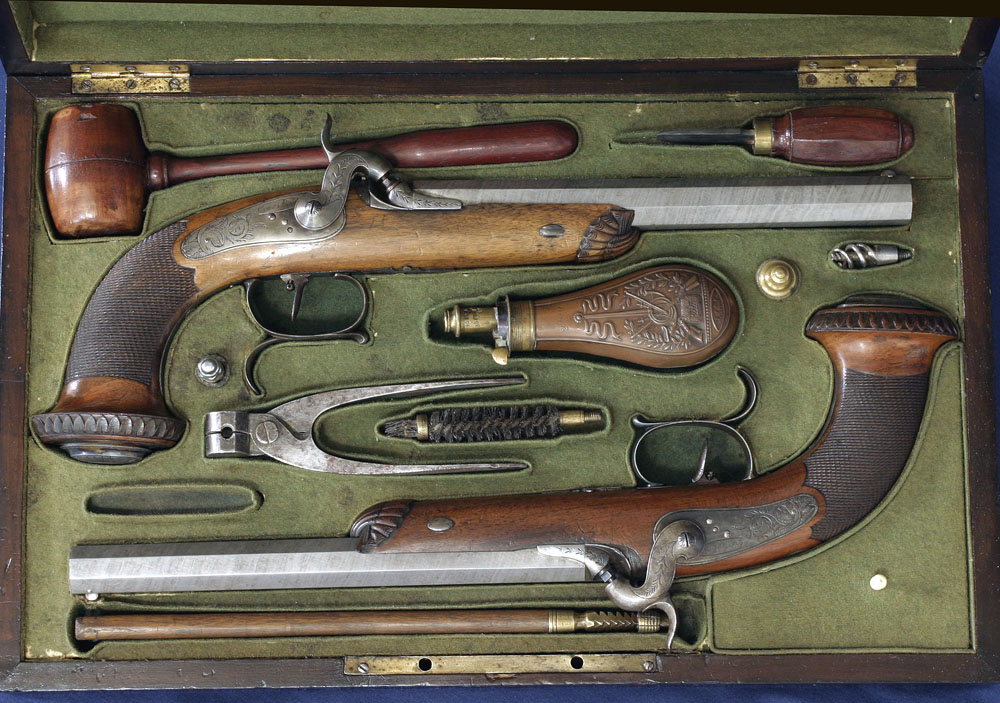
First off, thank you so very much to all of you who contribute thoughtful comments to this page. You make my life and this blog a work of joy. That said, this blog is not a public bulletin board or soap box for every disaffected crank to post on. Sorry if that sounds harsh. I have had (until today) only a very few posts that were clearly inappropriate. But I feel that this is a good time to remind everyone that the basic rules of civil discourse apply here. Debate issues not personalities. Debate vigorously if you feel so called, but not personally. Ad Hominum attacks are not allowed. Your blog master is in every sense a social reactionary and a creature of another era. So the bottom line is this. If you are posting something that might in a more civilized age have resulted in an early morning meeting over coffee and pistols, please refrain from doing so.

Yours
Ad Orientem

Florovsky on the Last Things (part 1)

Eschatology - an unpopular topic

Eschatology was for a long time a neglected field in modern theology. The arrogant phrase of Ernst Troeltsch - "The bureau of eschatology is for the most part closed" - was distinctively characteristic of the whole liberal tradition, since the Age of the Enlightenment. Nor is this neglect for eschatological issues fully overcome in contemporary thought. In certain quarters eschatology is still regarded as an obsolete relic of the forlorn past. The theme itself is avoided, or it is summarily dismissed as unreal and irrelevant. The modern man is not concerned with the last events. This attitude of neglect was recently reinforced by the rise of theological Existentialism. Now, Existentialism does claim to be itself an eschatological doctrine. But it is a sheer abuse of terms. Eschatology is radically interiorized in its existentialist reinterpretation. It is actually swallowed up in the immediacy of personal decisions. In a sense, modern Existentialism in theology is but a fresh variation on the old Pietistic theme. In the last resort, it amounts to the radical dehistorization of the Christian faith. Events of history are eclipsed by the events of inner life. The Bible itself is used as a book of parables and patterns. History is no more than a passing frame. Eternity can be encountered and tasted at any time. History is no more a theological problem.

On the other hand, precisely in the last few decades, the basic historicity of the Christian faith has been reassessed and reaffirmed in various trends of contemporary theology. This was a momentous shift in theological thinking. Indeed, it was a return to Biblical faith. Of course, no elaborate "philosophy of history" can be found in the Bible. But there is in the Bible a comprehensive vision of history, a perspective of an unfolding time, running from a "beginning" to an "end," and guided by the sovereign will of God toward the accomplishment of His ultimate purpose. The Christian faith is primarily an obedient witness to the mighty deeds of God in history, which culminated, "in those last days," in the Advent of Christ and in His redemptive victory. Accordingly, Christian theology should be construed as a "Theology of History." Christian faith is grounded in events, not in ideas. The Creed itself is a historical witness, a witness to the saving or redemptive events, which are apprehended by faith as God's mighty deeds.

This recovery of the historic dimension of the Christian faith was bound to bring the eschatological theme into the focus of theological meditation. The Bible and the Creed are both pointing to the future. It has been recently suggested that Greek philosophy was inescapably "in the grip of the past." The category of the future was quite irrelevant in the Greek version of history. History was conceived as a rotation, with an inevitable return to the initial position, from which a new repetition of events was bound to start again. On the contrary, the Biblical view opens into the future, in which new things are to be disclosed and realized. And an ultimate realization of the divine purpose is anticipated in the future, beyond which no temporal movement can proceed - a state of consummation.

In the witty phrase of von Balthasar, "Eschatology is the 'eye of the storm' in, the theology of our time" (Hans Urs von Balthasar, "Eschatologie," Fragen der Theologie Heute. Feiner, Trütsch, Böckle, editors (Zürich: Köln, 1958), pp. 493-421). Indeed, it is a "subtle knot" in which all lines of theological thinking intersect and are inextricably woven together. Eschatology cannot be discussed as a special topic, as a separate article of belief. It can be understood only in the total perspective of the Christian faith. What is characteristic of contemporary theological thought is precisely the recovery of the eschatological dimension of the Christian faith. All articles of faith have an eschatological connotation. There is no common consensus in the contemporary theology of "the Last Things." There is rather a sharp conflict of views and opinions. But there is also a new widening of the perspective.

Emil Brunner's contribution to the current discussion was both provocative and constructive. His theology is a theology of hope and expectation, as it befits one who stands in the Reformed tradition. His theology is inwardly oriented toward "the Last Events." Yet, at many points, his vision is limited by his general theological presuppositions. Indeed, his theology reflects his personal experience of faith. (Cont)

-Archpriest G. Florovsky

Friday, November 03, 2006

Sailing to Byzantium

Considering all of this, I'm obliged to admit that it's only the insurmountable obstacle of Matthew 16, 17-19, and the unbearable sense of loss involved in relinquishing the Roman rite that prevents me from making my own "peace with the East".

There was a time not too far past when I could have wriiten those same words. Read the rest of a very thoughtful essay here.

ROCOR & Moscow: Some blunt words...

The Canonical Consequences of Rejecting the Act of Canonical Communion

The rejection of the Act under the present historical opportunities would mean the total break of the Russian Orthodox Church Outside of Russia with all the Local Orthodox Churches, which will then have every reason to deem us schismatic.

The Serbian Orthodox Church, our last link with the fullness of canonical Orthodoxy, will doubtless refuse communion with us.

The rejection of the Act may in a very real sense persuade the Church of Jerusalem to deem us schismatic, withdraw the existing blessing for our bishops and priests to serve in the Holy Land, and retrieve the antimensia upon which we now serve. It threatens the total loss of our Holy Sites.

Rejecting the Act would make us, in the eyes of the Russian Orthodox Church, schismatics, like the followers of Valentin Rusantsov, and will exclude the possibility of participating in the church life of our homeland. At present, our voice is being heard, and we are invited to participate in ecclesiastical and historical conferences. Rejecting the Act would end such activity.

Regarding the possible timeline of adopting the Act, that is, of reestablishing unity, as a participant of the negotiating process, I can say the following:

If the Act is not signed, the opportunity we have been given would quickly disappear. Not only the Moscow Patriarchate, but the entire Orthodox world would thereby be convinced that cannot be dealt with seriously, that we ourselves prefer to be essentially sectarians, torn from the fullness of universal Orthodoxy, and do not wish to be united with our much-suffering Church in the Fatherland and with canonical Orthodoxy.

If this occurs, and if once again we were to desire to hold talks with the Russian Church in the Fatherland, then—even if they agree to speak to us—it would be an entirely different conversation. We will never again be given the opportunity to preserve the entire Church Abroad as a completely self-governing Church. The best we could hope for would be that the unconditional demand is made that we merge into the Moscow Patriarchate, which will then indeed fully control our church matters—they will appoint and transfer bishops and clergymen, etc.

-Archpriest Alexander Lebedeff (ROCOR)

Read the rest here.

Short Essay... Deep Thoughts

I have read this five times now. And I get something more each time I read it. Who else but Fr. Stephen of course.

Thursday, November 02, 2006

Ankara's Nightmare

In late November Pope Benedict XVI will arrive in Turkey for an official visit. He had hoped to be there last year at the invitation of the Ecumenical Patriarch for the celebration of the Feast of St. Andrew the First Called (patron of the Patriarchal See). However Turkey informed the Holy See that November of 2006 would be a more convenient date. Yet when the Pope travels there he will not be meeting the Prime Minister of Turkey who it appears will be out of town. A previous engagement perhaps? Also as part of the lead up to this special event the Turkish press has been doing its fair and balanced best to ignore the papal visit. Except that is, when reporting on the general hostility to the trip by most Turks. So, why the cold shoulder?

There are two reasons which stand out. Both have some basis though I believe one carries far greater weight. The one that everyone is thinking of is +Benedict’s speech at Regensburg in which he quite correctly and courageously drew attention to some of the defects in the Islamic mind set which are not conducive to reason and in some cases lend somewhat to a predisposition to irrational and even violent behavior. The Pope’s decision to quote a Byzantine Emperor's highly polemic opinion regarding Islam produced a largely predictable result. There were mass protests some of which were quite hysterical and even violent. Churches were burned and people were attacked. At least one Roman Catholic nun and one Oriental Orthodox priest have been martyred as a result of the anti-Christian violence.

The second and in my opinion more significant reason, is that this visit will shine an unwelcome light on Turkey’s treatment of religious minorities at a time when they are seeking admission to the European Union. For years the Christian minority in Turkey have suffered varying degrees of persecution, both official and unofficial. Until fairly recently Turkey had a thriving minority population of ethnic Greeks (Orthodox Christians). However a series of pogroms and various quasi legal measures have combined to drive most of them out of the country. Today only a few thousand remain. In the 1970’s the Turkish government seized many churches and shut down the country’s only Orthodox seminary (which was world famous). Despite pleas to reopen the seminary from many quarters Turkey remains unmoved. A public law mandates that only Turkish citizens can be elected Patriarch and the government reserves the right to confirm or veto any patriarchal election. At the present rate it is possible that we may be looking at the last (save perhaps one) Patriarch of Constantinople.

Turkey has never been very good at coming to terms with its own history. It still denies its complicity in the genocide of the Armenians, despite overwhelming and damning evidence accepted by every reputable historian and the entire international community. In fairness everyone wants other people to like their country. As an American I am pained by the low opinion that many throughout the world hold for my country today. But we do not criminalize negative opinions of our own country. In Turkey it can be a crime to criticize the country. And any discussion of certain aspects of its history is beyond the scope of permissible discourse.

Nor is this attitude limited to its Christian population. Turkey has a significant body of Kurds within its borders. And they too have suffered from Ankara’s neglect at best or malevolent attentions at worst. Recently Turkey has strongly hinted at military intervention if any effort is made to establish an independent Kurdistan in what is now Northern Iraq.

All of this of course can not bode well for Turkish aspirations to enter the EU. Another factor against their ambitions is the current tide of anti-immigrant feeling now rising in Europe. If Turkey gained EU membership there would be virtually no way to prevent a human wave of Islamic immigration into the heart of Western Europe. With recent violence and protests highlighting the lack of assimilation on the part of Europe’s already significant population of Islamic immigrants this is something that weighs heavily on the minds of leaders throughout the continent. This brings us back to Turkey’s unwelcome guest. In his previous incarnation as Cardinal Ratzinger, the Pope spoke out against Turkey’s admission to the EU. Most observers believe that contributed to Turkey’s decision to put off the papal trip to this year.

But there is also a fear that goes beyond even the light likely to shine on Turkish history. And that is the very real (and legitimate) concern that the Pontiff’s visit could precipitate some form of ugly incident while the eyes of the world are firmly fixed on Turkey. The possibility of violence during the Pope’s visit is significant and Ankara has already confirmed that security will be very heavy. Nor am I just referring to an assassination attempt on the Pope and or the Patriarch (God forbid!) While one may feel a certain concern for the Pope’s safety he at least will be moving under a curtain of heavily armed police and security agents. This can not be said for Turkey’s embattled Christian population. The danger of some sort of riot or orchestrated violence during the papal visit is quite real. And it is Ankara’s nightmare.

Iraq: Time to leave?

Metropolitan +Philip of the Antiochian Orthodox Archdiocese has recently stated that it was a mistake for the United States to invade Iraq. He has also called for all US troops to be pulled out of the country by spring of 2007. I can not state that he is the only Orthodox primate to speak out on this subject so directly. But he is the only one I know of doing so.

To be honest, I am ambivalent about the war in Iraq (as opposed to Afghanistan where I am 100% in favor of it). During the period leading up to the war I bought the whole bill of goods and supported it. Today I have serious doubts about the wisdom and necessity of the action. Hindsight is always 20/20 they say. The problem is I still don’t know if it was the right thing to do or not. I do not buy into all of the silly conspiracy theories about going in for oil etc. The Oliver Stone School of Politics has never appealed to me. But whether one agrees with the basic justification for the war or not, one thing is painfully clear. It’s been botched.

The post war planning was so incompetent that it is astonishing that no one has been held to account for it. Donald Rumsfeld is still running the War Department. And the administration has never apparently spent much time asking how a war we were assured would be over in 6 weeks with all US troops out of Iraq in 6 months or less is now half way into its 3rd year with no end in sight and the situation going from bad to worse. I for one believe enough young people have died in this debacle that its time some tough questions were asked and some accountability demanded. I spent ten years in the military and I understand that mistakes happen in war and the enemy can be generally counted on to be uncooperative in whatever you’re trying to do. But I expect people to LEARN from their mistakes. That has not been in evidence here.

“Cuiusvis hominis est errare, nullius nisi insipientis in errore perseverare.”

Anyone can err, but only the fool persists in his fault. - Cicero.

Wednesday, November 01, 2006

Dear Benedict...

Over at The New Liturgical Movement Shawn Tribe is starting a letter writing campaign to the Pope on the subject of the Motu Proprio by which the Rite of Pius V is expected to be freed. He has kindly provided the Pope's address and his email address. This prompted a very sensible question in the comments section. How do you address the Pope in correspondence? As someone who has occasionally been accused (not without some justification) of being a social snob when it comes to etiquette I immediately began searching for the answer. The below rules are the traditional ones for ecclesial correspondence observed by Roman Catholics who have occasion to write the Pontiff. Please note the word "traditional."

Before describing how an address should be written, or how a letter to an ecclesiastical personage should be begun and ended, it may be well to say that the paper must always be white, no other colour being allowed. The size and form of stationery considered appropriate is that known in Italy as palomba; it is used by the Roman Congregations, and is so called because it has the watermark of a dove (It., palomba). In other countries the paper used for protocols or ministerial correspondence may be employed, but it should be handmade, as both stronger and more suitable.

The ink must always be black; coloured inks are forbidden; first, because they are contrary to traditional usage, and next because they are liable to changes, having, for the most part, a basis of aniline or of animal oil; moreover, these inks on being exposed to the light lose colour rapidly and soon make the letter impossible to read.

The letter must be written as our fathers wrote, and not, as business letters are now sometimes written, first on the right hand sheet and then on the left, in inverse order to that of the leaves of a book. This is expressly laid down in an instruction issued by Propaganda when Monsignor Ciasca was secretary, and rests on the necessity of providing for the due order of the archives and for facility of classification.

Lastly, it is better not to write on the back of the sheet, as the ink may soak through the paper and make the document less easy to read; in any case, it is a rule of politeness to facilitate the reading of a letter in every possible way.

Ten years ago the use of a typewriter was not permissible; at the present day it is. Many decrees of the Congregation of Rites are written in this way; the Congregation of Bishops and Regulars allow it in the case of documents addressed to them, and other ecclesiastical courts have followed their example, but letters addressed to the Sovereign Pontiff personally must still be written by hand. If the letter be sealed, red wax must be used, any other colour, or even black, being forbidden; but the use of wafers, made to look like seals of red wax, which are gummed on to the envelope, is now tolerated. Moreover, according to the practice of the ecclesiastical chanceries, the seal used should be smaller in proportion to the dignity of the person addressed. In practice, however, it is not easy to follow this rule, since it is not everyone who possesses seals of different sizes.

FORMS OF ADDRESS


The Pope

The Sovereign Pontiff is addressed at the commencement of a letter as "Most Holy Father" (Beatissimo Padre); in the body of the letter as "His Holiness" (Sua or Vostra Santità). It is customary to speak to him always in the third person, and the letter ends with: "Prostrate at the feet of Your Holiness, I have the honour to profess myself, with the most profound respect, Your Holiness's most humble servant."

If, instead of a letter, a petition is sent to the Sovereign Pontiff, to be examined by him or by one of the Roman Congregations, it should begin: "Most Holy Father, Prostrate at the feet of Your Holiness, the undersigned N., of the diocese of N., has the honour to set forth as follows:" -- and the statement of the request ends with the words: "And may God . . ." (meaning, "May God enrich Your Holiness with His gifts"). If written in Italian the petition ends with the formula, Che della grazia . . ., the beginning of a phrase implying that the favour asked is looked for from the great kindness of the Sovereign Pontiff. After folding the petition lengthways to the paper, the petitioner should write at the top, "To His Holiness, Pope N. . . . ."; in the middle, "for the petitioner" (per l'infrascritto oratore), and at the bottom, to the right, the name of the agent, or the person charged with the transaction of that particular business at the Roman court.


From the Catholic Encyclopedia (1913 ed.)

Tuesday, October 31, 2006

Rome Orthodoxy and the Tridentine Question

There is an excellent essay over at Vivificat on the subject of the effect that the imminent Tridentine indult might have on relations with Orthodoxy. The general thrust of the essay is probably not much. In the short term I tend to agree for most of the reasons stated in Theo’s essay. Rome has a lot of problems that go way beyond a botched liturgical reform post-Vatican II. Those need to be addressed first. But in fairness there are encouraging signs that many of these issues are being looked at. Thus I am not quite as pessimistic as Theo seems to be.

The new management in the Vatican is showing clear signs of a willingness to put teeth behind rhetoric in church teachings and discipline. The expected indult is just another example that Pope +Benedict XVI is shaking things up after forty plus years of anything goes. +John Paul II (Magnus) did a lot during his more than 25 years on the throne of Peter. But he had short comings. One was that while he was generally orthodox in his preaching, he was a soft touch in church discipline. This problem was compounded by the fact that the last five years of his pontificate were ones of greatly reduced leadership due to his poor health. But JP II is gone now for more than a year and there is a new sheriff in town.

+Benedict XVI having waited the customary one year from the death of his sainted predecessor is now starting to put his stamp on the church he leads. He is shaking up the Vatican Curia and reasserting church discipline in a wide range of areas. The Tridentine indult is just a foretaste of what I think is to come. In his former persona as Cardinal Ratzinger he repeatedly voiced grave concerns about the direction that the liturgical reform had taken in the years after the council. Now we see efforts underway to reintroduce Latin into the reformed Mass, affirming a right to offer Mass ad orientem as well as ad populi, prohibiting lay people from the purification of the sacred vessels and so on. Unlike +John Paul II Benedict does not have the political baggage of Polish nationality as a hindrance to establishing a rapport with the Russian Orthodox Church. Also Benedict is respected as a first rate theologian who understands the Eastern Churches better than any pope in many centuries. In short he is seriously respected in Orthodox theological circles. This alone puts the Rome/Orthodox dialogue on an entirely different plane.

But yes, Theo is right. Rome still has more problems than you can shake a stick at. Discipline is horrible and if the new pope wants to change that, it needs to be remembered as a very liberal friend of mine keeps pointing out, that Benedict is in his late 70s. This is not likely to be a long pontificate. And no matter how much discipline is reformed the very serious theological issues which divide Orthodoxy and Rome are not going to get swept under the carpet just because the Pope has issued a letter banning homosexuals from the clergy etc. In this sense I suspect that the real test will come not with this pope but the next one and his answer to a question. How far is Rome willing to go in adjusting its understanding of the decrees of Vatican I? The wording of those decrees is so crystal clear that we Orthodox have a hard time seeing how you can get around them. But the Roman Church has done some pretty impressive theological contortions before in the name of doctrinal development. A couple excellent examples are the current effort to repudiate limbo, and the gradual backing off of the crystal clear language used by Boniface VIII in Unam Sanctum about the fate of those outside the church. Boniface VIII today would be called a Feenyist and labeled a heretic. So who knows. I remain skeptical but not completely without hope.

Still, I do look forward to hearing again the glorious strains of Mozart and Gregorian Chant in the Roman Catholic Church while the last guitar is smashed over the head of the last Extraordinary Lay Eucharistic Minister. Am I asking for too much?

Welcome Home!

Fr. John Fenton recently of Zion Lutheran Church (LCMS) in Detroit MI, has announced his resignation and plans to enter the Orthodox Church with his family. It is reported that he hopes to be ordained and establish a Western Rite parish in Detroit under the Antiochian Archdiocese. Prayers are solicited for his and his family’s well being, both spiritual and material in this challenging time of transition. May God grant them many years!

Hat tip to Ben over at Western Orthodoxy Blog

Monday, October 30, 2006

The Rape of Europe

We interupt our normal Sunday off from bogging to bring you the following article by Paul Belien. It is a must read for anyone who is concerned about the state of the world today and its likely state tomorrow.
The German author Henryk M. Broder recently told the Dutch newspaper De Volkskrant (12 October) that young Europeans who love freedom, better emigrate. Europe as we know it will no longer exist 20 years from now. Whilst sitting on a terrace in Berlin, Broder pointed to the other customers and the passers-by and said melancholically: “We are watching the world of yesterday.”

Europe is turning Muslim. As Broder is sixty years old he is not going to emigrate himself. “I am too old,” he said. However, he urged young people to get out and “move to Australia or New Zealand. That is the only option they have if they want to avoid the plagues that will turn the old continent uninhabitable.”
Read the rest here.

Friday, October 27, 2006

Odds and ends...

From the other side of the fence...
Fr. Jake (yes that Fr. Jake) has taken to quoting St. Ignatius lately for support against conservative Anglicans who are defecting en masse from The Episcopal Church (TEC). With more parishes and even entire dioceses requesting alternative episcopal and primatial oversight schism has become a reality for TEC. No one is happy with dissent and the liberals now running TEC have been going out of their way to demonize the conservative dissent. (In fairness there has been some pretty nasty venom coming from conservatives as well.) Although St. Ignatius did condemn schism, somehow I don't think he would have supported communion with TEC. You can read Fr. Jake's post here and my reply to it here. There is a little more give and take farther down in the comments area.

Sarum Mass online...
Shawn Tribe over at The New Liturgical Movement has posted some pictures of a Sarum Rite Mass celebrated a few years back. The vestments alone are worth the look.

See the article here.

Fire & Tragedy


A massive wild fire is still raging largely unchecked in southern California. Thus far it has consumed about 38 sq miles. That’s more than what would normally be destroyed by a large nuclear bomb. Yesterday five firemen were caught away from safety in a freak wind shift while battling to save a home. Three died on the spot and a fourth succumbed later to his injuries. The fifth remains in extremely critical condition with burns over 95% of his body. Prayers are requested for all those affected by this terrible disaster especially the families of the firemen killed and inured in the line of duty. The dead and injured fireman are...

Deceased: May their Memory be Eternal!

Mark Loutzenhiser, engine captain, 44, of Idyllwild. A certified emergency management technician, Loutzenhiser had been a firefighter for 21 years and had also worked as a crewman for the Vista Grand Hot Shots firefighting team and as a volunteer for the Riverside County Fire Department. He had studied fire science at Mt. San Jacinto College. The longtime resident of Idyllwild, Calif., was involved in numerous local programs, including youth sports.

Jess McLean, fire engine operator, 27, of Beaumont. A seven-year veteran, McLean was an outdoors enthusiast who liked to camp and ride his motorcycle to work, according to a neighbor. He studied fire science at Crafton Hills College and had also been a member of the Vista Grande Hot Shots.

Jason McKay, assistant fire engine operator, 27, of Phelan. McKay had been with the U.S. Forest Service for five years and had also worked as a volunteer firefighter in Adelanto. A certified emergency medical technician, he had an associate degree in fire science.

Daniel Hoover-Najera, firefighter, 20, of San Jacinto. Hoover-Najera was in his second season of firefighting. He graduated from San Jacinto High School in 2004.

Injured: May God the physician of souls and bodies grant him healing from all injuries and pain.

Pablo Cerda, firefighter, 23, of Fountain Valley. Listed in critical condition Friday. Cerda was in his second year of fighting fires for the Forest Service. He graduated from Los Amigos High School in Santa Ana in 2001 and had attended the Riverside Community College Fire Academy.

This is really bad... even for San Francisco.

OK. If the title did not serve as adequate warning then let me be blunt. The linked article below is NOT for the faint of heart or weak of stomach.
The Sisters of Perpetual Indulgence now use Most Holy Redeemer Parish Hall (beneath the church) for their monthly Revival Bingo.

Here's the listing for the next event. (scroll down to graphic)

Here's an article describing the fun, including prizes of porn dvd's and sex toys.

Here's the Sisters' own description with graphics.

And here's some info on "Peaches Christ", guest host for the "Bare Chest Bingo" event on November 2nd. (Read her/his bio, s/he is a direct descendant of Christ)
The original post contains links to web sites which I refuse to post on A/O. All I can say is that the Roman Catholic Church has sunk very low indeed to allow this sort of thing on church ground. It is simply appalling. Does anyone have B16’s private number? It’s definitely time to drop the dime on this craziness.

The original post with links can be found here.

Warning: The sites linked in the original post are graphic.

Thursday, October 26, 2006

Nicaragua says NO to abortion

According to an article published in the NY Times Nicaragua’s national legislature has voted to ban all abortions without exception in the country (currently there is an exception for grave health risks to the mother). The bill is awaiting the signature of the president. Also, there is discussion of increasing penalties for illegal abortions from around 6 years to 10-30 years in prison, which is more commensurate with premeditated murder. The presidential election is very near in that country and former leftist and communist sympathizer Daniel Ortega is a prominent candidate. However he has come out strongly in favor of the no exceptions ban on abortion which position he credits to his conversion to Roman Catholicism.

Read the story here.

What do we mean by the word ORTHODOX?

by St John Maximovich

SHORTLY AFTER THE DOCTRINE of Christ began to be propagated among the Gentiles, the followers of Christ in Antioch began to be called Christians (Acts XI:26). The word "Christian" indicated that those who bore this name belonged to Christ-belonged in the sense of devotion to Christ and his Doctrine. From Antioch the name of Christian was spread everywhere.

The followers of Christ gladly called themselves by the name of their beloved Teacher and Lord; and the enemies of Christ called His followers Christians by carrying over to them the ill-will and hatred which they breathed against Christ.

However, quite soon there appeared people who, while calling themselves Christians, were not of Christ in spirit. Of them Christ had spoken earlier: Not everyone that saith unto Me, Lord, Lord shall enter into the Kingdom of Heaven; but he that doeth the will of My Father which is in heaven (St. Matt. VII:5). Christ prophesied also that many would pass themselves off for Christ Himself: Many shall come in my name, sayings I am Christ (Matt. XXIV:5). The Apostles in their epistles indicated that false bearers of the name of Christ had appeared already in their time: as ye have heard that Antichrist shall come, even now there are many antichrists (I John II:19).

They indicated that those who stepped away from the doctrine of Christ should not be considered their own: They went out from us but were not of us (I John II:19)" Warning against quarrels and disagreements in minor matters (I Cor. I:10-14), at the same time the Apostles strictly commanded their disciples to shun those who do not bring the true doctrine (II John I:10). The Lord, through the Revelation given to the Apostle John the Theologian, sternly accused those who, calling themselves faithful, did not act in accordance with their name; for in such a case it would be false for them.

Of what use was it of old to call oneself a Jew, an Old Testament follower of the true faith, if one was not such in actuality? Such the Holy Scripture calls the synagogue of Satan (Apocalypse II:9).

In the same way a Christian in the strict sense is he only who confesses the true doctrine of Christ and lives in accordance with it. The designation of a Christian consists in glorifying the Heavenly Father by one's life. Let your light so shine before men, that they may see your good works, and glorify your Father which is in heaven (St. Matt. V:16). But true glorification of God is possible only if one rightly believes and expresses his right belief in words and deeds. Therefore true Christianity and it alone may be named "right-glorifying" (Ortho-doxy). By the word "Orthodoxy" we confess our firm conviction that it is precisely our Faith that is the true doctrine of Christ. When we call anyone or anything Orthodox, we by this very fact indicate his or its non-counterfeit and uncorrupted Christianity, rejecting at the same time that which falsely appropriates the name of Christ.

Tuesday, October 24, 2006

When Children Die

A number of good articles have come to my attention on the subject of what happens when young children die. This is an agonizing event for those left behind and it can be made much more so by uncertainty regarding the fate of the child’s soul. In recent weeks there has been a great deal of discussion over the prospect that the Roman Catholic Church may be preparing to condemn a pious myth that has been so long and widely held that it has gained something close to the status of doctrine in the minds of some in the Roman Church. That myth is that the souls of un-baptized children are denied the beatific vision of paradise by virtue of their ancestral sin. This is largely a product of the teachings of Blessed Augustine which have never gained much currency in Orthodoxy. According to this belief the souls of those children not baptized but too young to have been capable of committing any conscious sin were barred by the stain of original sin from heaven and instead went to place commonly called Limbo (Limbus Infantium).

It is not my intention to join this discussion since it has already been addressed by various Catholic writers at great length and I have nothing to add to it. Al Kimel over at Pontifications has posted three (essay 1, essay 2, essay 3) articles on this issue in which he has made it clear he is shedding few tears at the passing of this belief. The subject is also being discussed by Michael Liccione over at Sacramentum Vitae which is hosting the discussion from Pontifications. For a defense of Limbo one may read this article over at Seattle Catholic (a very conservative web site) and this essay by Prof. Robert Miller at First Things.

The two other articles which I would commend to the interested reader are from an Orthodox perspective. The first is by Fr. John Breck which can be found on the website of the OCA. It is a short essay approaching the issue from an Orthodox theological perspective. The second is an article by Fr. Stephen Freeman just posted on his new blog. I have no recollection of ever reading anything by Fr. Stephen which I did not like, and this is no exception. It is I think sufficient for me to say that I am not a fan of Limbo (which is very un-Orthodox). On a more personal note, I can still remember driving through the Catholic cemetery where my grand parents are buried and seeing the area set aside for the graves of un-baptized infants. It was a most tragic place and I always felt great pain for the families whose children were denied even burial in consecrated ground.

Voting...

While walking down the street one day a US senator is tragically hit by a truck and dies. His soul arrives in heaven and is met by St. Peter at the entrance.

"Welcome to heaven," says St. Peter. "Before you settle in, it seems there is a problem. We seldom see a high official around these parts, you see, so we're not sure what to do with you."

"No problem, just let me in," says the man.

"Well, I'd like to, but I have orders from higher up. What we'll do is have you spend one day in hell and one in heaven. Then you can choose where to spend eternity."

"Really, I've made up my mind. I want to be in heaven," says the senator.

"I'm sorry, but we have our rules."

And with that, St. Peter escorts him to the elevator and he goes down, down, down to hell. The doors open and he finds himself in the middle of a green golf course. In the distance is a clubhouse and standing in front of it are all his friends and other politicians who had worked with him.

Everyone is very happy and in evening dress. They run to greet him, shake his hand, and reminisce about the good times they had while getting rich at the expense of the people. They play a friendly game of golf and then dine on lobster, caviar and champagne.

Also present is the devil, who really is a very friendly guy who has a good time dancing and telling jokes. They are having such a good time that before he realizes it, it ! is time to go.

Everyone gives him a hearty farewell and waves while the elevator rises...

The elevator goes up, up, up and the door reopens on heaven where St. Peter is waiting for him.

"Now it's time to visit heaven."

So, 24 hours pass with the senator joining a group of contented souls moving from cloud to cloud, playing the harp and singing. They have a good time and, before he realizes it, the 24 hours have gone by and St. Peter returns.

"Well, then, you've spent a day in hell and another in heaven. Now choose your eternity."

The senator reflects for a minute, then he answers: "Well, I would never have said it before, I mean heaven has been delightful, but I think I would be better off in hell."

So St. Peter escorts him to the elevator and he goes down, down, down to hell. Now the doors of the elevator open and he's in the middle of a barren land covered with waste and garbage.

He sees all his friends, dressed in rags, picking up the trash and putting it in black bags as more trash falls from above.

The devil comes over to him and puts his arm around his shoulder. "I don't understand," stammers the senator. "Yesterday I was here and there was a golf course and clubhouse, and we ate lobster and caviar, drank champagne, and danced and had a great time. Now there's just a wasteland full of garbage and my friends look miserable. What happened?"

The devil looks at him, smiles and says, "Yesterday we were campaigning...... Today you voted."

Hat tip to Woody.

Saturday, October 21, 2006

Why I Am Not Voting

Tuesday Nov 7 2006 is an important date for most Americans. If I am not occupied with work or some other distraction, I plan to hit the video store, pop some pop corn and curl up on the davenport for a quiet evening of movies. Most others will be voting and watching the results of the national elections being held that day. I may check in just to see what’s going on, but I don’t plan to linger as I might have on previous election nights. That’s because I am not voting this year.

Some people will react with horror or condemnation to this announcement. We have after all been raised to believe that voting is our patriotic duty. To which I respond … Bull! I have often said that there are excellent reasons for not voting. In this particular election I am not sufficiently familiar with the issues in the local elections to cast an informed vote. And as for the national elections, my absence from the voting booth is I believe the most effective and moral means of protest I have over the mess our country is in.

Since 1984 I have never failed to vote in an election. As an 18 yr old I cast my first vote for Ronald Reagan and have been voting since then every two years like clockwork. So why not this year? Because I can not in conscience vote for the candidates of either of the two main political parties.

I should pause to note here that I have never voted for a Democrat for national political office. I am philosophically opposed to much of what the Democrats stand for (though I have voted across party lines in local elections). But the deal breaker between me and the Democrats is abortion. As long as that party remains wedded to the “right” to kill children (born or not is irrelevant to me), I will never under any circumstances vote for a Democrat for national political office. But, the reader may point out, surely there are pro-life Democrats. Yes there are. But they are an extreme minority in a party that institutionally supports abortion rights. A pro-life Democrat will support a majority that puts anti-life Democrats in committee chairmanships and other positions of power in Washington. Pro-life Democrats are at best, a small tolerated minority within their party. They have no possibility of influencing their party’s position on this issue. Until the Democrats divorce themselves from the abortion rights positions it has taken in the past I am morally prohibited from voting for any of their people for national political office.

OK so why not vote for the Republicans? They are certainly pro-life as a party. This is true. But the Republican Party has become corrupt. Don’t get me wrong. I am not some naïve idealist who thinks politicians should be squeaky clean. I am quite realistic in my view of Washington. This is not a city populated with saints. A certain amount of corruption in public office has always existed and I am prepared to tolerate it in the sense that the guilty should be punished , but I don’t usually hold an entire party responsible for the misbehavior of some of its members. However, the Republicans have become drunk on power and have forgotten what they were sent to Washington to do.

For years I raked Democrats over the coals about their irresponsible stewardship in Washington when they were in the majority. Reckless spending, high deficits and a ballooning national debt, plundering the public treasury to buy votes with so called public works projects, an ever expanding government that wants to tell everyone how to live their lives and a wanton disregard for the constitutional limits on the powers of the government. Republicans would do it right when we gain the majority. Well we got the majority in 1994. And at first things did improve. But there is an old axiom that power corrupts… And that corruption has now reached deep into the soul of the Republican majority in Congress.

Every item I listed above about the Democrats is now an accusation that could be fairly made against the current majority party. We have a debt that is going through the roof. Part of that is in fairness the result of 9/11 and the subsequent brief recession. But statistical studies have shown that most of it is the product of steep tax cuts which disproportionately favor about 1% of the population. I am no fan of taxes. But I do not regard them as intrinsically evil as some in the Republican Party seem to. Taxes are a necessary evil. They are the dues of citizenship. And they should never have been cut so drastically while a significant national debt remained. That they were cut so deeply and that the benefits went mainly to the wealthiest elements of our population was immoral as well as fiscally reckless. That the president called for the abolition of the estate tax (already amended so it applies only to the very wealthiest) in the middle of a war shocked my conscience.

Efforts to control Federal spending have been a joke for the last six years and one that has gotten worse each year. The highway bill passed last year was an abomination. Pork? After that bill got passed I was ready to require all members of Congress to be Jews. We have an administration and a Congressional majority obsessed with passing a constitutional amendment to outlaw gay marriage but can not find the time or money to address a wide open border with a million illegal immigrants entering our country annually! Hello? Is anyone home? Do these people understand the concept of priorities? And why is Donald Rumsfeld still employed at the War Department? Republicans used to believe in accountability. Iraq has been an unmitigated disaster. I say this as someone who bought the whole bill of goods back in 03. I supported the war. But it was botched and the post war planning was so breathtakingly incompetent that with Rumsfeld still in office, accountability is no longer a term I associate with this administration.

Then there is the issue of constitutional restraints on power. I am sorry but I have read the Constitution carefully and can find no mention of “signing statements” anywhere. From whence does the President claim the power to ignore the laws of the land? If he signs a bill it is law, period end of discussion until or unless the courts overturn it. If the president doesn’t like the bill his ONLY constitutional recourse is to veto it. But President Clinton used signing statements too, reply the president’s apologists. So what? Bill Clinton is not someone I look to as an example of the sort of conduct I expect from my president. If we Republicans have been reduced to citing Bill Clinton’s actions as a defense for something that is blatantly illegal then we are in deep trouble (which we are).

But on an even more serious note is the de facto suspension of key parts of the Bill of Rights by this administration. Since 9/11 the executive branch has claimed the authority to spy on citizens of the United States without warrants, and to arrest and detain persons INCLUDING UNITED STATES CITIZENS, indefinitely without warrants and without access to legal council. Don’t believe me? Do a Google search on the name Joseph Padilla. This man is an American citizen. He was arrested on American soil and was held without formal charges or access to a lawyer for a prolonged period of time. His case is still winding its way through the courts, with the Feds STILL claiming they are not bound by the courts where enemy combatants are concerned. The problem is that they claim the president has sole discretion to identify enemy combatants. This is effectively a suspension of the writ of Habeus Corpus. Only Congress can do that. The total disregard for the rule of law by this administration (and the current majority in Congress) should alarm anyone who believes we are a constitutional republic, with limited powers vested in the government.

Some will claim that the Republicans are surely the lesser of evils. I should therefore support them with whatever reservations I have. I don’t agree. In some situations I am prepared to vote for the lesser of evils. Indeed I did that to a certain extent in the last general election. But not this year. This has gone on for too long. Nor am I absolutely convinced (abortion aside) that the Republicans are indeed the lesser of evils. Support for corrupt and decadent public officials needs to stop at some point. Yes it’s likely that if more people think like me the Democrats will win, and the Republicans will loose. I think that’s likely anyway but the point is still valid. Blame me if you will. The bottom line is the Republicans deserve to loose. Maybe a few years in the minority will give them a much needed lesson in humility and a fresh opportunity to get back in touch with what they are supposed to be about. Given a choice between two parties that both believe in big government, big debt, telling people how to live their lives, no respect for restraints on governmental power, no accountability for incompetence, and no respect for the rule of law, I choose to support neither.

Does anyone have any good suggestions for movies to rent on election night?

Byzantium's Last Refuge


Welcome to the Monastic Republic of Holy Mount Athos. Please set your calendar back a thousand years.

Clocks here run on Byzantine time, which starts at sunset. Dates are calculated according to the Julian calendar of the Roman Empire, which varies by 13 days from the modern Gregorian calendar you're used to. Some settlements are supplied solely by mule teams, and the flags of Byzantium still fly.

Radio? Television? Newspapers? Paved roads? If they didn't exist in the year 972, you probably won't find them here.

And if you're a woman, you'd better make other plans. Females have been strictly forbidden here for a thousand years. Not even female animals are permitted.

Mount Athos is an Eastern Orthodox monastic republic and a surviving administrative unit of the Byzantine Empire -- a fully functioning mini-state with roads, settlements and a capital city, all operating under a charter granted by the Byzantine Emperor at Constantinople in 972.

Read the rest here.

Hat tip to Fr. John Whiteford (ROCOR)